


Female Leaders Not Likely to Recommend Their Own Company

?The barriers to advancement that women face in the workplace have been well-documented.

However, a new report by Linkage, a women’s leadership development firm acquired by SHRM, revealed that many organizations aren’t listening to or addressing these challenges fast enough, leaving women feeling dissatisfied with their companies.

The findings, collected from a survey of more than 3,000 women, showed that women who ascend to director or senior director are less likely than they were earlier in their career to recommend their employer as “a great place for women leaders to work.”

“This is a huge leadership pipeline problem for organizations,” said Kristen Howe, Linkage’s chief product officer. “Not just for filling positions at the senior level, but also as junior women look up and don’t see themselves reflected in the senior leadership.”

Howe noted that the dissatisfaction women have with their organizations can be attributed to several factors, including their employers not understanding their professional needs—such as women are less likely than men to have mentors or sponsors—and the inherent bias toward women that permeates many workplaces.

The survey comes after a 2022 SHRM report showed that women who are promoted to managers become more likely to believe women in their company are given fewer opportunities for upward career growth and that just half of HR professionals believe senior leaders in their companies are held accountable for ensuring equal access to opportunities that result in leadership roles.

Burnout, Lack of Flexibility Causing Women to Leave

Federal data indicates that more than 1 million women left the labor force from February 2020 to January 2022, largely due to the COVID-19 pandemic. But even as the pandemic has subsided, companies are still struggling to retain female workers, particularly women in leadership positions.

Flexibility has shown to be a catalyst in women staying or leaving. A 2022 report by McKinsey and Co. revealed that female leaders are significantly more likely than male leaders to leave their jobs due to lack of flexibility.

Remote-work options and flexible scheduling have led to women experiencing fewer microaggressions and higher levels of psychological safety, per the McKinsey report. They also help women avoid another rising issue among female employees: burnout.

About 43 percent of female respondents expressed feelings of burnout at their current workplace, according to the 2022 SHRM report. This aligns with a recent survey of more than 10,700 workers by Slack’s Future Forum consortium, which found that women are 32 percent more likely than men to experience burnout.

Burnout can lead to a negative attitude, a lack of productivity, high stress and a lack of teamwork. Burnout and exhaustion have caused women, particularly female leaders, to leave the workplace in large numbers.

“Seventy percent of women are confident they are equally to more qualified than their male peers but are getting less recognition and promotion for the work they are doing, including carrying the disproportionate share of creating inclusive empathetic workplaces,” Howe said. “This all leads to burnout.”

How Companies Can Better Support Women

The Linkage report notes that employers must understand the support and upward mobility opportunities their female employees require to help them rise through the ranks. Organizations can support the needs of female workers in several ways:

  • Define the benchmark. Many companies falsely assume that women have enough opportunities. When employers create a clear course of action for women and enhance leadership diversity, these workers tend to stay longer, advance faster and are more engaged. Look at the actual numbers of women leaders in your workforce.
  • Implement a formal sponsorship program. Informal sponsorship isn’t good enough because executives tend to sponsor workers who are similar to them, Howe said. Sponsorships can equip women with the tools and knowledge to advance in their careers.
  • Enable women to overcome hurdles. Women often ask for more leadership development specific to the challenges they face, such as lack of networking opportunities. Company leaders should take time to learn more about these challenges and identify ways to help women overcome them.

Jennie Yang, vice president of people and culture at 15Five, a performance management platform in San Francisco, said women often do not ascend the leadership pipeline due to the patriarchal beliefs, biases and favoritism that often occur among male-dominated leadership teams.

“Companies can take proactive steps to help women ascend professionally by addressing unconscious bias, promoting gender diversity, providing mentorship and sponsorship, and fostering an inclusive culture,” she said. “HR and people leaders play a key role in developing the programs for leadership, management, and team members to ensure women feel seen, heard, valued and rewarded for their contributions.”
Employers Must Display Updated Posters

?The U.S. Department of Labor (DOL) has released a new “Employee Rights Under the Fair Labor Standards Act (FLSA)” poster to reflect recent legal changes made under the Providing Urgent Maternal Protections for Nursing Mothers (PUMP) Act. Employers must replace their older versions with the new version because the older versions of the FLSA poster are no longer compliant.

We’ve gathered a group of articles on the news from SHRM Online and other trusted sources.

More Changes Coming

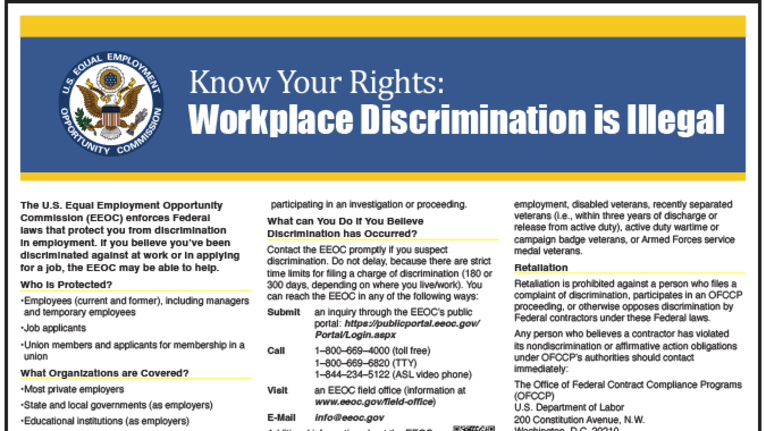
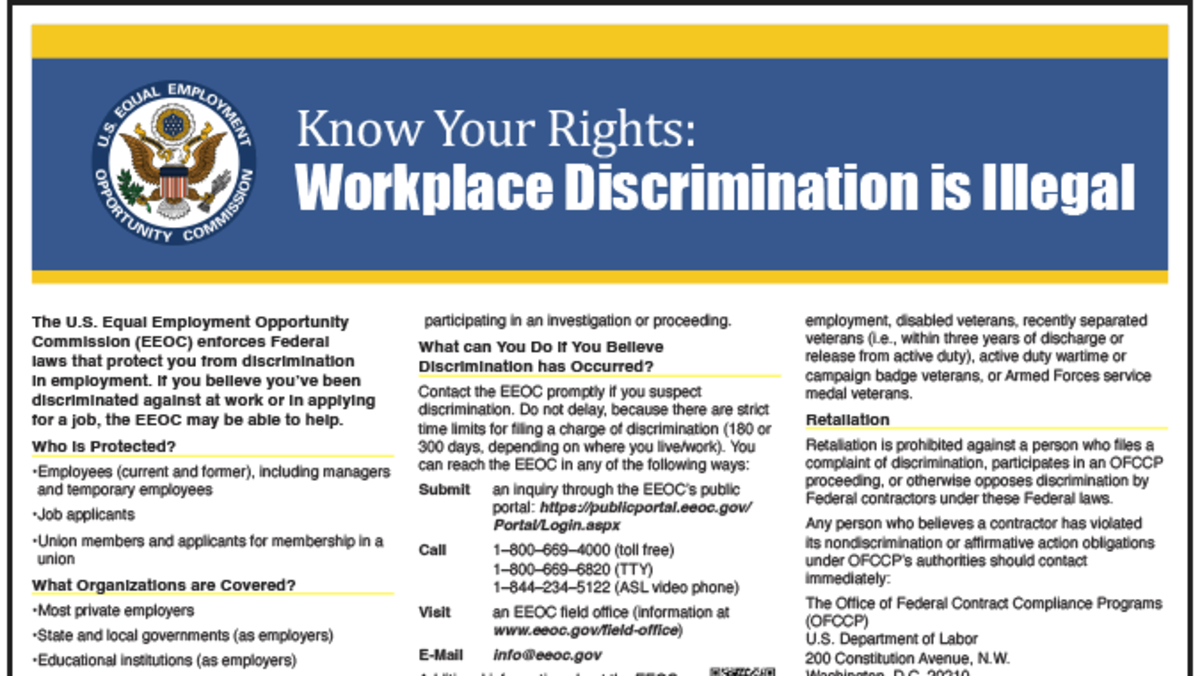
These mandatory posting changes come on the heels of an October 2022 change to the Equal Employment Opportunity Commission’s (EEOC) “Know Your Rights” poster. But more changes are expected. On June 27, the EEOC is expected to update its “Know Your Rights: Workplace Discrimination is Illegal” poster with new information about the Pregnant Workers Fairness Act.

As a result, employers may want to hold off on displaying a new all-in-one poster. The temporary FLSA poster can be displayed alongside an all-in-one poster until all mandatory changes are available.

In addition to the federal posting changes, over 35 state posting changes have already been announced in 2023 with many more expected to follow.

(J.J. Keller & Associates and J.J. Keller & Associates)

FMLA Poster

The DOL recently made minor changes to the Family and Medical Leave Act (FMLA) poster.

The April 2016 and February 2013 versions of the FMLA poster still fulfill posting requirements, meaning employers don’t have to immediately replace the posters that may be captured in a combination posting. However, as a best practice, employers should consider posting the April 2023 FMLA poster as soon as practicable.

(Atkinson Andelson Loya Ruud & Romo via Lexology)

Easily Viewed Display

Employers must have the legal posters conspicuously posted at each worksite. Required posters must be displayed so they are easily visible to the intended audience, according to the DOL. Some posters must be visible by job applicants, as well.

In response to the large number of employees working remotely in 2020, the DOL issued Field Assistance Bulletin 2020-7, addressing when the DOL will consider electronic posting by employers via e-mail or an Internet or intranet website to satisfy the employer’s requirement to provide employees with required notices.

(SHRM Online)

Update for PUMP Act

The PUMP Act largely took effect Dec. 29, 2022, but changes to remedies took effect April 28. The law expands the right of nursing mothers to take breaks and have a private place to express breast milk during the workday.

While the Affordable Care Act amended the FLSA to provide lactation protections to nonexempt employees, the PUMP Act extends these protections to virtually all employees, including those who are exempt. Certain workers in the transportation industry are excluded from the PUMP Act.

(SHRM Online and SHRM Online)

The COVID-19 Public Health Emergency Ends This Week. Here’s What To Know

May 11 marks the end of the COVID-19 public health emergency (PHE)—the beginning of a significant phase in the COVID-19 pandemic, as well as the ending of a series of benefits enabled by the emergency.

President Joe Biden announced earlier this year he would not renew the PHE or the COVID-19 national emergency again after May. Both had been in place since early 2020. Biden signed a resolution in April ending the national emergency earlier than intended, although that early end didn’t shift some of the original deadlines as spelled out in previous administrative guidance.

The end of the PHE means a number of provisions will end, including mandates that health insurance plans fully cover COVID-19 testing without employee cost-sharing. May 11 also will mark the end of the COVID-19 vaccine mandates for federal employees, federal contractors and some health care workers.

There are significant implications for employers regarding the end of PHE—as well as the end of the national emergency, which occurred last month—said Wade Symons, regulatory resources group leader at consulting and professional services firm Mercer, and organizations will need to make decisions as far as COVID-19 vaccine and testing coverage and more.

So what should employers know? What should they do? We rounded up SHRM Online stories to help employers better understand what the end of the COVID-19 emergencies means.

Employers Will Have to Make Decisions for the End of the COVID-19 Emergencies

What exactly does the end of the PHE and national emergency mean for employers and their health and benefits plans? And how should they address it?

The PHE, for instance, mandates that health insurance plans fully cover COVID-19 testing without employee cost-sharing, on both an in- and out-of-network basis. But that requirement now changes, meaning medical plans, including employer-sponsored plans, do not have to pay for testing and will have to decide how to proceed.

“That’s a bit of a decision point,” Mercer’s Symons said. “Employers will have to decide: How are we going to cover COVID testing going forward? Are we going to continue to do what we did before and pay for it? Are we going to limit it to in-network only? Are we going to restrict further how employees can get over-the-counter tests?”

(SHRM Online)

New Guidance Helps Employers Navigate End of the COVID-19 Emergency Orders

Employers have some clarity on test and vaccine coverage and on how to unwind COVID-19-era extended deadlines, including for COBRA continuing healthcare coverage elections.

This clarity comes courtesy of frequently asked questions (FAQ) guidance issued March 29 by the U.S Department of Labor, U.S. Department of Health and Human Services and U.S. Department of the Treasury. The FAQ guidance includes details on COVID-19 diagnostic testing, coverage of vaccines, and the extended deadlines for COBRA, special enrollments and group health plan claims and appeals.

(SHRM Online)

COVID-19 Vaccine Mandate for Federal Workers Will End May 11

The Biden administration announced May 1 that the COVID-19 vaccine mandates for federal employees, federal contractors and some health care workers also will end on May 11.

“While vaccination remains one of the most important tools in advancing the health and safety of employees and promoting the efficiency of workplaces, we are now in a different phase of our response when these measures are no longer necessary,” the White House said in a statement. The Department of Health and Human Services and Department of Homeland Security will also start the process of ending their vaccine requirements for Head Start employees and health care workers at many facilities certified by the Centers for Medicare & Medicaid Services, according to the White House statement.

(SHRM Online)

Biden Ends COVID-19 National Emergency

President Biden signed a Republican-led resolution to end the COVID-19 national emergency on April 10, a month earlier than originally planned. The national emergency is one of two COVID-19 emergencies that have granted special permissions and provided support during the pandemic.

(SHRM Online)

Early End to COVID-19 National Emergency Won’t Change July 10 Deadline

President Joe Biden in April ended the COVID-19 national emergency weeks earlier than expected—but the premature ending won’t shift the deadlines spelled out in the administration’s guidance from March, including the extended deadline for special enrollment in health plans.

The Department of Labor has unofficially clarified that although the national emergency ended April 10 instead of May 11, previous guidance it issued in the form of frequently asked questions stands, including that the outbreak period—originally slated for 60 days after the national emergency ends—will still end on July 10. That date is significant for employers because it marks the end of the special enrollment period that gives employees up to a year to enroll in a health plan after a major life event, rather than the standard 30 days employees normally have to enroll in a plan after such an event.

July 10 will also mark the end of some COBRA-related relief, under which employees were allowed extra time to pay their COBRA premiums or to decide whether they wanted to use the coverage.

(SHRM Online)

Will You Be Texting Your Way Regarding Dating?

Have you implemented with a romantic date over text, the flirty banter returning and forward for two days, when unexpectedly it tapers off? Or perhaps the guy disappears altogether? Before you decide to ponder that which you could have done wrong, or just what may have occurred, it’s time to set the record straight about texting.

Texting is actually fun and flirtatious. It’s a fantastic, low-maintenance method to keep consitently the fire burning in the event that you along with your day had some chemistry together. But the majority of of us believe as well comfortable behind the display â?? to the point where it actually hinders genuine connections, and interferes with our intimate existence.

Texting isn’t a replacement for internet dating. We are in need of that genuine in-person local discreet gay hookup to enable something to expand. When you text or information someone, discussing flirty banter or even more individual thoughts, it feels like you will be growing better. But texting and texting cannot allow you to develop a relationship â?? they generate a false feeling of link. In fact, if texting will be your barometer for how well the relationship is certainly going, you will be totally misled.

An individual would like to pursue a connection to you, they want to view you in-person. They would like to arranged times. Flirting over text may be part of the fun, however it is just part of it. If a person you are seeing is just chatting with you over text, no matter what lovely he could be, he isn’t really contemplating following a relationship. If he had been, he would end up being requesting out.

You have earned a real-life union.

Take into account the finally connection you had that has been fantastic over book, but fizzled rapidly. There could be a variety of reasons this took place. Texting can be an enjoyable solution to pass the time for object of affection, or a distraction from considering an ex, and even a Plan B in case the other individual he is enthusiastic about doesn’t pan away. It is also an instant ego boost. Whatever the case, it doesn’t make a difference. The truth is, there is not a chance for an actual link to take place in the event the major conversation is through text.

As opposed to depending on your own texting chemistry after a great first conference or time, it’s a good idea observe what will happen on another day, or a 3rd. Do not merely think that texting will eventually help you to the spot you want in a relationship. Permit your times understand what you need. Ask her or him out. Cannot take anything significantly less than real-life conversation â?? there isn’t any alternative. If someone else keeps putting you down, claiming they have been busy, or merely messages one to get together during the last-minute, proceed. They aren’t the proper connection for your needs.

How to Align Talent Management with Business Strategy in Asia-Pacific

Human Resources traditionally has been underrepresented at a board level. HR directors are often seen as managers tasked with recruitment and training instead of vital decision-makers responsible for ensuring a return on the considerable investment companies make in their personnel. Fortunately, HR is evolving, and the professionals working in this field are becoming more involved in the strategy of the company as a whole. HR professionals must balance their strategic responsibilities while ensuring a healthy work environment and talent management program. 

Why HR Should Be Involved With Business Strategy 

Most strategic decisions cannot be independent from HR. Whether it involves hiring additional experts, upskilling employees, tasking employees to execute a strategy, or retrenching staff, people are at the heart of everything the organization does. 

One company that is leveraging HR as part of its business strategy is the Toshiba Group. According to GM of Personnel and General Affairs, Kazuhito Mihasi, the company is “transforming from a working company to a company we hope to work for.”

The Toshiba Group is implementing work style reforms to become a leading Cyber-Physical System technology company, requiring a diverse work environment that fosters employee satisfaction and engagement. Toshiba Digital Solutions is spearheading the reform with initiatives in processes, technologies, and culture. Examples include telework, satellite offices, job rank system, diversity and inclusion, second job trial, and deploying Robotic Process Automation (RPA), and an internal social network. The reforms align with the future of work, which includes large-scale changes such as freedom from fixed hours and locations, corrections to employment inequality, project-based work styles, and widespread collaboration. 

If employees aren’t satisfied and productive, a business simply can’t reach its full potential. The contributions of HR are vital. The HR department has the insight and knowledge to ensure that the policies and strategies created reflect the needs of the workforce and align with the goals of the business.

Business and People Strategies in Action

HR may be viewed as a “soft skill,” but it’s far from the truth. HR professionals have made significant contributions to the organizational bottom line for years. Here are just a few ways HR can impact the profitability and operations of the business: 

Leveraging Data-Driven Insights To Enhance Future Capabilities 

Modern HR managers have vast quantities of valuable data at their disposal, including information about retention levels, absence, productivity, and employee satisfaction. When working in conjunction with HR, executive teams can make decisions based on reliable information instead of assumption. 

“By providing data-driven insights, People Analytics can aid in managerial decisions by helping identify drivers of engagement, retention, performance, and wellbeing, among others. Companies can use the insight to customize interventions for different employee groups to optimize organizational performance,” says May Leng Kwok, Regional Head at the CIPD Asia.

The best source for analytics is the company’s Human Resources Information System (HRIS), which contains a wealth of information on recruitment, talent, and performance. 

“Analytics should benefit both the employee and the organization. Ensure that the data collected can be legally used for the intended purposes. It is also important to consult with employees on their willingness to share data and give them the option to opt-out if they feel uncomfortable. Also, ensure you link the different data sources that you regularly use so that it’s all in one place, and focus on improving data accuracy. Remember to present data in the simplest way possible for a non-technical audience and teach them how to interpret it,” says May. 

Acting as Custodians for the Business Vision

HR professionals are instrumental when it comes to developing long-term strategies, including structural changes and development programs. They have their fingers on the pulse when it comes to the priorities and skills of the existing workforce and can provide in-depth insight  about how strategies should be developed and implemented to achieve key objectives. 

One company that has demonstrated this clearly is Tata Motors in India. The company believes in hiring a multi-skilled workforce from both the automobile and other sectors to enrich their business. They have ongoing partnerships with industrial training institutes as well as their own professional training centers. 

New candidates undergo stringent training to familiarize themselves with the companies’ mission, vision, rules, and regulations. Existing employees are also regularly trained to keep the teams on track with new goals and initiatives. 

Ensuring Compliance and Hitting Environmental, Social, Governance (ESG) Goals

Corporate social and environmental responsibility is high on the agenda of all businesses, as government mandates aim to hold companies accountable for their impact. Not complying with legislation leaves businesses vulnerable to hefty penalties and considerable environmental fallout. HR can help businesses make decisions about hiring and employee development in line with the relevant laws and provide valuable contributions when it comes to ESG and CSR (corporate, social, responsibility) policies, ensuring that employees understand and are equipped with the right processes to carry out their duties in a compliant way. 

Diversity, equity, and inclusion (DEI) form part of all CSR programs, and it’s particularly challenging in the APAC region. According to a Google survey, APAC respondents score 10% to 15% lower than the global average on questions ranging from the importance of equal rights to an interest in other cultures.

“The last two years has been hailed as an unprecedented time, which has both unified and brought out the stark differences in our world – be it access to resources or the right to express our true selves, we also need to acknowledge that DEI is all about adapting human behavior, something that requires continuous development of inclusion competencies and ongoing practice everyday to see visible impact around us,”  says Rashmi Vikram, Chief Equity Officer, dentsu APAC.

Improving Employee Well-Being

According to the Mental Health Foundation, addressing well-being and mental health at work increases productivity by as much as 12%. Depression, stress and burnout are at a high across the APAC region, following the pandemic which can have a significant impact on a company’s finances as well. 

Lockton Companies China introduced a special Mental Health initiative to raise awareness about employee well-being in the organization, and to reduce stigma around the process. The company also introduced Mental Health First-Aiders to assist struggling employees. Writing in a LinkedIn post, Stella Sung, who is now SVP, Head of People Solutions – North Asia, opened up about her own struggles and encouraged employees to do the same. “Lockton Companies put our employees’ mental health in the forefront. I encourage everyone struggling to come to myself, friends, family, or one of our qualified mental health first aiders to talk about it and we are always here to listen,” she writes. 

HR professionals can become important advocates for employees and assist companies with implementing effective top-down well-being initiatives. 

People Strategy and Business Strategy: The Best of Both Worlds

It’s clear that HR professionals deserve a seat at the boardroom table as key drivers for both organizational strategy and important people initiatives that create an environment where employees are poised to reach their goals and fulfill their obligations to their employers. No other department is able to execute strategic initiatives in a way that goes straight to the heart of the company.

Photo by Jopwell for Pexels

Inflation Eases Slightly in April

?Inflation fell slightly in April, hitting the slowest annual rate in two years, according to new figures out today.

The Consumer Price Index (CPI) for all items rose 4.9 percent for the 12 months ending in April, before seasonal adjustment, the U.S. Bureau of Labor Statistics (BLS) reported May 10. That’s just under the 5 percent year-over-year notch it reached in April.

On a monthly basis, the CPI rose 0.4 percent in April, seasonally adjusted, after increasing 0.1 percent in March.

The index for shelter was the largest contributor to the monthly all items increase, followed by increases in the index for used cars and trucks and the index for gasoline, the BLS reported. The increase in the gasoline index more than offset declines in other energy component indexes, and the energy index rose 0.6 percent in April. The food index was unchanged in April, as it was in March. The index for food at home fell 0.2 percent over the month, while the index for food away from home rose 0.4 percent.

“Inflation is down from crisis levels, but not back to normal,” tweeted Justin Wolfer, a professor of public policy and economics at the University of Michigan.

Core inflation, excluding food and energy, rose 0.4 percent in April after rising 0.4 percent in March, the BLS said.

Meanwhile, real average hourly earnings decreased 0.5 percent, seasonally adjusted, from April 2022 to April 2023, the BLS reported separately today. The change in real average hourly earnings combined with a decrease of 0.6 percent in the average workweek resulted in a 1.1-percent decrease in real average weekly earnings over this period.

Although inflation has eased from its scorching hot pace—it hit a four-decade high last year of a roughly 9 percent annual rate—its persistent elevation continues to drive increased rates of financial stress and financial fragility and lower rates of confidence in savings and retirement.

Data out last week from the Employee Benefit Research Institute and research firm Greenwald Research, for instance, found that inflation is driving steep declines in workers’ confidence about their post-work savings. Both workers’ and retirees’ confidence in having enough money to live comfortably throughout retirement significantly dropped from 2022’s numbers, falling to 64 percent from 73 percent among workers and to 73 percent from 77 percent among retirees.

And a survey by FinFit with Salary Finance released May 1 found that financial stress is on the rise and now impacting about half of employees—no matter what income bracket they’re in. Meanwhile, four out of five workers said that the rising cost of consumer goods over the past year impacted them, that report found.

Employers are offering some relief in the form of higher pay for their employees: Data from consulting firm Mercer found that employers are shelling out bigger pay boosts to employees in 2023 than they have in years. U.S. employers reported 2023 annual merit increases have averaged 3.8 percent, while total compensation—which includes merit awards as well as all other types of compensation increases impacting base pay, such as promotional, cost-of-living and minimum wage—increased by 4.1 percent.

But employees are still expecting higher wage increases as a result of high cost of living, some reports indicate. The overwhelming majority of workers (83 percent) expect a raise in 2023, and, on average, they foresee an 8.3 percent uplift, according to the ADP Research Institute’s annual global survey of more than 32,000 workers, released last month.

“Heightened employee expectations around pay increases is likely in part driven by the global macroeconomic environment we’re currently facing,” Nela Richardson, ADP’s chief economist, recently told SHRM Online. “Workers everywhere are trying to manage their personal finances through high inflation and the high costs of living. Whereas U.S. workers were once expecting pay raises between 2 percent and 3 percent, in line with the pace of inflation at the time, they’re now expecting pay growth over 6 percent, which is in line with current inflation levels.”

When Do You Take-down Your On Line Dating Visibility?

If you are online dating sites, have you started going out on a regular basis with one of your fits? You have gotten to a place within dating union for which you wonder should you eliminate the profile, or ask him if he’s eliminated his. Quite simply, it is another way of experiencing a conversation about where the commitment is on course and how significant you want to become.

So what does this suggest? How can you start a discussion about when to defeat your web dating profile? And how did you know when the correct time is?

This is a difficult topic, thus I’ll present some instructions of what you should consider to see if you’re prepared.

Maybe you have had covers getting special? For those who haven’t, you really need to assume he or she is still dating others. Individuals have different objectives about interactions, so communication is vital. If you should be nervous to take it, next avoid being troubled with him for willing to day others. Plus don’t insist the guy defeat their profile just because you’ve disassembled your own website. The speak about in which your connection is actually headed is actually foremost, not whether or not the profile page is actually active or perhaps not.

Talk what you would like. There’s no criterion for how an union should progress, so don’t place a time restriction on once you should both defeat the users. Should you want to date her exclusively, then discuss it. Do not believe that because you’ve been internet dating for monthly or 3 months if not longer that you’re in a relationship and she should remove her profile. She could have a separate concept. End up being obvious and discuss what you want.

Never feel pressured to get rid of the profile if you should be perhaps not prepared. Internet dating is mostly about meeting individuals and witnessing who’s right for you. If you are online dating some one but still feel unsure, enable your self the ability to search and date other people. There is crime in stating you like not to be exclusive.

If you have both decided to date entirely but he does not want to take down his profile, it is vital to go over the reason why. This could look like a no-brainer, however if the guy desires to hold their profile upwards, it is because he is nonetheless pursuing additional ladies, or he isn’t ready for a relationship though he does as you. Either way, it is not fair for your requirements, therefore the most sensible thing to do is keep the profile up-and tell him might continue steadily to date others. If you’d like to be unique in which he’s shying away, he might never be best for your needs.

https://www.datingfunxxx.com/

Worker Productivity Is Down. Is Remote Work the Cause?

?U.S. worker productivity year-over-year has declined for five straight quarters for the first time on record. Does that support the arguments made by critics of remote work that traditional, in-person work produces better results?

“We’ve seen ongoing sluggishness with economic output, all the while experiencing a very strong labor market recovery,” said Gregory Daco, chief economist at EY-Parthenon, the strategy consulting arm of global accounting and advisory firm EY, which produced the insight using data from the U.S. Bureau of Labor Statistics. 

But in response to those who say the sustained drop in productivity is a result of the work-from-anywhere revolution, Daco says “not necessarily.”

U.S. productivity fell 2.7 percent in the first quarter of this year compared to last year, but concurrently, the number of hours worked increased, meaning that people are working longer hours but aren’t as productive as they used to be.

Daco said employers should be careful not to scapegoat flexible work, while affirming that it could be one of the causes of lower productivity. “The assumption is that people may work less efficiently when at home, because they are often multitasking nonwork tasks,” he said. That may include caring for children, elderly parents or others who need assistance, say workplace experts.

Hybrid work arrangements can be the most stressful for workers and the toughest to navigate because of the uncertainty involved, according to research from Jeanne Meister, executive vice president at Executive Networks, a San Francisco-based resource group for HR leaders, and the founder of the Future Workplace Academy, which provides learning and research on the future of work. “Companies are not providing enough guidance in how to be successful working in these new environments,” she said. “It’s easy to lay blame on the workers but what can the employer do to enable remote and hybrid work in a successful way?”

The high rate of turnover since the pandemic could be another factor leading to lower productivity. “People have been shifting jobs, moving to different sectors, in some cases quitting, in some cases taking early retirement,” Daco said. “There’s been a lot of churn in the labor market. To some degree that has weighed on worker productivity. If you replace someone who has been in their role for 10 years with someone brand new, productivity will take a hit.”  

The digital workplace transformation could be yet another reason for lower output, Daco said. “Technology adoption takes time,” he said. “When a company rolls out a new way to do things, it takes longer than intended. Sometimes new technology is not more productive initially, and in some cases, it may be less productive until everyone gets up to speed.”  

We’ve rounded up articles from SHRM Online to provide more context.

What’s to Blame for Lower Productivity?

Experts point to an array of factors contributing to the overall decline in productivity, including economic uncertainty, layoffs, burnout and a high rate of quitting.

(SHRM Online)

Productivity Disconnect

Although studies have shown that employees are often more productive when they have the option to work remotely, business leaders remain skeptical, a phenomenon that researchers have dubbed “productivity paranoia.”

(SHRM Online)

How to Manage a Hybrid Workforce

Data supports the belief that hybrid work is the future. But in many ways, hybrid teams are more challenging to manage than all-remote or entirely in-person ones—which is why it will be essential for companies to implement effective hybrid work practices.

(SHRM Online)

HR Pros Rank Top Reasons for Turnover

SHRM Research surveyed HR professionals in the U.S. to learn what they consider the top reasons for turnover at their organizations. Respondents ranked a list of common reasons why employees have been exiting.

(SHRM Online)

Gen Z Expects Mental Wellness Support from Employers

?

Carson Finkle remembers the panic attack he had in his sleep five years ago when he was mentally spent, wrung out, and depleted from winding down one startup business as he started up another.

“I’d never experienced anything like that before,” the entrepreneur said of the vivid nightmare that shocked him awake. “I was crying uncontrollably. I thought I’d lost my mind.”

He embarked on a mental wellness pilgrimage that resulted in founding Create Meditation in Yorba Linda, Calif., a company that works with individuals and employers.

Like Finkle, members of Generation Z—the oldest are 23 and entering the workforce—are prioritizing mental wellness.

Report after report shows they expect tangible employer support and to be comfortable talking about their struggles without feeling stigmatized.

SHRM research found that 61 percent of Generation Z respondents said they would strongly consider leaving their current job if offered a new one with significantly better mental health benefits. 

[SHRM members-only Resource Hub Page: Mental Health] 

Monster’s 2023 State of the Graduate Report found that 54 percent of 1,000 new and soon-to-be college graduates would turn down a job offer if an employer did not offer work/life balance. Ninety-two percent of respondents said it’s important they feel comfortable discussing mental wellness at work.

Emily Rosado-Solomon, assistant professor of management at Babson College in Wellesley, Mass., has seen an uptick among college students talking about their mental health—and a change in the tenor of those conversations.

There’s a willingness since the COVID-19 pandemic began “to disclose they have anxiety or depression,” Rosado-Solomon said. “When I started teaching, I didn’t see that.”

Students “expect these conversations to be able to continue in the workplace,” she added.

The disruption and trauma in the last several years—political and social unrest, layoffs, COVID-19—has led to “the normalization of mental health challenges at work,” according to the Harvard Business Review reported.

But while employers have responded with enhanced counseling benefits, apps, and mental health days or weeks, it’s not enough. 

“Employers,” HBR said, “must connect what they say to what they actually do.”

This is especially important because work is negatively impacting workers’ health, SHRM Online reported.

Meeting Mental Health Expectations

So, what can employers do? From personal coaches to mindfulness training and flexible environments, there are a variety of ways employers can create a culture that supports mental health.

1. Design jobs in ways that promote good mental health.

“While unlimited flexibility is not possible in all jobs, managers should look for ways to increase employees’ autonomy where it doesn’t compromise a business need,” Rosado-Solomon said.

“Managers might consider hybrid work options when employees don’t have to be in the office, or they might allow employees to take breaks at nonstandard times and make up work later in the day.”

Allowing workers to attend a therapy session during the middle of the afternoon is another form of workplace flexibility.

2. Encourage managers to serve as mental wellness role models, when possible.

“This may manifest as managers mentioning that they are taking a mental health day or putting a therapy appointment on a shared calendar that’s visible to subordinates,” Rosado-Solomon said.

Executive leaders also should model mental wellness behaviors.

“It has to start from the top down,” Finkle said. If company leaders don’t use the benefits, “people don’t feel they have permission to take advantage of that wellness program or activity.”

3. Introduce structured, healthy team-based activities.

Finkle likes the idea of team activities, which he said can take the form of a weekly walking meeting or an employee book club.

“Our willpower can diminish very quickly in staying with good habits on our own,” he pointed out.

An ADP Research Institute report, People at Work 2023: A Global Workforce View found team-building activities were gaining traction as mental health-boosting initiatives, favored by 27 percent of 32,612 respondents surveyed in Asia Pacific, Europe, Latin American and North America (Canada and the U.S.). Respondents were full- and part-time employees as well as gig workers.

4. Offer allocated vacation days instead of unlimited paid time off (PTO).

Employees often feel guilty about taking unlimited PTO and don’t use it, Finkle said.

However, “when it is a sanctioned/allocated vacation that HR reminds everyone to take, it gives everyone in the company permission to take the time off. It removes any guilt or judgment,” he added.

5. Conduct mindfulness training during onboarding.

“This can be done in person or through Zoom,” Finkle pointed out. “Having all employees learn/develop the skill of breathing will give them some tools to greatly help manage their nervous system.”

6. Offer insurance coverage for therapy.

Forty percent of 2,756 graduating college seniors LaSalle Network surveyed in March said insurance coverage for therapy is the No. 1 employer benefit they want.

“They want to make sure they were able to go to therapy and it wasn’t a taboo subject at the company,” said Sirmara Campbell, CHRO at LaSalle Network.

7. Offer personal coaches.

“Therapy can be great, but I still think there’s a stigma in the business realm,” especially among older generations, Finkle said. He suggested giving everyone a business or life coach from outside the organization who meets individuals for 30 minutes once a week.

These conversations can help the employee excel in all areas of their life, and that “carries over to impact the business,” he said.

8. Provide mental health training to managers.

The idea is not to turn managers into therapists, Rosado-Solomon said, but to educate them on how to show compassion without “overstepping boundaries of the supervisor-subordinate relationship or prying in a way that might make an employee uncomfortable.” 

There are training programs, she said, that offer specific suggestions on what managers should and should not say to an employee in crisis, give them a better understanding of mental health challenges, and teach them how to check in with employees.

Cinque motivi per decidere di provare Online Dating per il vacanze

Nessuno vuole essere solo il viaggi. Se hai mai pensato a approfondire internet dating, davvero – cosa esattamente fermando? La vacanza periodo fornisce un numero di possibile opportunità di uscire in città e localizzare chiunque a coccolare con dentro. Non c’è spiegazione per proteggere te stesso su e look from the Yule record solamente. Ecco cinque idee per enable you to get quando guardi la combinazione di situazioni con incontri questa vacanze!

Tip 1: the city è jumping! Non c’è davvero modo migliore rompere il ghiaccio (o trasportare freddo) che prendendo intorno alla città con qualcuno in criminal activity. Che si tratti un festival di luci o uno speciale fidanzamento associato con il Schiaccianoci, la pausa periodo in realtà ready con task. Discover someone su an online dating website e keep one un altro business mentre guardare le festività natalizie da strade di area.

Suggestion 2: It really is a time per posting. Buon divertimento appagante nuova gente questa stagione natalizia. Do not think from it as internet dating â € “think about it un’avventura con individui! Che si tratti di un caffè o di un pasto, suo una delizia quando qualcuno ti permette di vedere uno scorcio del vita. Anche se tu forse non una partita, scompare ricco in nature dopo discutere il tuo tempo con qualcuno.

Tip 3: No gift force! If you have just andato in un appuntamento romantico o due, sei fuori gancio per regali fino al poi festività. Positive, a birthday can come avanti, ma almeno non è necessario preoccuparsi se qualcosa oltre fioriture o un pacchetto da sei servire!

Suggestion 4: Never confused for terms. In which sei stato optare per le festività natalizie? In realtà è famiglia in visita? Ogni volta che fornire internet dating provare il viaggi di vacanza, tu sono mai e poi mai confuso per parole. Divertente storie da anni passato misto a presente strategie volontà make un iniziale grande appuntamento travel entro!

Tip 4: relax – dating is actual relax! L’anno in realtà si sta esaurendo e un appuntamento romantico è un grande modo per portare un tranquillo vicino alla conclusione di un frenetico anno. Presta attenzione sopra tu parli, fatti una bella risata sopra ti lamenti e ti piace impresa di qualcuno esattamente chi potrei essere apprezzare il tuo, anche!

pubblicato a questo indirizzo

Subscribe to our Newsletter