

Supreme Court Won’t Hear Reverse Discrimination Case

?The U.S. Supreme Court recently declined to hear a reverse discrimination and retaliation case brought by two white police officers who opposed a diversity initiative.

The two former Michigan State Police officers claimed they were demoted and fired, respectively, in retaliation for complaining about their employer’s diversity initiative and alleged double standards in disciplining employees.

The police agency said the former officers were disciplined because of their misconduct in handling a transfer of another employee. The U.S. District Court for the Western District of Michigan ruled in favor of the agency in December 2021.  

The Supreme Court’s decision lets the district court’s ruling stand. The lower court’s ruling sheds light on when white employees can or cannot claim reverse discrimination.

Under federal law, “the prohibition against discrimination includes discrimination against white employees and applicants. In effect, this means that everyone is in a protected category when it comes to race and gender,” said Cara Crotty, an attorney with Constangy, Brooks, Smith & Prophete in Columbia, S.C.

Background

In 2019, the new director of the Michigan State Police emphasized that diversity was a priority for the agency. In 2020, the Michigan State Police staff was 89.5 percent white and 91 percent male, and 71 out of the 77 first lieutenant posts were held by white males, according to court documents. At a staff meeting, the two plaintiffs said the agency’s diversity initiative hurt the morale of white male officers.

The agency later received a complaint that one of the plaintiffs, who had a rank of inspector, yelled at and badgered another employee. An agency investigation found that the two plaintiffs pressured a subordinate to change scores on an evaluation form in an effort to oppose a lateral transfer for another employee. The investigation concluded the inspector was insubordinate, provided inaccurate and unethical direction to an employee, mishandled the protocols required for a lateral transfer process, and lied about what he had done, according to court documents.

The inspector believed he was being punished for opposing the diversity initiative and complaining about racial remarks a Black employee had made during an off-duty comedy routine. The agency later fired the inspector and demoted the other plaintiff.

To prove discrimination with circumstantial evidence, employees must show that they are a member of a protected class, are qualified for the job, suffered an adverse employment decision and were treated differently than similarly situated employees who weren’t in the protected class. If that is proven, then the employer must show it had a legitimate, nondiscriminatory reason for taking the adverse action.

The district court found the white officers failed to show they were treated differently than nonwhite officers. The plaintiffs pointed to four nonwhite officers who they thought were disciplined less harshly than white officers, but the court found those four individuals were not comparable to the plaintiffs because they didn’t have the same rank, supervisor or alleged misconduct.

Retaliation Claim

In a retaliation claim, a plaintiff must show they engaged in protected activity and the employer knew about this protected activity and subsequently took an adverse employment action because of it.

Workers’ objections to an employment practice are legally protected activity if their supervisors should have reasonably understood that they were complaining about unlawful discrimination; however, it’s not protected activity if the objection is too vague or about general unfairness, the district court explained.

“The complaints cannot just be about a belief or feeling that different treatment is occurring or will occur,” said Luther Wright, an attorney with Ogletree Deakins in Nashville, Tenn. “Complaints or allegations that are really just disagreements with how management handled a particular situation do not constitute reports of discrimination, will not constitute protected activity and will not support a claim for retaliation.”

In this case, the plaintiffs’ “chief concern was that the diversity initiative was unfair to white police officers, not that it illegally discriminated against white males,” the district court said. Furthermore, the plaintiffs did not prove the state police director had any knowledge of their criticisms about the diversity initiative, the court concluded.

“If an employee raises concerns about the organization’s diversity, equity and inclusion (DE&I) practices, this could potentially be considered protected activity,” Crotty said. “Employers should treat such a complaint like any other issue involving potential discrimination or harassment and ensure that the employee does not experience retaliation.”

Best Practices

Employers should design “a DE&I program that truly embraces everyone. That requires an explanation of purpose to all employees and being open to having difficult conversations about past inequities, clearly stated current goals, and the role each employee plays in having a workplace where every person is respected and feels like they belong,” Wright said.

Employers should not implement arbitrary hiring goals or use race in any way in the selection process, Crotty noted.

“Any hiring practice or objective that looks like a quota should be avoided,” she said. “Employers want to make sure that protected characteristics are not a factor in making hiring decisions and that hiring managers are not implicitly invited or expected to make decisions that incorporate those factors.”

Instead, employers should focus recruitment efforts on sources that are likely to provide a diverse pool of candidates, “but they should not state a preference for candidates of any race or gender,” she added. “Ideally, targeted recruitment will increase the diversity of the candidate pools from which an employer is selecting, and through application of a neutral selection process, the workforce will naturally become more diverse.”

5 Sans effort Rencontres en ligne Protection Directives

Sites de rencontres en ligne continuer à prospérer malgré personnes qui jurent ne pas réessayer – simplement réactiver leur compte semaines après. J’ai mentionné avant: Rencontres en ligne est en fait un période. Mais pourrait être dangereux.

Bien que occasionnels, violents activités criminelles parfois arriver parmi {en ligne|sur le web|en ligne|en ligne|web|daters basés sur Internet. Parfois les individus sont amenés à épanouir quelqu’un simplement se faire voler sous la menace d’une arme, en tant qu’instance. Un autre plus horrible instance, une femme était assassinée avec elle reste dissoute dans l’acide par un homme elle est tombé sur sur un site.

Le meilleur conseil j’ai entendu est en fait du femelle énergie combinaison du Podcast “my personal favorite Murder”: “stay magnifique et pas être assassiné. ” Je veux dire, c’est vraiment ironie et toutes sortes de, mais ils sont sérieux. Alors que la plupart concernant le agressif activités criminelles impliquant sites de rencontres en ligne tendent à être commis contre femmes, guys doivent être secure, too.

La majorité des individus connaître concepts de rester sécurisé, mais j’ai développé une liste de diffusion avec quelques beaucoup plus bien idées.

1. Ne pas Rencontrer Votre Date à leur Lieu unique

Et ne pas avoir tous sont disponibles vous permettent d’obtenir. Au lieu de le tout premier grand rendez-vous, personnes! Prevent que non-sens. Faites simplement ne faites de l’exercice.

Meet quelque part community, et assurez-vous il y a susceptible d’être autres personnes la vérité est dite là. Dans le cas où vous êtes pas familier avec le lieu, rechercher vos faits, parcourir avis produits sur un internet dating blog site, et essayez de avoir une idée de le place avant d’y aller. Ou vous pourriez même suggérer un lieu vous êtes plus à l’aise avec.

2. Être stratégiquement vague au sein de profil Relationship

Mes friends, looks, je sais nous sommes tous obtenir un fruits de mer mais exercice physique prudence. C’est simple localiser personnes avec quelques composants de en personne reconnaissable information.

Vous ne devriez pas record la college, pas enregistrer ton travail, et envisager peut-être pas publication votre travail nom. Eliminate publication votre nom complet, chaque fois que vous le pouvez. C’est vraiment simple à traquer quelqu’un réseaux sociaux enregistrements (Twitter ou Linked In) considérant nom ou travail sujet recherches.

Au lieu de être particulier, état normalement ce que vous exécuter. “Je un collège enseignant” ou “nous travaille avec TV et movie “ou quelque chose comme ça qui donne eux une pensée mais sans décoration le tout image.

3. Use Original Images

Bien sûr, probablement le plus incroyable image que vous avez de vous à Bali ou au Machu Picchu, pendant que l’avez partagé sur Instagram et FB. Génial! Mais je suis supplie vous s’il vous plait évitez ces photographies sur le profil amazing matchmaking. Alors qu’Instagram pourrait pas autoriser leurs photos is indexed by search, plusieurs autres sites internet grattez Instagram information, et avant longtemps, vôtres images tend être instantanément consultable. Simplement demander votre voisin d’à côté ou meilleur ami faire une séance photo iPhone acquérir les photos effectué correct.

4. Ne pas Se connecter à services tiers

Les applications de rencontre comme Bumble que vous connectez-vous avec myspace pour vérifier votre identité. Je pense, ce qui est boiteux. Comprendre que vous avez vraiment un profil de rencontre facilite trouver les ressources. Vraiment vouloir un étranger une fois que vous avez compris où vous “vivez en ligne “? Probablement pas.

Si vous êtes fréquent et informel personne dans social networking, vous ne pouvez pas reconnaître tous indices êtes faire à des harceleurs possibles. Quand vous le faites choisir se connecter à un tiers- party service pour votre matchmaking, envisager produire un compte social media marketing simplement pour online dating buts. Vous ne devriez pas placer aucune données personnelles dans ce profil. Juste entrez votre premier titre.

5. Évitez le premier contact

Je sais la majorité des les gens sont n’est pas vers le premier branchement, mais il est important de déclarer que vous devriez probablement empêcher démarrage avec un corps tu ne enfin.

Ce n’est pas difficile de être séduit par quelqu’un avec un charisme hors du commun. Néanmoins, gardez reins en échec, et gardez ces shorts on. Se familiariser avec quelqu’un initialement. Déterminer ce que leur la vie de tous les jours, juste quoi leur unique vivant scénario est en fait, juste quoi leur personnel chaque jour la vie, etc. interrogez-les sondez questions pour savoir si ils sont un personne “régulier” par opposition à un sociopathe juste qui s’engage dans étrange meurtrier passions.

Si un rendez-vous romantique court mal, Dites-leur Vous obtiendrez en contact par la suite Concernant Une autre date

Mesdames, tout comme vous didn ‘t actuellement suffisant à s’inquiéter, vous devez vous préoccuper de le possible mauvais dates, aussi. Occasionnellement un rendez-vous va de côté, donc ne veux pas jour lui encore. Si vous êtes incertain concernant votre time de caractère, ou si vous savez que votre sortir est sensible et ne peut prendre simplement rejet, puis vous continuer avec caution.

Si vous êtes incertain comment votre sortir va réponse un léger déception à la fin du grande date, vous pouvez juste leur faire savoir que vous allez les appeler ou contacter eux pour le prochain sortir. Tandis que qui est un mensonge, si c’est aide à garder vous secure, c’est bénéfique.

Si vous avez restant le bar ou le bistro avec votre jour pendant que voudrais obtenir apart, faites-leur savoir vous verrez tous encore une fois, mais informez-les vous devez utiliser les toilettes, leur fournir un rapide câlin à un bras, beeline return to the site, et autoriser quelqu’un la vérité se dit là comprendre circonstance.

Le plus important, faites attention à votre Gut

À la fin de ta journée, tu seras sûr et néanmoins endurer les pires effets. Il est important de finir par être minutieux et syntonise ton abdomen. Si quelque chose sent incorrect, ensuite compter sur cette impulsion.

Malgré tous les chaleur rencontres sur Internet obtient de personnes, tout le monde garde retour à il. Une partie de secure relation est en fait comprendre comment le contenu vous ajoutez out to gérer votre cas peut également être utilisé pour rechercher. Même si vous êtes réellement sage à propos de rencontres sur Internet et entreprendre la plupart des correct choses, vous pouvez toujours trouver mauvais personnes avec pires intentions disponibles juste qui pourrait tenter utiliser et vous déjouer. Soyez prudent là-bas, folks.

http://www.rencontres-porno.com/rencontre-fetichiste.html

Vegas for Beginners #SHRM2023

The SHRM Annual Conference & Expo is June 11-14 in Las Vegas! If it’s your first time in Vegas we have some great tips for you.

The post Vegas for Beginners #SHRM2023 appeared first on Workology.

Top Ten Things to Do in Las Vegas During an HR Conference

Between sessions, parties, and networking what do you do in Vegas? Go to a show? Be a tourist? Watch the fountains? Here are just a few.

The post Top Ten Things to Do in Las Vegas During an HR Conference appeared first on Workology.

Doing Vegas The Right Way at #SHRM23

Doing Vegas during the SHRM Annual Conference & Expo can be daunting if it’s your first time in Vegas! Learn how to do it the right way.

The post Doing Vegas The Right Way at #SHRM23 appeared first on Workology.

Top 10 Las Vegas Restaurants for Conferences

Heading out for SHRM Annual in Las Vegas? Be sure to check out this list of great Vegas restaurants and get some amazing eats and treats!

The post Top 10 Las Vegas Restaurants for Conferences appeared first on Workology.

The #SHRM23 VIP Unofficial After Hours Guide Is Coming Soon

The annual 2023 SHRM conference is June 11-14 in Las Vegas! Sign up for the #SHRM23 VIP Unofficial After Hours Party Guide by texting ‘SHRM’ to 512-548-3005.

The post The #SHRM23 VIP Unofficial After Hours Guide Is Coming Soon appeared first on Workology.

What’s the Difference Between the PHR and the SPHR?

Not sure what the difference between the PHR and the SPHR is? We’re here to help! Find everything you need to know right here.

The post What’s the Difference Between the PHR and the SPHR? appeared first on Workology.

Employers Stock Naloxone to Counteract Opioid Overdoses in the Workplace

?In 2017, the New York State Education Department permitted schools to implement opioid overdose prevention programs, explained Jeffrey P. Simons, superintendent of schools at the East Greenbush School District. The suburban district, with around 4,000 students and about 800 employees, was an early adopter of one such program.

“Some might suggest that it’s not an appropriate place to have an opioid prevention program. I would argue that it is, because it is our responsibility to take care of people,” Simons said. “My view is you need to take care of your people, and having supports in place serves the broader mission of an organization that wants to have a positive, safe and healthy employment culture.”

An estimated 107,600 people in the U.S. died from opioid overdoses in 2021, the CDC reported. Administering naloxone—a medication that reverses the effects of opioids—to a person who has overdosed can save their life. But it must be administered quickly to avoid potential respiratory problems, said Nash Alexander, chief operating officer of Wilton EMS in Upstate New York. Having naloxone in the workplace means an employer can respond faster than the local EMS, he added, as responders can take between five and 20 minutes to arrive on scene.

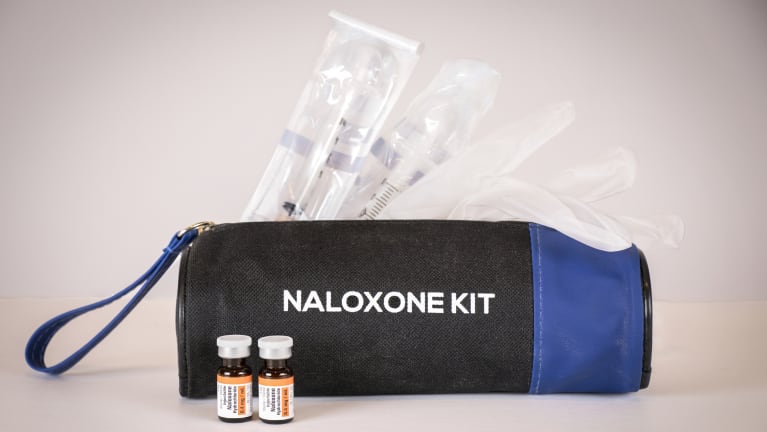
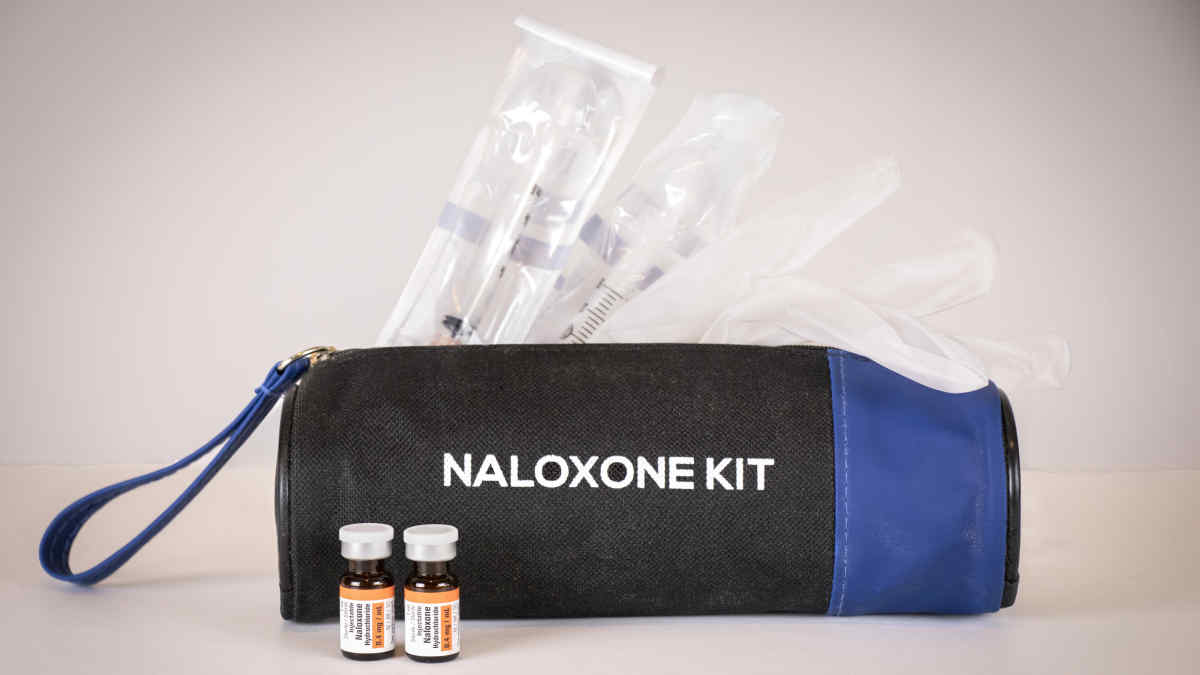
With Narcan (a brand name of naloxone typically administered as nasal spray) now available over the counter, employers that make the medication part of a workplace safety kit can rapidly assist an individual experiencing an overdose. According to the Bureau of Labor Statistics, workplace overdose-related deaths totaled nearly 400 in 2020, leading experts to urge employers to take an active role in battling the opioid epidemic.

[SHRM members-only HR Q&A: Should employers keep naloxone in the workplace?]

The Case for Naloxone in the Workplace

Adam Calli, SHRM-SCP, principal consultant of Arc Human Capital LLC in Washington, D.C., draws comparisons between the availability of Automated External Defibrillators (AEDs) and naloxone in the workplace.

“Though extreme opioid consumption isn’t typically considered a hazard of the workplace, neither is heart disease and related conditions that might cause heart attacks, but companies buy AEDs anyway,” Calli said. “It’s another way to show employees we care and to look out for their overall wellness.”

Although AEDs cost between $1,200 and $3,000, plus staff training, many companies see them as a lifesaving component of their safety kit. The average price per dose of Narcan is $50 to $75.

“Knowing this, you must ask yourself, do you have a workforce likely to overdose on opioids at work where receiving a quick emergency dose of naloxone would be beneficial?” Calli said. “You can consider the number of visitors to your workplaces, such as vendors, clients, etc., as you consider the numbers and likelihood of the overdose.”

After looking at the probability of use, Calli suggests considering:

  • What’s the shelf life of the drug? (It’s about 18-24 months.)
  • What’s the cost of the drug?
  • If you have to dispose of it, how frequently are you likely to do so?
  • What’s the expense of those disposals?
  • Who will be responsible for monitoring the drug and ordering replacements as needed?
  • How easy is it to get the drug to keep a supply on hand?

Opioid overdoses can happen to anyone.

“What if someone starts a new medication? When people have been prescribed opiates, some can have an unexpected reaction,” Alexander said. “Somebody may have had knee surgery and are still on medication when they return to work or may just start a medication and can experience an unintentional reaction. Having naloxone available is for the safety, health and well-being of your team.”

Naloxone Training and Reporting

Of employers interested in making naloxone part of their workplace safety kit, many report not knowing how to respond to an overdose. State and local health departments offer a starting place. For example, when employers work with their local health department in New York State, training and kits are free, according to Alexander. The health department will also help organizations with the required reporting after administering naloxone.

State or industry-specific regulations also provide guidance. For example, Simons explained, New York school districts must employ a medical director—in his district, this individual is a private pediatrician. But currently, only the school’s nurses have received training to administer naloxone; however, district leaders are considering whether to open training up to coaches and extracurricular advisors in accordance with state law.

Training on the use of either the nasal spray or injectable form of naloxone could be included as part of the onboarding process, Calli suggested, as well as in an annual refresher safety training program.


Katie Navarra is a freelance writer based in New York State.

A Method for Staying Out of Court

?Former employment attorney and author Jathan Janove writes for SHRM Online on how to inject greater humanity into HR compliance. Jathan welcomes your questions and suggestions for future columns. Contact him at the e-mail address at the end of this column.    

In my former days as an employment law litigator, it seemed every lawsuit had the same three problems that spoiled the employee-employer relationship: 1) avoidance, 2) problematic documentation and 3) insult added to injury. After reviewing the three problems, I’ll share my method for staying out of court.

The Three Problems

Avoidance occurs when management is too anxious to confront a problem. This results in the problem not being addressed in a timely way. Instead, it festers. Then, when the problem can no longer be ignored, the opportunity to deal with it safely and effectively is lost. It’s like a patient with a medical condition that’s too long neglected and now is no longer treatable.

The second problem, problematic documentation, tends to take two forms: missing documents and documents the employer wishes didn’t exist. In a lawsuit, problematic documentation typically supports the plaintiff’s claim of inconsistency, which is used to rebut management’s reason for an adverse employment action. The inconsistency bolsters the plaintiff’s argument that the real reason for the action is one forbidden by law.

The last of the three problems, insult added to injury, tends to arise from the first two. The employee on the receiving end of the adverse employment action isn’t just injured (e.g., loss of job), but the way things are handled makes them feel insulted, degraded, humiliated or worse. The emotional reaction produces a desire for revenge, which often motivates the employee to seek legal counsel. As a former employment law litigator, I witnessed that path to the courthouse over and over and over.

The Method

For employers aspiring to maintain a claims-free workplace, here are three necessary actions:

1. Put your weight forward on your skis.

 Putting your “weight forward on skis” means using the avoidance instinct as a trigger to do the exact opposite. This means training and coaching managers on why the earliest sign of an employee problem is the very best time to address it and how to do so. HR can play an important supportive role as trainer, coach and resource where the message to management is, “When in doubt, run it by HR. We are here to help.”

Not only is this approach most effective in dealing with the problem at hand, but other employees will pay attention. When management takes employee problems seriously and is willing and able to deal with them efficiently and effectively, employees have greater confidence in leaders’ abilities to handle challenging situations. Leaders are seen as walking the walk rather than just talking the talk about what type of work environment they want to promote.

“The weight forward on skis principle was an absolute game changer in my leadership development,” said Nathan Child, chief marketing officer for Otter Products in Fort Collins, Colo. “I have since shared this with as many other leaders as I can. It is a foundation for success in relationships.”

2. Have the No-FEAR discussion.

This approach helps managers put weight forward on their skis. It’s a way to address a problem promptly and constructively without bitterness, rancor or negativity.

The No-FEAR technique is simple though not necessarily easy. If you put some time and effort into mastering this technique, the payoff will be enormous. It will go well beyond preventing claims to improving retention, talent development, productivity and accountability. It will also go a long way toward reducing job stress.

The discerning reader will note that I previously called this the No-FEAR Confrontation technique. Clients and people I coach have since persuaded me that there’s no need to include a negative connotation with the word “confrontation.” Regardless of the issue or problem, the No-FEAR technique should be viewed as a means to constructive, positive engagement.

3. Write the Same-Day Summary.

I came up with the Same-Day Summary after years of frustration as a defense counsel dealing with problematic documentation. I experimented with different approaches until I found one that management can be trained and coached to use properly.

The fundamental essence of the Same-Day Summary that distinguishes it from conventional HR documentation is that the message is not initially conveyed in writing. Instead, it’s communicated in a real-time conversation. The document follows very shortly after the conversation while memories of what was said are still fresh. This document simply confirms what the sender thinks are the conversation’s key points, subject to the recipient having the opportunity to respond with suggested corrections.

“I love the Same-Day Summary for documenting employee conversations and counseling sessions,” said Colleen McManus, SHRM-SCP, a senior HR executive with the state government of Arizona. “It is a tool that’s timely, constructive, and gives the employee an opportunity to contribute or make corrections. This differs from many more formal ‘documentation tools’ I have seen used by other employers. Busy leaders are sometimes daunted by the idea of having to go back and ‘document’ something when HR or their counsel ask them to. The Same-Day Summary makes this step easier. And because it’s easier, it’s more likely to be used, which gets these types of situations documented in a timely and professional way that would stand any organization in good stead if challenged.” 

I’ve been teaching, training, coaching and practicing Same-Day Summaries for well over 20 years, and I continue to hear that they are highly effective. I’ve been told that on the rare occasion a Same-Day Summary has shown up in court, it was very helpful to the employer. The rarity of it showing up in the legal system is a testament to its effectiveness in claims prevention.

Having previously dealt with numerous employment law claims throughout the country, I nonetheless maintain that employment litigation is virtually 100 percent preventable. Test my hypothesis: Familiarize yourself with the three problems and adopt the three methods. And then enjoy your claims-free workplace.


Jathan Janove is a former state bar “Employment Law Attorney of the Year;” author of
Hard-Won Wisdom: True Stories from the Management Trenches (HarperCollins 2017); Master Coach & Practice Leader with Marshall Goldsmith Stakeholder Centered Coaching; and faculty member, University of California San Diego Masters Series.

Subscribe to our Newsletter