

Watch Out for Overtime Compliance Challenges

?Overtime compliance is challenging, but employers have tools at their disposal, including wage and hour audits and safe harbor policies, to limit their liability.

An audit can be particularly effective, said Robert Boonin, an attorney with Dykema in Ann Arbor, Mich., at the SHRM Annual Conference & Expo 2022 in New Orleans on June 14. An audit conducted by a knowledgeable consultant or lawyer can shield employers from double damages, commonly referred to as liquidated damages, he noted at a concurrent session, “Overtime Compliance—It’s Not as Simple as It May Look.”

Overtime pay is due to all nonexempt employees for all hours actually worked over 40 in a workweek at the rate of 1.5 times the employee’s regular hourly rate of pay.

The broadest exempt group of employees are white-collar employees, which include:

  • Executives.
  • Administrative employees.
  • Professional employees.
  • High-level computer-related occupations.
  • Outside sales employees.

New Overtime Rule on Horizon

New overtime proposed regulations are on deck to be released possibly as soon as this summer that might recommend increasing the current exempt salary level of $684 per week—$35,368 per year—to a higher amount, Boonin noted. This amount might be to the $912 per week or $47,466 per year that the blocked overtime rule put forward by the Obama administration had provided.

Or even higher. Sen. Sherrod Brown, D-Ohio, would like to see an exempt salary threshold in the $80,000s, Boonin remarked.

The duties tests might be changed under a new rule to make it more difficult to classify someone as exempt, and there might be periodic increases through indexing. So legal challenges of any new rule, once finalized, are possible, according to Boonin.

He doesn’t believe the salary level and salary basis tests—though in use for years—are derived from any language in the Fair Labor Standards Act (FLSA). He said that when the Obama overtime rule was struck down, the court asked the U.S. Department of Labor (DOL) where it had come up with the salary level rule.

[See SHRM’s FLSA Exemption Classification Resource Hub Page for a timeline of the history of the overtime rule.]

Misclassification

Administrative employees currently are the most commonly misclassified among white-collar exempt employees, Boonin said. If employees support production on the manufacturing floor, they’re not exempt, Boonin said.

The primary duty of administrative employees is performing office or nonmanual work related to the employer’s management or general business operations, or those of a customer.

Moreover, as part of the employee’s primary duties, the individual must exercise independent judgment and discretion with respect to matters of significance to be an administrative employee.

So someone who works in the file room or someone making predetermined choices wouldn’t fit within the exemption, he said.

Someone who has authority to negotiate likely would. For example, if someone in health care is responsible for conducting 30 requests for proposals and negotiating them down to the top three, that’s independent judgment, he said.

Help desk employees almost never are administrative employees, Boonin said. Neither are customer service workers.

Relevant inquiries include whether the employee:

  • Has authority to waive or deviate from established policies and procedures without prior approval.
  • Provides consultation or expert advice to management.
  • Plans long- or short-term business objectives.
  • Investigates and resolves matters of significance on behalf of management.
  • Represents the institution in handling complaints, arbitrating disputes or resolving grievances.

Professional Exemption

It’s easier to identify the professional exemption, Boonin said.

But it isn’t always easy. For example, a vice president of marketing likelier fits within the executive exemption than the professional exemption.

Primary duties must be in an area requiring specialized higher education and the consistent exercise of discretion and judgment for this exemption to apply, such as in:

  • Law.
  • Medicine.
  • Teaching.
  • Psychology.
  • Science.
  • Social work.

However, Boonin noted that the National Education Association on May 25 called for the DOL to rescind its regulation that lumps teachers in with doctors and lawyers as professionals who are categorically excluded from the protections of the FLSA.

Safe Harbor Policy

In addition to an audit, a well-drafted safe harbor policy can significantly reduce liability for misclassifications.

Boonin recommended following these guidelines when drafting such policies:

  • Notifying employees in writing as to the employer’s general salary basis obligations.
  • Providing a written complaint procedure.
  • Promptly correcting identified errors and promising not to repeat errors.

Moreover, a safe harbor policy should cover all pay-related claims of mistake or underpayment, he said. In addition, complaints should be made by the end of the following pay period.

Remote Work

In addition to overtime risks, there are other types of wage and hour liabilities that employers face, Boonin cautioned.

For example, a lot of people are working remotely and taking breaks that are still compensable. Have a good meal and rest break policy for remote employees, he recommended. Also, have employees certify on their time sheets that they are in compliance, he suggested.

In addition, don’t let nonexempt employees check e-mail at home or else risk a longer compensable workday. If nonexempt employees flout this rule, they must be paid for the extra work time but can be disciplined, Boonin noted.

New York Passes Salary Disclosure Law

?As part of the end-of-session rush of legislative activity, New York State lawmakers passed a bill that will require private-sector employers in the state to disclose salary ranges on job postings.

The bill now heads to Gov. Kathy Hochul for her signature or veto.

If enacted, which is expected, New York will be the latest state to jump on the hottest trend in pay equity legislation.

Here is what employers to know about the legislation – which potentially has nationwide reach.

What the Law Entails

New York’s salary transparency law mandates that employers disclose the compensation or range of compensation in any advertisement for a job, promotion, or transfer opportunity. The “range of compensation” means the minimum and maximum annual salary or hourly rate that the employer in good faith believes to be accurate at the time of the job posting.

For positions compensated solely on a commission basis, employers can comply with the law by including a general statement that compensation will be based on commissions. In addition to salary disclosure, employers must also provide the job description for the position, if one exists.

The statute applies to employers with four or more employees, so it excludes only the smallest employers from compliance. Temporary help firms are also excluded from compliance.

Employers are required to keep records that show a history of compensation ranges for each job opportunity and the job description for the position.

Importantly, the statute expressly applies to any jobs that can or will be performed, at least in part, in the state of New York. This means the statute applies to all listings for remote positions that can be performed wherever the employee resides because the position could be filled by an applicant who lives in New York, who would thus work remotely in the state. Accordingly, the statute has reach beyond employers with a physical presence in the state.

Employers who fail to comply with the statute face civil penalties of up to $3,000, depending on employer size, good faith, gravity of the violation, and history of previous violations.

Any person aggrieved by a violation of the statute can file a complaint with the New York labor commissioner, but there is no private right of action for an employee to file a lawsuit against the employer.

Employers are, however, expressly prohibited from refusing to interview or hire or otherwise retaliating against any applicant or employee who exercises rights under the statute.

The statute directs the labor commissioner to issue rules and regulations to implement the statute and to conduct a public awareness campaign to help make employers aware of their obligations.

Pay Transparency Trend Continues

All employers must have pay transparency at top of mind, as this continues to be the hottest trend in pay equity legislation. Colorado, Washington, and New York City have all enacted similar pay transparency laws requiring disclosure of salary in job postings.

Some jurisdictions, like Connecticut, Nevada, and Rhode Island, require employers to proactively disclose salary ranges to candidates during the hiring process, but not in job listings, while others require employers to provide pay ranges to candidates upon request, such as California, Maryland, Cincinnati and Toledo, Ohio.

We expect additional states and cities to consider similar pay transparency laws in the coming months. California, for example, has a pending bill that would require employers to provide the pay scale for a position to applicants, and some form of pay transparency laws have been proposed in Alaska, Massachusetts, Michigan, South Carolina, and Vermont. 

Five Steps to Take Now to Comply

The New York law will take effect 270 days after signed by Gov. Hochul, assuming she signs it. So the effective date may be sometime in March 2023, depending on the date of signature. You should use this time to prepare to comply with the law. Here are five steps you should consider:

  • Assess your policies for determining salaries and make adjustments where necessary.
  • Determine and document pay ranges for all positions.
  • Review existing job posting templates or create new templates, including internal listings for promotion and transfer opportunities, and ensure they incorporate job descriptions for the roles.
  • Train supervisors and managers, as well as compliance and human resource staff, on the implications of the disclosure obligation and take steps to ensure that recruiters are prepared to comply with the impending law.
  • Develop a process to consistently publish the expected wage range in connection with internal and external job postings.

Consider conducting a pay equity audit to make sure there are no significant discrepancies that may be revealed once you are required to post salaries on new job listings.

At best, such disparities could lead to discontent and employee attrition. At worst, they could lead to a pay equity lawsuit, if pay differentials appear to be based on a protected characteristic, such as gender or race.

Melissa Camire is an attorney with Fisher Phillips in New York. © 2022 Fisher Phillips. All rights reserved. Reposted with permission.

Minnesota Businesses Need to Take Steps to Comply with Frontline Worker Bonus Pay

Minnesota, a hotbed of COVID-19 at various times over the past two years, has a new law that recognizes the state’s frontline workers by offering them the chance to receive part of a $500 million bonus pool.

Employers need to take specific steps to ensure they fulfill their obligations to this new “hero pay” law. Minnesota Gov. Tim Walz signed the bonus-pay legislative bill, also informally referred to as the “Frontline Worker Pay Law,” on April 29, and the period of time that workers will be able to apply for their share of these funds starts June 8, kicking employers’ 15-day notice obligations into gear.

These bonus funds are intended to thank front-line workers for showing up to work in-person and providing critical services during the height of the state’s COVID-19 emergency in conditions that may have exceeded those contemplated by their ordinary employment.

Their work ensured Minnesota was “able to continue functioning during the pandemic,” the law states, and it enabled the continued flow of essential services and supplies throughout Minnesota.

The bonus concept behind this new law was the subject of extended political debate and compromise. But it is now a new statute, and employers need to take notice and act promptly, starting before the bonus application process starts. Although the law is funded by state monies, private employers still have an important role to play and need to take steps to comply.

Is Your Business is Covered?

First and foremost, only frontline businesses that employed someone who worked in Minnesota need to act. What are these frontline sectors? The law identifies 15 job sectors, specifically:

  • long-term care and home care;
  • health care;
  • emergency responders;
  • public health, social service, and regulatory service;
  • courts and corrections;
  • child care;
  • schools (including charter schools, state schools, and higher education);
  • food service (including production, processing, preparation, sale, and delivery);
  • retail (including sales, fulfillment, distribution, and delivery);
  • temporary shelters and hotels;
  • building services (including maintenance, janitorial, and security);
  • public transit;
  • ground and air transportation services;
  • manufacturing; and
  • vocational rehabilitation.

Are Specific Workers Eligible?

Whether a worker is an eligible frontline worker is not something you should try to determine. Rather, if you are in one of the applicable industry sectors, and you employed individuals who work in Minnesota, you should proceed with your notice obligations and let your employees decide whether they are eligible to apply.

However, you may be interested in learning more about eligibility. In addition to working in one or more of the 15 identified job sectors and applying in a timely fashion, there are certain criteria that need to be satisfied for your workers to be eligible:

The worker must have been employed for at least 120 hours in Minnesota between March 15, 2020 and June 30, 2021.

Due to the nature of their job, they must not have been able to telework.

They must have worked in close proximity to individuals outside their household.

For at least one of the taxable years beginning after December 31, 2019, and before January 1, 2022, any worker employed in an occupation with direct COVID-19 patient care responsibilities must have an adjusted gross income that is less than $350,000 if married and filing jointly, or $175,000 for any other tax filer.

For workers without direct COVID-19 patient care responsibilities, their adjusted gross income must be less than $185,000 if married and filing jointly, or $85,000 for any other tax filer.

Such workers must not have received unemployment insurance benefits for more than 20 weeks on a cumulative basis from March 15, 2020 through June 26, 2021.

Satisfy Your Notice Obligations

Even though the bonus pool is state-funded with no dollars coming directly from employers of frontline workers, the Frontline Worker Pay Law makes clear that, “no later than 15 days after the bonus application period is opened,” which is June 8, “employers in a frontline sector must provide notice” that advises “all current workers who may be eligible” to receive the bonus pay “of the assistance potentially available to them and how to apply” for the bonus pay benefits.

The employer must give notice in a form approved by the Commissioner of Minnesota’s Department of Labor and Industry (DOLI) and must give such notice “using the same means the employer uses to provide other work-related notices to employees.” You can download the DOLI-approved form in English, Spanish, Hmong, and Somali.

The notice must be at least as conspicuous as posting a copy of the notice at each work site where workers work and where the notice may be readily observed and reviewed by all workers working at the site, or providing a paper or electronic copy of the notice to all workers.

Employers must provide notice by June 23 to comply with their notification duties.

Take Steps to Prove You Provided Notice

The prudent employer will provide notice in a fashion where you can prove notice was provided, even if that means providing the notice multiple ways. Although the law does not require this additional step, it may help you down the road.

This new law does not address what happens if an employer fails to timely comply with the statutorily required notice obligations, but one can anticipate that affected employees may look to the employer to obtain the bonus amount if they learned about it too late to apply with the state.

When providing notice, you should provide notice based on the work that was performed in Minnesota, not based on residency of the worker in Minnesota or where your company is centrally located. That’s because an eligible worker only needed to have worked in Minnesota for the required amount of time to be eligible, and there is no residency requirement.

State officials believe that about 667,000 workers will split the $500-million-dollar bonus pool, resulting in each receiving approximately $750. However, if fewer workers apply for the bonus, the pool will be split among eligible workers who have applied, and they could receive up to $1,500 per person. Employees who apply and are denied the bonus can appeal within 15 days of the denial notice, and the appeal decision will be final.

Barbara Jean D’Aquila is an attorney with Fisher Phillips in Minneapolis. © 2022 Fisher Phillips. All rights reserved. Reposted with permission.

What Does Ohio’s New Firearms Law Mean for Employers?

?Currently in Ohio, in order to obtain a concealed handgun license, which is valid for five years, an Ohio resident must submit an application to the county sheriff, pay an initial $67 fee, pass a background check, and meet the minimum educational requirements, which include completing eight hours of training (at least two of which must be in-person training) and passing a written test.

Effective June 13, Ohio Senate Bill No. 215, which Governor Mike DeWine has already signed into law, will permit a qualifying adult to legally carry, possess, or conceal a handgun without a license, background check, or training requirements.

A qualifying adult means a person who is 21 or older, not legally prohibited from possessing or receiving a firearm under federal law or state law, and satisfies various criteria listed in Ohio Revised Code (R.C.) 2923.125.

In general, the new law still permits employers to establish, maintain, and enforce policies prohibiting individuals from carrying handguns or firearms in company buildings or within company vehicles.

Furthermore, it states that private employers are “immune from liability in a civil action for any injury, death, or loss to person or property that allegedly was caused by or related to a [person] bringing a handgun onto the premises or property of the private employer, including motor vehicles owned by the private employer, unless the private employer acted with malicious purpose.”

Transporting and Storing

Employers may be interested to learn that S.B. 215 does not mention R.C. 2923.1210, which prohibits employers from establishing, maintaining, or enforcing rules that restrict any individual with a valid concealed handgun license from transporting or storing a firearm or ammunition.

That applies if each firearm and all of the ammunition remains inside the person’s privately owned motor vehicle while the person is physically present inside the motor vehicle, or is locked in the trunk, glove box, or other enclosed compartment or container in or on the person’s privately owned motor vehicle; and the vehicle is in a location where it is otherwise permitted to be.” 

R.C. 2923.1210(C) also grants certain employers immunity from liability as set forth below:

“No business entity, property owner, or public or private employer shall be held liable in any civil action for damages, injuries, or death resulting from or arising out of another person’s actions involving a firearm or ammunition transported or stored pursuant to division (A) of this section, including the theft of a firearm from an employee’s or invitee’s automobile, unless the business entity, property owner, or public or private employer intentionally solicited or procured the other person’s injurious actions.”

Need to Revise Handbooks

Under Ohio’s new law, because all qualifying adults have all the same rights that are granted to individuals who have been issued concealed handgun licenses, employers will not be permitted to enforce rules prohibiting individuals, including those without concealed handgun licenses, from transporting or storing firearms or ammunition.

Employers may want to consider reviewing and revising their employee handbooks or applicable policies to ensure compliance with this new law.

Amanda T. Quan is an attorney with Ogletree Deakins in Cleveland. © 2022 Ogletree Deakins. All rights reserved. Reposted with permission.

Employers Face New Rules to Protect Workers From Outdoor Heat Exposure and Wildfire Smoke

With summer weather and wildfire season approaching, Washington State employers will have new seasonal workplace safety rules to take into account.

On June 1, the Washington State Department of Labor & Industries adopted emergency rules that add to already existing protections for outdoor workers from the summer conditions of heat exposure and wildfire smoke. Both emergency rules will take effect on June 15.

Outdoor Heat Exposure

Under the existing rule, employers with outdoor workers are required to maintain outdoor heat-exposure prevention plans, provide annual heat-exposure training to employees and supervisors to prevent illness, and increase the amount of drinking water available to workers and opportunities to drink it. The existing rule is effective annually between May 1 and September 30.

Under the emergency amendments to the existing rule, Washington employers are required to take extra precautions, which include:

  • ensuring a sufficient quantity of suitably cool drinking water is readily accessible to employees at all times;
  • providing access to shade or comparable opportunities to reduce body temperature, which could include air-conditioned spaces or vehicles;
  • educating workers about the importance of preventative cool-down periods to protect against overheating, and paying employees during those preventative periods;
  • mandating paid cool-down rest periods of 10 minutes every two hours when the temperature is 89 degrees Fahrenheit or higher;
  • implementing a system by which employees can communicate with their supervisor when necessary (e.g., cell phones in areas with reliable service);
  • closely observing employees for signs of heat-related illness; and
  • training employees about the requirements under the emergency rule.

This list is not exhaustive. The existing rule requires additional measures, such as ensuring sufficient hydration levels, prioritizing acclimatization, which is further defined in the emergency amendments as a period of seven to 14 days, and providing specific employee and supervisor training, including identifying signs of heat-related illness and determining whether medical attention is needed. Employers may want to review and understand their obligations under the heat-exposure rule before the June 15 effective date.

Wildfire Smoke

Washington joins California and Oregon in requiring employers to take specific preventative measures to ensure worker safety when workers will be exposed to wildfire smoke.

Under Washington’s emergency rule, employers are required to monitor the Air Quality Index (AQI) and take specific action when workers are exposed to levels of 69 or higher. Additional requirements are imposed when the AQI measures from 101 and 500, and higher than 500.

For example, Washington employers must:

  • monitor worksite AQI,
  • establish hazard communication systems with employees,
  • maintain wildfire smoke response plans tailored to their specific workplaces within their written accident prevention programs,
  • provide specific information and implement training programs for employees and supervisors,
  • monitor employees for symptoms of exposure, and
  • ensure prompt medical treatment when necessary.

Washington employers also may be required to provide respiratory protection to employees free of charge when certain AQI levels are observed.

Karen F. Tynan is an attorney with Ogletree Deakins in Sacramento, Calif. Kathryn P. Fletcher and Emma A. Healey are attorneys with Ogletree Deakins in Seattle. © 2022 Ogletree Deakins. All rights reserved. Reposted with permission.

Creating a Motivational Cash Compensation Program

Variable pay incentive bonuses are becoming a larger part of employee compensation, but that doesn’t mean organizations can ignore their base pay salary structures.

Before paying bonuses, organizations “must first have appropriate base pay as an anchor,” said John A. Rubino, founder and president of Rubino Consulting Services, a global HR consulting firm based in Pound Ridge, N.Y. He spoke June 14 at the SHRM Annual Conference & Expo 2022 (SHRM22) in New Orleans.

This year, salary budgets in the U.S. have been increasing, on average, by around 5 percent to 7 percent, up from around a 3 percent average increase over several years prior to the pandemic. These increases represent “growth in fixed expenses that compound year after year” as employees receive annual raises, Rubino said, highlighting the need to get salary-setting right.

Salary structures should be appropriate for the organization, flexible enough to respond to future developments and legally defensible, Rubino said. They should align employees’ efforts with business objections while serving to attract, retain and motivate workers.

Base Pay Strategies

When structuring pay, the initial decision is whether to give primacy to internal evaluations of a position’s value to the organization or to market pay rates, which reflect supply and demand, Rubino said during the concurrent session “How to Create a Motivational Total Cash Compensation Program (Base and Variable Pay) for Your Organization.”

“Organizations care about pay equity and have a hierarchy of values. Markets don’t,” he said. “Companies need to decide which approach is going to be primary” when creating salary structures.

Rubino favors determining internal equity first by considering intrinsic factors that add value to the organization, then folding in market data. But some organizations prefer to begin with market pay rates and then adjust with job content data based on internal evaluations, he noted.

Either way, compensation managers should define relevant labor markets for determining comparable pay rates by looking at factors such industry, organization size, revenue and geographic location.

[SHRM members-only how-to guide: How to Establish Salary Ranges]

Job descriptions should be in a standardized format and be reviewed annually to keep them up-to-date, Rubino emphasized.

Determine the organization’s benchmark jobs—easily identifiable positions such as “financial analyst”—to serve as the anchor points in pay structures. At least half of the jobs in an organization should be identified as benchmark jobs, Rubino advised.

When sourcing market rate data for benchmark positions, participating in surveys published by third parties can bring costs down. Customized pay surveys have higher costs but higher reliability, as well. Online data that is free and based on input from site visitors can be fun for potential job candidates to peruse “but unreliable for building pay structures, no matter how insistent job applicants are that they found the appropriate pay for the spot they’re applying for on one of these sites,” Rubino noted.

Job Evaluation Methods

Another key decision for compensation managers is choosing an appropriate job content evaluation method, leading to the creation of a hierarchy of job positions. Popular methods include ranking, classification, job component and point factor.

[SHRM members-only toolkit: Performing Job Evaluations]

Regardless of the method applied, the data from job content evaluations can be used to assign job grades “using professional judgment with an underpinning of mathematics,” Rubino said.

Next, develop pay ranges, again referring back to the underlying pay strategy decision regarding whether internal evaluations or market rates will be the primary consideration. Set pay policy by determining whether the organization will align pay more closely with market rates, pay above market such as at the 75th percentile, or pay below market, perhaps at organizations where other factors—e.g., mission or generous benefits—take precedence over cash compensation.

Variable Pay Rewards

With a solid base pay structure, organizations can consider Rubino’s advice for developing a variable pay program.

More organizations are removing performance considerations from base pay increases, “redefining salary increases as across-the-board market adjustments only—determined by competitive position analyses—and rewarding individual performance within a variable pay framework,” Rubino said. This reduces the problem of salary increases compounding annually, which can lead to “exponential growth in fixed pay costs,” he noted.

Variable compensation is paid in lump sums only when performance warrants, he explained, considerably reducing ongoing fixed expenses.

Variable pay can more easily reward the extra value employees add to organizations during a given quarter or year. The reward is also viewed as more tangible.

“A 3 [percent] to 5 percent base pay increase spread out over 23 pay periods per year, minus taxes, may not seem like much of a motivator, compared to a $5,000 incentive bonus lump sum,” he said.

Explain Pay-Setting to Employees

Compensation plans should be explainable to employees, “not a ‘black box’ that leads employees to assume they’re not being fairly compensated,” Rubino said during a June 13 SHRM22 concurrent session, “Communicating Successfully with Your Global Workforce: A Proven Methodology.”

“You can’t motivate with pay if employees don’t understand how pay is determined,” he noted. 

Employees, Rubino said, “may feel disconnected from their organizations “when they don’t understand how their reward programs work, the relationship between performance and pay, and what they need to do to get the rewards and recognition they feel they deserve.”

When communicating about pay ranges, organizations should consider providing written materials with a detailed explanation and examples of the compensation plan and how pay rates are determined, he advised.

Employers also can hold training sessions for managers and employees to help them establish performance goals and behavioral guidelines tied to merit pay increases or variable pay bonuses.

Organizations can provide additional information and give employees an opportunity to ask questions through online resources and webcasts.

Ask HR: Is This Age Discrimination?

?SHRM President and Chief Executive Officer Johnny C. Taylor, Jr., SHRM-SCP, is answering HR questions as part of a series for USA Today.

Do you have an HR or work-related question you’d like him to answer? Submit it here. 

I have been passed over for promotion multiple times over the last few years. Those promotions always seem to go to younger workers. When pressed for reasons, I have heard some version of the response: ‘We are looking for someone with more long-term prospects.’ I’ve also been asked when I plan to retire in a couple of interviews. Is this possibly discriminatory? What can I do?  —James

Johnny C. Taylor, Jr.: This really makes my blood boil. To think that we are still holding on to the misguided belief that older Americans have limited value in the workplace is terrible. Not only does the law require employers to evaluate candidates based on their skill, experience and merit instead of age, race, gender or ethnicity, but it’s also the only ethical way for employers to operate.

I’ll start by saying age discrimination—which includes suggesting someone consider retiring due to their age—is real and prevalent in U.S. workplaces. According to the Equal Employment Opportunity Commission (EEOC), the number of age-related discrimination charges filed by workers aged 65 and over doubled from 1990 to 2017, and 36 percent of workers feel their age has prevented them from securing a job since turning 40.

Despite negative perceptions, workers aged 60 and above have proven themselves to be reliable, smart and hardworking. And as employers are struggling to retain workers during the Great Resignation, older employees are especially attractive because the data says they are less likely to exhibit workplace aggression, substance misuse, tardiness and voluntary absences.

Should you believe you were discriminated against based on your age, you could be protected by the Age Discrimination in Employment Act (ADEA), which forbids age discrimination against individuals who are aged 40 or older in any aspect of employment. You can file a claim with your state Fair Employment Practices office or the EEOC.

I encourage you to maintain focus on your experience, unique skill set and perspective in future interviews. If an interviewer broaches the subject of age, redirect the conversation. Share a story about how you demonstrated resourcefulness to achieve an objective or how you positively contributed to an overall team goal. Hopefully, the narrative will remain centered on the unique assets you would bring to the position.

I was recently offered a full-time direct position with the company where I am currently a contract employee. However, the salary offer is less than what I currently make as a contractor. I feel like not taking the offer will put my status as a contractor in jeopardy. What recourse do I have here? – Donna

Johnny C. Taylor, Jr.: To be candid, it isn’t uncommon for employers to offer independent contractors lower salaries when they are converted to full-time employees. There are a few dynamics at play here.

One is the total compensation package. Employees tend to receive more comprehensive benefits than independent contractors and temporary workers. The value of total compensation—including salary, benefits and perks—may actually exceed your contractor salary.

Secondly, always remember there is more to gain from a job than pure compensation. I challenge you to see the situation from a broader career context. Examine what you can gain from the position outside of money. Will it expand your skills and capabilities? Can you make new connections in your field? Are there professional growth opportunities available to you as a permanent employee that may not be available to you as a contractor?

Now, all this being said, nothing prevents you from having an honest and respectful conversation with your company. If the company does not, for example, provide any benefits to offset the reduction in pay, the prospective employer may understand your concern and might consider increasing the offer. So, feel free to share your financial expectations for the position as you negotiate compensation.

Keep in mind, HR professionals are actively looking for several green flags during interviews. They are seeking to understand your character, how you comport yourself and your applicable skills for the position. Ultimately, they want to see how well you can represent the prospective employer. They want to see all you bring to the table. Conversely, you will want to understand all the benefits the position and the organization offer you. I hope you find a position that meets all of your needs.

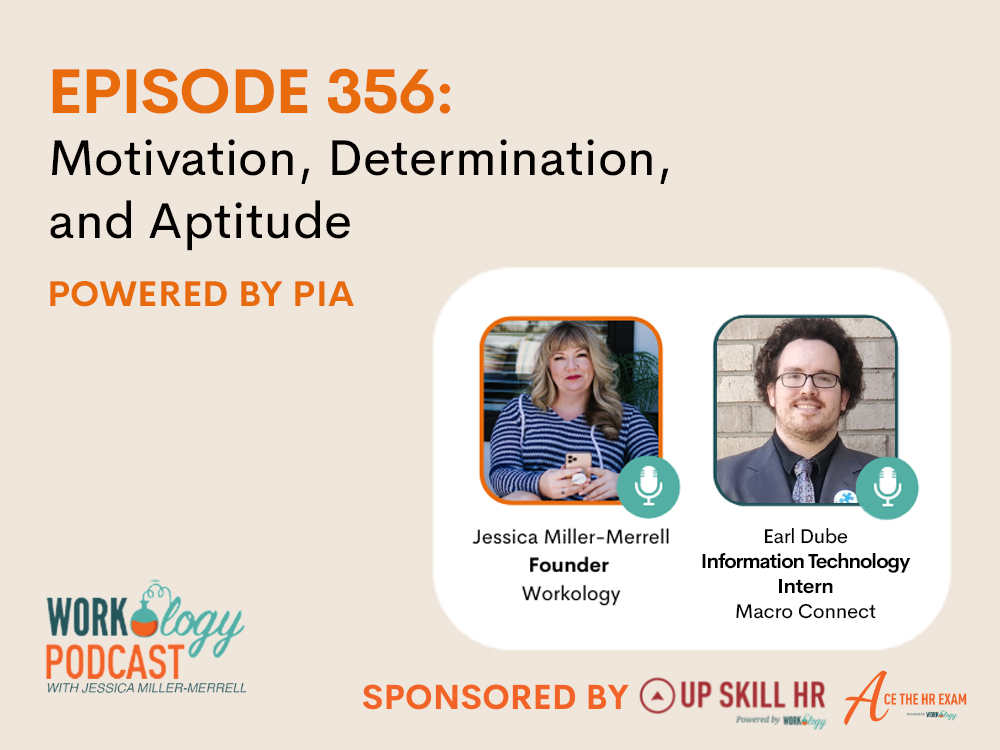
Episode 356: Motivation, Determination and Aptitude With Earl Dube, Information Technology Intern at Macro Connect

Don’t lie about yourself or embellish the truth just to make people think better of you despite your disabilities. I spent half my life lying about myself to avoid being judged because of my neurodiversity, and sometimes I wish I trusted people more to treat me equally. Episode 356: Motivation, Determination, and Aptitude With Earl […]

The post Episode 356: Motivation, Determination and Aptitude With Earl Dube, Information Technology Intern at Macro Connect appeared first on Workology.

First-Time Jobless Claims Hold at 229K

?States reported that 229,000 workers filed for new unemployment benefits during the week ending June 11, a drop of 3,000 from the previous week’s revised level. The number of workers continuing to claim unemployment benefits—1.3 million—is still well below the pre-pandemic average of 1.7 million.

Jobless claims have remained near pre-pandemic levels since early this year, as employers have generally avoided laying off workers given historically high demand, though it is being reported that some layoffs are starting to occur in a variety of sectors due to slowing business growth and rising labor costs.

The unemployment rate held at 3.6 percent in May, close to what is considered full employment. And the U.S. labor market overall remains strong, but is showing some initial signs of cooling. U.S. employers added 390,000 jobs in May—a robust gain that also was below the average monthly pace of growth over the past year.

Supreme Court Permits Mandatory Arbitration of PAGA Claims

The U.S. Supreme Court clarified on June 15 that companies can compel arbitration of an employee’s individual claims regarding labor code violations.

In its ruling on Viking River Cruises v. Moriana, the Supreme Court preempted a California rule that allowed workers to go to trial with their claims under California’s Labor Code Private Attorneys General Act of 2004 (PAGA).

In PAGA claims, individuals can sue a former employer as an agent or proxy of the state. They can bring representative claims, or nonindividual claims, which involve violations that happened to someone other than the plaintiffs.

The Supreme Court held that the Federal Arbitration Act preempts the California Supreme Court’s ruling in Iskanian v. CLS Transp., which invalidated contracts that waive an individual’s right to file lawsuits alleging PAGA claims.

The Supreme Court did not nullify the plaintiff’s right to sue in a representative capacity. It remanded the plaintiff’s case back to the trial court and ordered its dismissal, based on a lack of standing under PAGA.  

“The U.S Supreme Court delivered a stunning victory to employers seeking to enforce employment agreements requiring that their employees arbitrate on an individualized basis,” said Richard Silberberg, an attorney with the law firm Dorsey & Whitney in New York.

The decision shows that the court “remains committed to the enforcement of arbitration agreements, even those that include contractual waivers by employees and other potential claimants of class or collective procedures,” he added.   

Five justices supported the full majority opinion, and three others agreed in part. Justice Clarence Thomas dissented.

Legal Background

The state passed PAGA in 2003 to permit individuals to sue under the California Labor Code for civil penalties that were previously only recoverable by the state.

The penalties for violating PAGA are $100 for each aggrieved employee per pay period for the initial violation and $200 for each aggrieved employee per pay period for each subsequent violation.

The plaintiff in this case signed a mandatory arbitration agreement that stated she could not bring a class action against the employer. She sued over labor code violations for herself and others.  

Later, California courts denied the employer’s motion to compel arbitration of the plaintiff’s PAGA claims. They concluded the employer wanted to use arbitration as a shield to avoid PAGA claims.

The case raised the question of whether individual claims can be separated from representative claims.

In today’s ruling, the Supreme Court “found that under PAGA, a plaintiff has standing to maintain non-individual PAGA claims in an action only by virtue of the fact that she is also asserting an individual PAGA claim in that action,” Silberberg pointed out.

Therefore, the plaintiff’s representative PAGA claims had to be dismissed once it was determined that she had to arbitrate her individual PAGA claim.

“For now, a PAGA claim cannot survive an agreement to arbitrate because the employee’s individual PAGA claim would have to be arbitrated, and the employee would then lack standing to assert representative PAGA claims on behalf of others in court,” Silberberg said. “But it is highly unlikely that today’s rulings will doom PAGA claims altogether.”

Today’s ruling might “invigorate legislative efforts to amend PAGA to re-establish the viability of a representative PAGA action that could survive FAA preemption,” he added. 

Subscribe to our Newsletter