D.C. Council Passes Bill Protecting Marijuana Users

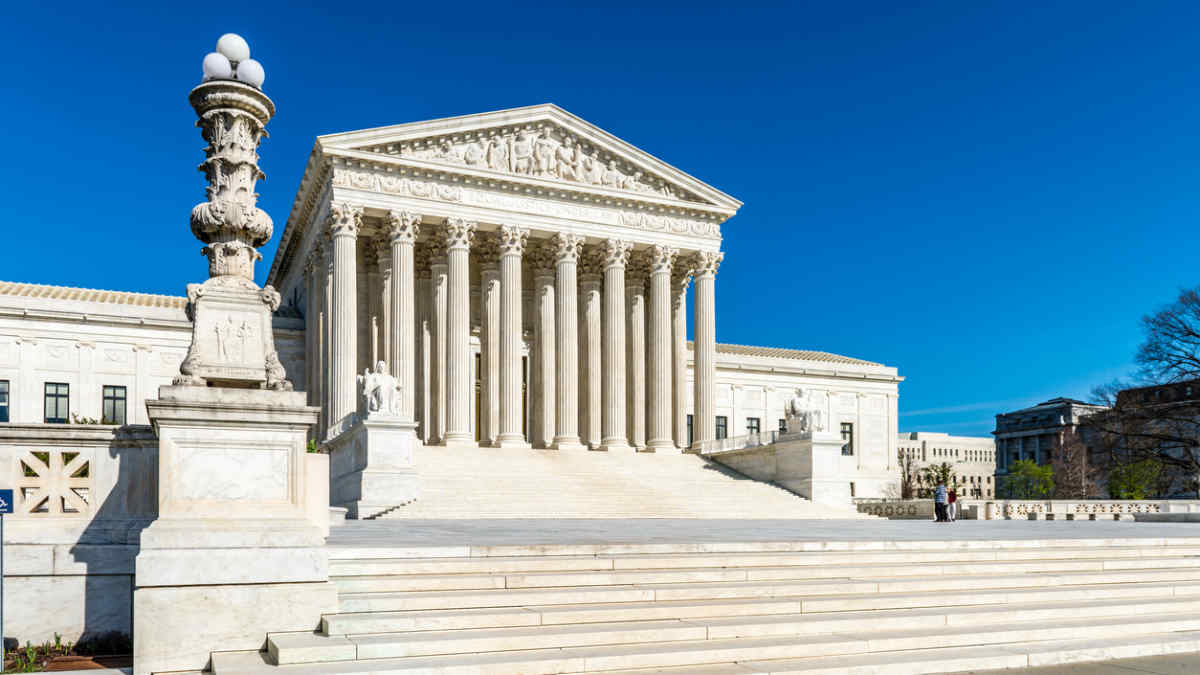
?Private-sector employers in Washington, D.C., will not be allowed to fire workers or refuse to hire applicants who test positive for marijuana use, with some exceptions, under a law passed by the D.C. Council on June 7.

Recreational marijuana use has been legal in the city since 2015, and council members said they believe no worker should be fired for using a legal substance. Marijuana is still considered illegal under federal law.

The bill has been sent to D.C. Mayor Muriel Bowser for approval. If she signs it, it will become law after a 60-day congressional review.

We’ve rounded up resources and articles from SHRM Online and other trusted outlets on the news.

Exceptions

The new law makes exceptions for workers in safety-sensitive jobs, including operators of heavy machinery, construction workers, police and security guards, and medical professionals.

It also will not apply to federal workers nor to employees caught using or possessing marijuana on the job.

(The Washington Post)

State Law Trends

Growing acceptance of marijuana use in recent years has led to the proliferation of state laws legalizing medical and recreational cannabis consumption, as well as a push for employment protections for off-duty use. Here’s what employers need to know about evolving marijuana laws and their impact on the workplace.

(SHRM Online)

More Workers Are Testing Positive for Marijuana

The percentage of U.S. workers who test positive for marijuana continues to climb higher as more states legalize the drug for medical and recreational use.

(SHRM Online)

What Are Safety-Sensitive Jobs?

As employers grapple with evolving marijuana laws and their impact on the workplace, they should note that many states that provide employment protections for cannabis users have exceptions for workers in safety-sensitive roles. But what exactly is a safety-sensitive job?

(SHRM Online)

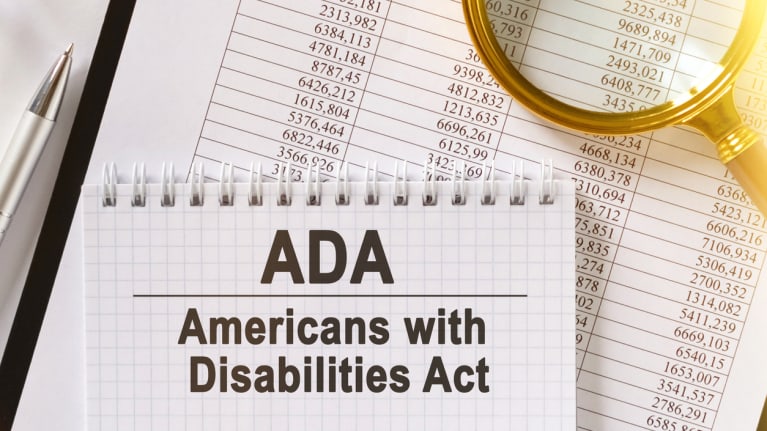
Court Cases Show Mistakes to Avoid in ADA Compliance

?Staying compliant with the Americans with Disabilities Act (ADA) presents various challenges for employers, and these challenges have only increased in the last two years during the COVID-19 pandemic. There’s a lot of complexity in determining what’s a covered condition and what’s an essential job function.

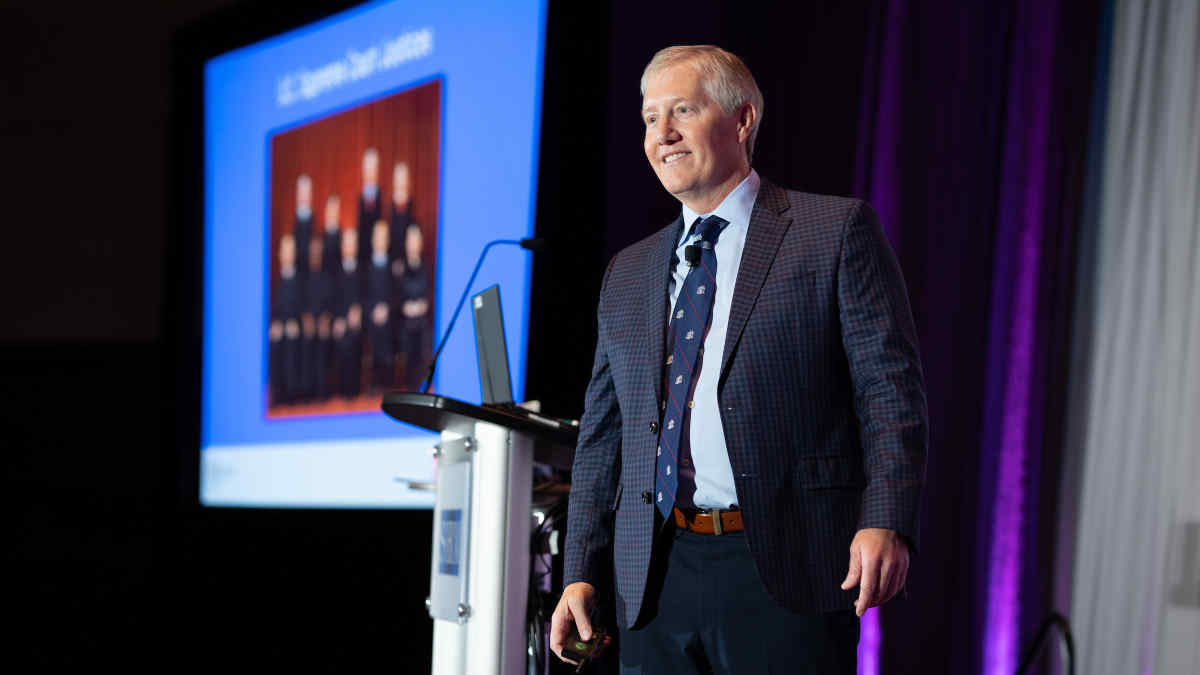
Louis Richard Lessig, a lawyer with Brown & Connery in Westmont, N.J., discussed some illuminating ADA cases at the SHRM Annual Conference & Expo 2022 in New Orleans and virtually on June 14.

Two of the biggest problems are employees who want the HR professional to be a psychotherapist, and managers who don’t care or know the right way to communicate with employees who come in with ADA accommodation requests, Lessig noted.

“The very things you’re worried about are the very things the ADA was designed to help,” he added. “The challenge is, there [are] people in your organization who don’t listen or don’t take the time.”

Remember that employers must offer reasonable accommodations by engaging in an interactive process with the employee, but the employee also must participate in this process.

“We all know that sometimes employees just want what they want, even if you make them a legitimate offer that’s reasonable,” Lessig said. “Just because it [the accommodation] doesn’t work doesn’t mean you’ll get tagged, so you shouldn’t be afraid. If an employee is not going to meet you halfway, you don’t have to do squat. It’s true.”

Even if an employee qualifies for an accommodation under the ADA, the employee must be able to perform the essential functions of the job with or without the accommodation. Being able to drive to and from work doesn’t necessarily count as an essential job function.

“There’s a distinction between the essential functions of your job and your desire to get home after you’re no longer on the property,” Lessig quipped.

Access to the workplace is the employer’s responsibility, however.

Lessig recalled a case involving an employee who got caught in the worksite’s revolving door with a man, and it triggered her claustrophobia and post-traumatic stress disorder. She asked to be able to use the regular doors, even though the employer required all employees to use the revolving doors. The employer put an emergency alarm on the regular doors and locked them. She asked again to use the regular doors, and the employer said no. She filed suit, and the court ruled in her favor. An employer cannot block access to the workplace by denying a reasonable accommodation.

Foster Clear Communication

Many medical conditions are invisible, which makes the situation more challenging for managers and HR professionals. But clear communication can solve that problem.

“Write stuff down,” Lessig advised. “The ‘he said/she said’ is fine in any other case, but in an ADA case, the way we protect you is to write stuff down. Centralizing this stuff is a good thing. Why? Because your line managers have no clue.”

You might not know much about a medical condition that an employee discloses to you. Ask questions about the person’s symptoms, treatments and needs.

These cases “are very individualized,” Lessig said. “If you don’t know, you have to ask. This is not a guessing game. There’s no reason to not seek clarity.”

He recalled a case where an employee’s doctor recommended cannabidiol (CBD) cream for an arthritis-like condition. The employer had a policy stating employees can be called for a random drug test, and they must disclose in advance if they have a medical condition and a doctor’s order for a drug like marijuana. Otherwise, the presumption is the substance is being used illegally.

When this employee was asked to complete a drug test, it turned out positive, and the employer fired her. She sued, but the case was dismissed by the court. The employer had a right to expect her to fully disclose her use of CBD cream.

“This is an issue you’re all dealing with,” Lessig said. “We can’t make this stuff up, and our employees don’t get it. Some of it is we need to teach them.”

Another mistake employers make is to fire a worker even after they’ve cooperated with the employer’s policy.

Lessig described a case involving an HR generalist who got a biopsy to look for bone cancer. Because the biopsy was invasive and caused lingering pain, she was out of work for a couple of months.

Then the senior vice president of HR said she was beyond her maximum 12 weeks of leave under the Family and Medical Leave Act and fired her. The employer lost at the appellate court, which found that the employee had handled everything correctly and disclosed everything that was going on.

Getting fired like that “is not supposed to happen to people in HR,” Lessig noted.

Don’t Do Nothing

Another case revealed how doing nothing can cause legal trouble. This case involved three deaf individuals who applied to be cashiers at a supermarket. The store manager called them for interviews, and they said they needed an American Sign Language interpreter for the interviews. They received no response from the manager, Lessig said.

The U.S. Equal Employment Opportunity Commission (EEOC) sued on their behalf, and the employer had to pay $280,000 to settle the claim out of court last year. 

In this situation, the employer was obligated to pay for an interpreter. Should an employer also install assistive technology that a deaf employee needs? Employers can always provide accomodations even when they are not legally required to.  

Mental health comes up often in ADA claims. In one case, a firefighter retired because of anxiety and depression from the job. He applied to work as a driver for a transit authority. After he was on that job for a while, the union president made comments suggesting “the guy is crazy, and you should avoid him.”

The employee asked to be a bus refueler and washer, but the employer fired him.

He sued the employer, claiming it fired him because it perceived him to be mentally ill. The employer told the court it didn’t know about the employee’s mental health diagnoses. The court did not believe that the employer was unaware of the union president’s comments, and it ruled against the employer.

Lessig recalled another case involving mental health. A chief financial officer started having suicidal thoughts. He told his boss that he needed to take time off, and the boss told him to take whatever time he needed to get better. He was out of work for a few months and went to talk to his boss about coming back to work. The boss said, “I can’t trust you. You’re fired.” The EEOC sued the employer, and the employer had to pay $250,000 to settle the claim out of court.

HR professionals can’t always make managers do the right thing, but by educating managers before employees ask for accommodations, “we can sure fix it, sort of,” Lessig said.


California Bill Would Require Pay Range in Job Ads

?A proposed bill in California would make pay more transparent. Under the bill, employers with 15 or more employees would have to include pay range in all of their job postings and publicly report how much certain groups of employees are paid.

“I give the bill a moderate chance of passing,” said Anthony Zaller, an attorney with Zaller Law Group, based in El Segundo, Calif. “If passed, it would be one of the strongest pay transparency laws in the country. Not only does the bill require employers to report wages for employees across race, gender and position in the company, it also proposes to publish each employer’s information on the Internet.”

“It seems to be moving through the Senate quite quickly, but it does have quite far to go before the governor signs it,” said Laura Reathaford, an attorney with the law firm Lathrop GPM, based in Los Angeles.

If it passes, HR professionals would need to implement a consistent protocol to ensure that job ads reflect accurate pay scales. “It will be important for HR professionals to have a compliance system in place to review and approve all job ads to ensure they are legally compliant,” Zaller said. “It will also be important to have records of the ads placed and retain these records for the time period required by the bill.”

That means HR professionals should document pay history for each employee for the duration of their employment plus three years after the employment ends.

This effort toward pay transparency is meant to help employers to detect and avoid discriminatory pay patterns.

It’s still unclear whether the proposed law in California would impact salary negotiations with job applicants.

“While it sets a range for the negotiations and gives employees an idea of what the position pays, the ranges could be large, and many employers are currently posting wage expectations to attract qualified employees,” Zaller said. “Moreover, California law already prohibits employers from asking employees about prior salary history.”

“Job applicants do not apply for jobs simply because the salary range has been disclosed. They apply for jobs where the salary and wages are competitive,” Reathaford said. “Therefore, I think one effect[KK1]  this law will have is that employers may be pressured to offer higher wages because the salaries and wages of their competitors will be more robust and accessible.”

Similar Bill in New York

The New York State Legislature recently passed a similar bill that would require employers with four or more employees to include salary ranges in their job ads. Gov. Kathleen Hochul has not signed it yet.

New York City has a similar pay transparency law that will take effect on Nov. 1. The New York City Commission on Human Rights recently released guidance to clarify that the law applies to both internal and external job postings. Bonuses, stock, benefits, overtime pay and commissions are not included as salary.

Although employers in New York City won’t be fined if they correct a first violation within 30 days, they may have to pay civil penalties of up to $250,000 for any subsequent violations.

Pay Data Reporting

California’s proposed bill would require private employers with 100 or more workers to submit a pay data report to the state’s Department of Fair Employment and Housing. The report must include the number of employees by race, ethnicity and sex in these job categories:

  • Executive- or senior-level officials and managers.
  • First- or mid-level officials and managers.
  • Professionals.
  • Technicians.
  • Sales workers.
  • Administrative support workers.
  • Craft workers.
  • Operatives.
  • Laborers and helpers.
  • Service workers.

The pay data report also must include the number of employees by race, ethnicity and sex whose annual earnings fall within each of the pay bands used by the U.S. Bureau of Labor Statistics in the Occupational Employment Statistics survey.

Employers with multiple establishments would have to submit a report for each establishment. Failure to provide a report each year could result in a fine of $100 per employee.

The state will publish these annual pay reports on a website that the general public can view.

Ultimately, preventing discrimination is the purpose of this record-keeping.

“The underlying goal is to have employers evaluate any pay disparities within their organization, specifically along racial or gender lines. The law is meant to encourage compliance with equal pay and anti-discrimination laws. If companies and HR professionals keep this goal in mind, the reporting obligation should be less of a concern,” Reathaford said.

The Importance of ‘Quiet Men’ at Work

?Dharmesh Shah is a self-professed lifelong introvert.

Shah, co-founder of software company HubSpot in Cambridge, Mass., is quieter than most. He doesn’t take phone calls, avoids networking in the traditional sense and goes somewhere quiet to “recharge” after social gatherings.

He also has a keen ability to empathize. He can observe what motivates his employees, what makes them happy and what makes them successful in order to craft a positive company culture.

Shah was one of several “quiet men” discussed by Jennifer Kahnweiler, Ph.D., a speaker and author, and Ed Frauenheim, the co-founder of San Francisco-based consultation firm The Teal Team, in their concurrent session “Quiet Men: Tapping Male Introverts’ Superpowers,” on June 14 at the SHRM Annual Conference & Expo 2022 in New Orleans.

“Some people think an introverted leader is an oxymoron,” said Kahnweiler, author of Creating Introvert-Friendly Workplaces: How to Unleash Everyone’s Talent and Performance (Berrett-Koehler Publishers, 2020). “How can you be a leader and be quiet? But some very successful people have been quiet men.”

Kahnweiler said famous, successful figures who fit the label include late TV personality Fred Rogers, Apple CEO Tim Cook and former President Barack Obama, each of whom leveraged their introversion and calm demeanors to change the world.

Why Now Is the Time for Quiet Men

Quiet men are introverted males who draw strength from solitude. They have been historically undervalued, marginalized and even shamed for their introversion by Type A, more aggressive male leaders.

Some challenges quiet men have faced in the workplace include:

  • Being seen as passive.
  • Having their ideas overlooked.
  • Underselling themselves.
  • Being exhausted by “man rules.”

But Frauenheim, co-author of Reinventing Masculinity: The Liberating Power of Compassion and Connection (Berrett-Koehler Publishers, 2020), said introverted men are uniquely suited to today’s faster, fairness-focused business climate. For example, the emergence of the #MeToo and Black Lives Matter movements have placed a greater emphasis on equality and diversity in the workplace.

“Men, especially white men, are [being] asked to listen more than speak,” Frauenheim said. “They’re asked to have power with others, not over others. Quiet men are better equipped to do this than extroverted men.”

The COVID-19 pandemic has led to increased mental health problems worldwide. During this time, introverted individuals have experienced growing success and appreciation for their ability to:

  • Build relationships.
  • Advocate for others.
  • Stay calm.
  • Listen with engagement.
  • Think deeply about problems or situations.

“Quiet men are good at advocating for others,” Kahnweiler added. “They check in with people about their lives.”

Frauenheim noted that extroverted men have their own set of strengths, including the ability to forge connections with large numbers of people. But he noted that “the time now calls for a more balanced male that doesn’t fit into that Type A personality.”

How Organizations Can Support Quiet Men

Kahnweiler and Frauenheim said being introverted doesn’t necessarily mean someone is being cold or distant. Instead of judging introverted employees, business leaders and HR professionals should show support and avoid shaming them for their dispositions.

Managers should consider:

  • Starting conversations with these workers.
  • Spotlighting quiet leaders.
  • Sponsoring employee resource groups for quiet employees.
  • Creating designated quiet spaces.

It could also be helpful to incorporate periodic quiet times for employees, particularly workers who are introverted, Kahnweiler said. Taking breaks to recharge their internal batteries can support the mental health of quiet people and improve their performance.

“If we can amplify voices of quiet men and utilize their talents,” Kahnweiler explained, “then we are helping organizations and we are making a difference in the world.”

Supreme Court Decides Important Cases on Arbitration

?The U.S. Supreme Court recently handed down some important decisions affecting employers in many ways, and there’s more to come. Arbitration has been a recurring theme lately.

Joseph Beachboard, an attorney with Ogletree Deakins in Los Angeles, gave an overview of recent Supreme Court cases and what’s likely to come up next in the court. He spoke at the SHRM Annual Conference & Expo 2022 in New Orleans and virtually on June 13.

“There have been some very important rulings for employers over the last two years,” he said. “There’s also a few important cases still pending before the court.”

All eyes have been on the anticipated overturning of Roe v. Wade, but there are other employment-related decisions to watch out for.

On June 15, the court decided Viking River Cruises v. Moriana, clarifying that employers can require employees to settle certain claims through arbitration.

California’s Private Attorneys General Act (PAGA) allows employees to sue on behalf of the state to recover penalties from employers for violations of California’s Labor Code. In this case, the company sought to compel arbitration of PAGA claims, based on an arbitration agreement. Lower courts found that the PAGA claims could proceed in court, and the company appealed to the Supreme Court.

In California, especially, “I do think arbitration agreements make a lot of sense,” Beachboard said. “They do save on costs. They do result in quicker decisions. I do think they’re fair …. If we can resolve cases and move on, that’s usually better for everybody. That’s my practical view on it.”

Public employers may be especially interested in Kennedy v. Bremerton School District, which the court is expected to rule on soon. The case will clarify whether a public school can prohibit an employee from saying a prayer while at school and visible to students. The question is whether that qualifies as protected religious expression or government speech that lacks First Amendment protection.

Other Recent Rulings

In the last two years, several employer-related cases were decided in the nation’s highest court—sometimes in favor of employers, but sometimes not.

In January, the court ruled in Hughes v. Northwestern University that employers must weed out retirement plan investment options that are too numerous, too expensive or underperforming. There’s now a “duty to protect your employees by monitoring and removing choices that have excessive fees or consistently underperform,” Beachboard said.

In a different case, Badgerow v. Waters, the Supreme Court ruled in March that the federal courts generally should not be involved in approving or rejecting arbitration damages.

Another ruling came on June 6, when the Supreme Court ruled in Southwest Airlines v. Saxon that employees cannot be forced to settle claims in arbitration if they are directly involved in interstate or international commerce. It held that the plaintiff did not have to arbitrate her wage claims because she sometimes loaded and unloaded cargo from airplanes, helping to transport goods across borders.

“The concern here is somewhat overstated,” Beachboard said. “The court’s ruling was quite narrow.” It does not apply to all airline workers.

Looking Ahead

Looking to the future, Beachboard expects to see the Supreme Court make significant judgements on these topics:

  • Marijuana use by employees.
  • Pay equity and pay transparency.
  • COVID-19-related claims and accommodations.

“There is going to be a lot of litigation about COVID,” Beachboard said. “There really is a lot of that [that] employers just aren’t realizing is coming their way.”
About 6,000 COVID-19-related claims are moving through the U.S. Equal Employment Opportunity Commission right now, he estimated.
He acknowledged the increasing divisions in the country, especially over matters related to the Supreme Court.
“Over the last 30 years, I haven’t seen the kind of attention on the Supreme Court as we’re seeing now, and in my opinion, it’s not a good thing,” Beachboard said. “The emotional reaction that I see people have is not something I ever recall. The Supreme Court is politics now. The Supreme Court is emotion, and we’re divided.”

In recent years, two justices have died, and two retired, leading to significant changes in the makeup of the group of nine. Judge Ketanji Brown Jackson will soon be the latest to join the ranks of the justices.

Learn to Schedule Your Priorities

?”Busy does not equal results,” admonished Julie D. Burch during her laughter-filled, standing-room-only concurrent session at the SHRM Annual Conference & Expo 2022 in New Orleans on June 13.

“It’s about [being] efficient, effective and productive” and thinking about how we spend our time. “We do not find time in big chunks. We find it in small pieces—it’s minutes here and minutes there,” she pointed out during her presentation, “Crash Course to Effectiveness: Time Management for the Overworked, Overstressed and Overwhelmed.”  

Burch is an author, training and development expert, and president of Julie Burch Speaks, based in Flower Mound, Texas.

People tend to fall into one of four destructive time-management styles, she said:

  • The Busy Bee. This person has their hands in everything, doing a little bit of everything and finishing nothing.
  • The Fire Chief. This person is constantly reacting to the next crisis, taking care of everyone else while not getting their own work done.
  • The Superhero. This person zooms in with good intentions to help others, leaving little time for their own tasks. “The reality is, the superhero is super-stressed,” Burch said.
  • The Procrastinator. This person is always in deadline mode. People typically procrastinate by diverting their time to less important tasks, rationalizing “it’ll just take 10 minutes.” Pretty soon, all those 10 minutes add up and there is no time left to tackle the big project, which gets pushed aside.

Tips and Techniques

“Everybody only gets 24 hours in the day. If we’re going to invest our time in something, it needs to be a good investment of our time. Pay attention to what you’re spending your time on,” Burch advised.

She shared the following recommendations for how to do that:

Batch. Perform similar tasks together and at regularly scheduled intervals.

Break tasks into small pieces.

Be accountable. Tell someone else what you plan to work on today, and then have them check in with you later to ask if you followed through with your intentions.

Reward yourself when you accomplish a task.

Create two to-do lists—a master list extending far into the future and a focused daily to-do list. Use them to prioritize and track what you need to accomplish. “Learn to schedule your priorities, not prioritize your schedule,” Burch said. Consult your master list and daily list first thing in the morning, and update the daily list throughout the day. As you tackle your list, ask yourself this power question, Burch advised: “Is this a ‘today’ task or an ‘after-today’ task? If today, it goes on the focused to-do list.”

Establish a weekly block plan on how you will use your time. Chip away at a large goal, for example, by dedicating time for it on your calendar, closing your door and treating that time as inviolate. “We bounce from thing to thing, reacting to the urgent demands of others. Learn to set boundaries. It’s not about telling people ‘no,’ it’s about telling people ‘yes … later. I’m happy to help you. Here’s when [I’m available],’ ” she advised.

Take action. “You can’t spend your whole day saddlin’ up and not riding,” Burch said, invoking a Texas saying.

Jennifer Costa, HR manager at Roots Community Health Center, an Oakland, Calif.-based company with 200 employees, said these tips will help her prioritize at work.

“There’s a project I’ve been putting off that I’m [now] looking forward to tackling,” she said. “It’s a handbook I’ve been putting off for a year.”

High Court Rules on Federal Arbitration Act’s Application to California PAGA Claims

Members may download one copy of our sample forms and templates for your personal use within your organization. Please note that all such forms and policies should be reviewed by your legal counsel for compliance with applicable law, and should be modified to suit your organization’s culture, industry, and practices. Neither members nor non-members may reproduce such samples in any other way (e.g., to republish in a book or use for a commercial purpose) without SHRM’s permission. To request permission for specific items, click on the “reuse permissions” button on the page where you find the item.

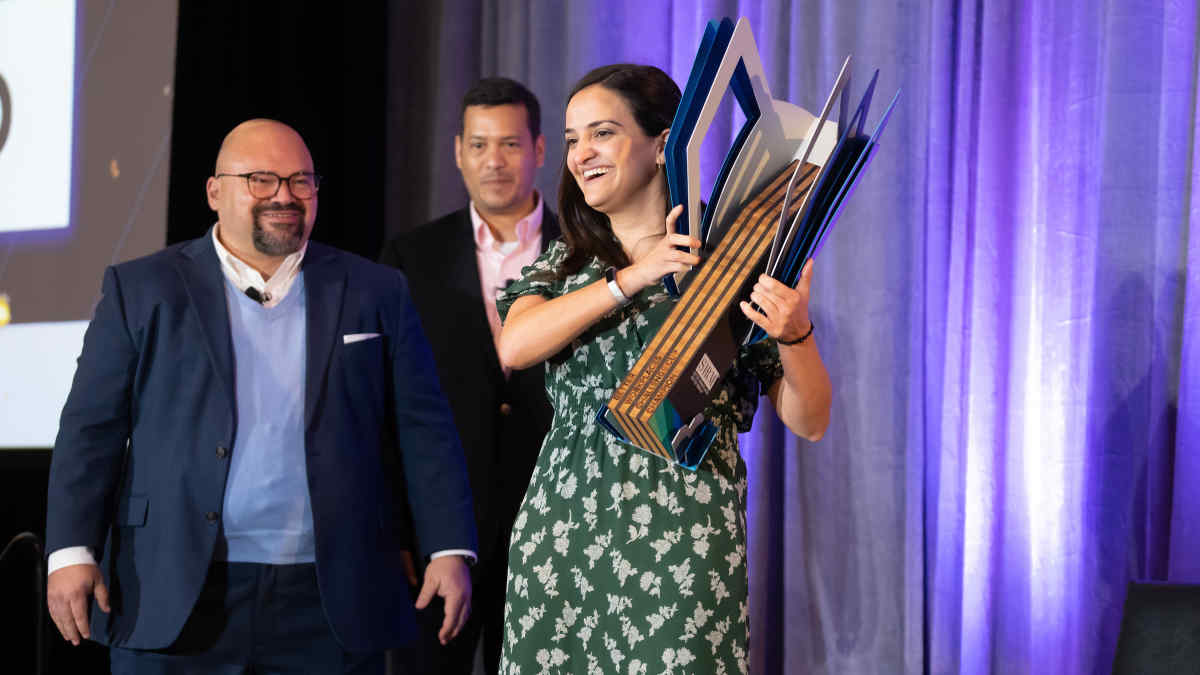
Vinco Wins SHRM’s 2022 HR Technology Startup Competition

Vinco, an education-technology company based in Monterrey, Mexico, won the second annual SHRMLabs Better Workplaces Challenge Cup (BWCC). The announcement was made June 14 at the SHRM Annual Conference & Expo 2022 in New Orleans.

SHRMLabs is the workplace innovation hub and venture capital arm of the Society for Human Resource Management (SHRM). The competition aims to bridge the gap between companies that are creating workplace technologies and the end users of their products: HR professionals and their workforces.

“We would like to congratulate Vinco and all the finalists for their ingenuity in the human resource field,” said Alex Alonso, chief knowledge officer at SHRM. “As the HR field continues to evolve, we need to be able to innovate and adapt to the new landscape. This competition has proven a win for connecting investors and inventors to promote creative solutions.”

Vinco co-founder and CEO Lissy Giacomán and three other BWCC finalists presented their final pitches at the conference in front of a panel of judges, including Cindy Eckert, an entrepreneur and the CEO of The Pink Ceiling, which invests in companies founded by women; and Kevin Harrington, an entrepreneur and Original Shark on the ABC TV show “Shark Tank.”

Giacomán recently spoke with SHRM Online about Vinco, and how it improves work and the practice of human resources.

“Vinco serves as a bridge between employers seeking to upskill and retain their workforce, working adults who want to earn credentials, and educational institutions looking to drive their enrollment online,” she said. “We make it easy for HR teams to upskill their employees at scale, and we do so by connecting their employees with more than 2,000 top educational programs for working adults and by providing personal coaches to help workers be successful students, all while improving employee retention and productivity.”

Giacomán added that there are more educational programs available, especially online, but that access to these programs is not equitable. “At Vinco, we focus on helping historically underserved and undereducated populations, the operational base of companies, to connect with more and better educational opportunities and prepare the workforce for the jobs of the future,” she said.

Vinco was awarded a cash prize of $50,000.

Narrowing the Field

The four finalists were selected from over 150 initial submissions. The three-round competition kicked off with 10 virtual first rounds beginning in February. The top two startups from each of the first rounds competed in the semifinals in May. The 20 semifinalists represented innovations in areas such as benefits usage; diversity, equity and inclusion (DE&I); employee experience; hybrid and remote work; people analytics; and career development. At each round innovators presented to a panel of judges composed of HR practitioners and business executives.

“Each year, I can’t help but be inspired by the next generation of innovators bringing skills to the market,” said Guillermo Corea, managing director of SHRMLabs. “The solutions being presented today have real-world impact, and we’re serving as a platform to make that effect even bigger. Congratulations to all the competitors for their work.”

In addition to Vinco, the SHRMLabs 2022 BWCC finalists included:

  • Automation Workz: An app that motivates upskilling and reskilling for front-line workers, based in Detroit.
  • Included: A platform that operationalizes and scales DE&I, based in Redmond, Wash.
  • Inclusivv: An engagement platform that facilitates conversations, based in Atlanta.

The application process for the 2023 Better Workplaces Challenge Cup contest will open later this year.

Reminder: PCORI Fee Is Due Aug. 1 for Self-Insured Health Plans

At the end of last year, the IRS raised the fee that insurers or sponsors of self-insured health plans pay annually to fund the federal Patient-Centered Outcomes Research Institute (PCORI) trust fund. The new fee is $2.79 per covered person, with other fees described below.

The fee is typically due on July 31 each year, but for 2022, the fee is due Aug. 1, as July 31 falls on a Sunday this year.

The fee applies to health plans for the preceding calendar year. According to IRS Notice 2022-04, the annual fee adjustments are as follows:

  • For plan years that ended on or after Oct. 1, 2021, and before Oct. 1, 2022 (including calendar year plans), the fee is $2.79 per person covered by the plan—employees and dependents—up from $2.66 a year earlier.
  • For plan years that ended on or after Oct. 1, 2020, and before Oct. 1, 2021, the fee is $2.66 per person, up from $2.54 the year before.

However, according to a March 4, 2022, update of the IRS Q&As on PCORI fees:

  • After Sept. 20, 2021, and before Oct. 1, 2022, the applicable dollar amount is $2.79.
  • After Sept. 30, 2020, and before Oct. 1, 2021, the applicable dollar amount is $2.66.

Self-insured employers pay the annual PCORI fee directly to the IRS. For fully insured employers, the fee is paid by the insurance provider, although the cost may be factored into premium increases.

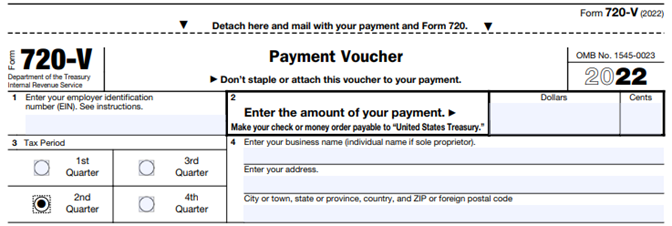
Fees are reported and paid annually with the submission of IRS Form 720 (Quarterly Federal Excise Tax Return), and are due by July 31 of the year following the end of the plan year, unless that date falls on a weekend or federal holiday.

PCORI_720_Form.png

Fee Applies Through 2029

The Affordable Care Act created the fee to fund a Washington, D.C.-based institute that conducts research on the comparative effectiveness of medical treatments. The fee was originally to apply only to plans with terms ending after Sept. 30, 2012, and before Oct. 1, 2019. However, as part of the Bipartisan Budget Act of 2019, annual PCORI filing and fees were extended for an additional 10 years, through 2029.

“The PCORI fee is calculated using the average number of lives covered under the policy or plan and the applicable dollar amount for that policy year or plan year,” explained William Sweetnam, the legislative and technical director at the Employers Council on Flexible Compensation in Washington, D.C. “The applicable dollar amount was $2 when the fee was enacted as part of the Affordable Care Act, and that amount is increased annually based on increases in the projected per capita amount of national health expenditures.”

Calculating PCORI Fees

The IRS provides self-insured employers with options for determining the average number of plan enrollees, which the IRS refers to as covered lives—employees, spouses and dependents covered by the health plan. According to the IRS, plan sponsors may use any of the following methods to calculate the average number of covered lives under the plan:

  • The actual count method. Plan sponsors add the total of lives covered for each day of the year, divided by the total number of days in the plan year.
  • The snapshot method. Sponsors add the total lives covered on one date in each quarter of the plan year.
  • The snapshot factor method. Similar to the snapshot method, the number of lives covered on any one day may be determined by counting the actual number of lives covered on that day or by treating those with self-only coverage as one life and those with coverage other than self-only as 2.35 lives.
  • The Form 5500 method. Plan sponsors use a formula that includes the number of participants reported on the Form 5500 for the plan year.

The IRS posted a chart showing the application of PCORI fees to common types of health coverage.

FSAs, HRAs and Other Benefits

Generally, health flexible spending accounts (FSAs) are considered excepted benefits and therefore do not require a Form 720 and PCORI fee payment “unless the employer—and not just the employee—makes contributions to it that exceed the lesser of $500 annually or a dollar-for-dollar match of the employee’s contribution,” said Gary Kushner, president and CEO of Kushner & Company, an HR strategy and employee benefits consulting firm in Portage, Mich. “In that event, those FSAs must also be included in filing the Form 720” with appropriate per-enrollee payment.

For health reimbursement arrangements (HRAs), employers should “first look at the integrated group health plan,” Kushner advised. “If the [health] plan is fully insured, then the employer must file the 720” and pay the fee for each employee with an employer-funded HRA. The fee is paid per employee, and spouses and children covered by the fully insured health plan are not included in the fee calculation.

“If, however, the underlying group health plan is self-funded, then no separate 720 need be filed for the integrated HRA, but rather, one filing and fee for the self-funded group health plan is due,” Kushner noted. In this case, the fee is calculated based on covered lives, not just employees.

While the insurance carrier is responsible for paying the PCORI fee for the fully insured medical plan, “the employer is responsible for paying the PCORI fee on the HRA,” wrote Karen Hooper, vice president and senior compliance manager at Newfront, an insurance and financial services firm in San Francisco. “The IRS is essentially double-dipping in this scenario by imposing the PCORI fee on the same lives covered by both the major medical and the HRA. In recognition of this, the HRA PCORI fee paid by the employer is determined by counting only one life per employee participating in the plan (and not dependents).”

The PCORI fee does not apply to health savings account (HSA) participants, as HSAs are individual accounts, not group health plans.

The fee also “does not apply to dental and vision coverage that are excepted benefits (whether through a stand-alone insurance policy or meeting the ‘not integral’ test for self-insured coverage),” Hooper explained, and “virtually all dental and vision plans are excepted benefits.”

Missed Payment Deadlines

“An employer that overlooks reporting and payment of the PCORI fee by its due date should immediately, upon realizing the oversight, file Form 720 and pay the fee (or file a corrected Form 720 to report and pay the fee, if the employer timely filed the form for other reasons but neglected to report and pay the PCORI fee),” advised Ethan McWilliams, a senior compliance analyst at Lockton, a benefits broker and services firm based in Kansas City, Mo.

Employers in this situation should be sure to use the form for the appropriate tax year.

“The IRS might levy interest and penalties for a late filing and payment, but it has the authority to waive penalties for good cause,” he noted.

Future Fees

The PCORI fee dollar amount is adjusted yearly to reflect inflation in national health spending, as determined by the Secretary of Health and Human Services (HHS).

“Due to the fact that [HHS] did not publish updated National Health Expenditures tables for 2021, this year’s fees are based on the projections set out in the 2020 tables,” according to a client alert by law firm Fraser Trebilcock in Lansing, Mich. “As such, plans should pay close attention to next year’s fee changes,” which could reflect multiple years of health care inflation.

[Need help with legal questions? Check out the new SHRM LegalNetwork.]

Mental Health Scholarship Honors Cheslie Kryst’s Legacy

?The SHRM Foundation announced the establishment of the Cheslie C. Kryst Memorial Scholarship at the SHRM Annual Conference & Expo 2022 in New Orleans on June 14. Two $10,000 scholarships will be awarded, one each to an HR student and an early-career HR professional who express and display a deep commitment to workplace mental health and wellness. 

Kryst, 30, died by suicide on Jan. 30. She was a Society for Human Resource Management (SHRM) speaker and friend of SHRM who majored in management with a concentration in human resources management. She was a complex civil litigator, Miss USA 2019 and correspondent for the TV show “Extra.”

“SHRM lost a very special friend and member of our family earlier this year,” said Emily M. Dickens, J.D., chief of staff, head of government affairs and corporate secretary at SHRM, during the morning general session.

“We will never forget Cheslie,” she told Kryst’s mother, April Simpkins, SHRM-CP, and  brother Chandler Kryst, who were in the audience as special guests of SHRM President and Chief Executive Officer Johnny C. Taylor, Jr., SHRM-SCP.

Simpkins is an HR consultant, CHRO at Totalhr, mental health advocate, past diversity director for the South Carolina SHRM State Council and active volunteer in the Carolinas Chapter of SHRM.

“[Kryst] lives on in our memories of her passion and her presence,” Dickens said, noting her “unwavering advocacy for criminal justice reform and her commitment to Dress for Success and Big Brothers Big Sisters of America.”

“She was a champion for our profession and a beautiful, kind person who touched the lives and hearts of so many people,” Dickens added. Kryst “remains an indelible inspiration for girls and young women, especially of color.” 

Applications for the scholarships will open in July, and the scholarships will be awarded Oct. 17 at the SHRM Foundation’s annual Tharseo Awards in Chicago to assist the recipients’ pursuit of their academic degrees. The Tharseo Awards, which the SHRM Foundation launched in 2021, honor leaders who serve as visionaries, innovators and change agents.

Scholarship applicants must demonstrate a track record of promoting mental health through practice or through their academic studies and write an essay on the significance of workplace mental health and wellness within their HR career. An external panel of judges will review applications, and the winners will be notified in September.

The scholarship announcement preceded the conference’s general session on “Shifting Mental Health Awareness into Action in the Workplace,” which was a discussion between SHRM Board Chair Melissa Anderson, SHRM-SCP, and Arianna Huffington, founder and CEO of Thrive, a behavioral change tech company based in New York City.

Subscribe to our Newsletter