
Tips for Addressing Burnout in the Workplace

?Robert Bogue, president of Indiana-based technology company Thor Projects, and Terri Bogue, the company’s chief operations officer, have both experienced burnout in their lives. They’ve dealt with high levels of stress that created personal and professional challenges for them.

Over time, they learned to manage their priorities to prevent the physical and emotional exhaustion that leads to burnout.

“For instance, I’m a private pilot but I don’t fly because I don’t have time for that aspiration,” Robert explained. “You can do that with everything you have. Say, ‘I can’t do the family vacation. I can’t do this. The math doesn’t add up.’ “

On June 12, Robert and Terri led a concurrent session, “Extinguish Burnout and Ignite Engagement,” at the SHRM Annual Conference & Expo 2022 in New Orleans. The session aimed to equip workers, HR professionals and business leaders with the tools and techniques needed to help them prevent or recover from burnout.

“Burnout occurs when your internal fire is out and you have no more fuel left,” Robert said. “It can result in a negative attitude, a lack of productivity, high stress, a lack of teamwork and a negative transparency.”

Recent studies show that burnout is increasingly common in the U.S. Among workers surveyed in the American Psychological Association’s 2021 Work and Well-being Survey:

  • 79 percent experienced work-related stress in the month before the survey.
  • Nearly 60 percent reported negative effects of work-related stress, including a lack of interest, motivation or energy and a lack of effort at work.
  • 44 percent reported physical fatigue.
  • 36 percent reported cognitive weariness.
  • 32 percent reported emotional exhaustion.

“We have this perception of how much time we have to give different people in our lives,” Terri explained. “But sometimes we get out of balance with reality. Your perception of what you should be able to do might not match reality.”

5 Ways Employees Can Combat Burnout

A combination of family, work and social stressors can contribute to burnout, which can impact workers at all levels, including business leaders. Robert and Terri offered several ways in which workers can avoid or reduce burnout:

  • Change your attitude. Are you thinking about momentary challenges or the long-term results? Try to maintain an optimistic point of view when dealing with work challenges.
  • Reframe your perceptions. Robert explained that many people harbor false perceptions of the expectations others place on them. What beliefs do you accept as fact that are just your perceptions?
  • Give yourself some credit. Robert asked, “Would you let anyone talk to your best friend the way you talk to yourself? Probably not.” It is OK to give yourself a pat on the back for great work.
  • Focus on self-care. This includes maintaining a healthy diet, exercising regularly, taking mental health days and seeking professional support when needed.
  • Find ways to limit your demands. There are ways we can manage the demands we place on ourselves, Terri said. For example, why do we always say “yes”? It’s OK to admit when you cannot handle something, whether it is a work or personal task.

“We need to make sure our expectations, perceptions and results match,” Terri said. “When they don’t, that’s when we experience burnout.”

How Employers Can Help

Business leaders play a crucial role in helping workers avoid and overcome burnout, creating a positive work atmosphere and igniting engagement:

  • Recognize great work. Let your employees know when work is done well—and do not let them downplay the significance of their accomplishments.
  • Offer support. Create a culture in which seeking help is encouraged. In addition, proactively ask workers what you can do to help them perform their jobs better and avoid unnecessary stress.
  • Promote a healthy work/life balance. Life happens. Let your workers take time to deal with personal responsibilities. As Robert said, “It is important for a leader to demonstrate their own work/life struggles.”
  • Set realistic expectations. Robert emphasized the importance of placing realistic expectations on what a company’s workforce can accomplish and understanding that an increased workload may require changing deadlines for other projects.

“To prevent burnout, we as leaders need to engage with employees and give them a rest from time to time,” said Jamilu Dawaki, deputy director of HR for the Central Bank of Nigeria, who had traveled from Abuja, Nigeria, to attend the conference. “That will help them do their jobs better in the long run.”

In 2019, Robert and Terri released a book on preventing burnout, Extinguish Burnout: A Practical Guide to Prevention and Recovery (SHRM, 2019), that aims to help all workers deal with stress that can result in burnout.

Time for Nonprofits to Revisit Performance Management and Pay Strategies

Because not-for-profit organizations’ priorities often revolve around their social missions, their organizational cultures tend to differ from those of for-profit companies, including how they approach pay. But nonprofits shouldn’t dismiss the benefits of revamping their compensation strategies to tie pay to performance, advised Tracye Weeks, SHRM-SCP, team leader and senior consultant at San Francisco-based NonprofitHR, a Black women-owned human resources firm, and Tina Twyman, SHRM-SCP, a senior consultant in the firm’s total rewards practice.

Speaking June 13 at the SHRM Annual Conference & Expo 2022 in New Orleans, Weeks and Twyman said that the mission of many nonprofits is focused on social change or alleviating societal problems. But that doesn’t mean they can’t tie rewards to performance or “marry” compensation to performance management.

“Doing so can further the goals of rewarding people equitably and cooperatively,” Weeks said, and do more to enhance collaboration and trust between managers and workers than simply providing automatic, built-in raises or bonuses that are equally parsed out to staff.

Continuous Performance Management

Before shifting to performance-based pay, performance management may need to be “blown up and put back together,” Weeks said.

“Performance reviews aren’t fun,” at least not as they’re usually done, she said. Throw out yearly performance management appraisal programs and replace them with cyclical feedback conversations, she advised.

“Once-a-year reviews are dreaded by managers and employees,” whether they are in the nonprofit or for-profit space, Weeks noted. Instead, managers can check in weekly with their team members to ask if they’re overwhelmed or to share client feedback. Quarterly, organizations can review performance so that, come the end of the year, there is a record that can be reviewed against employee and team goals and rolled into pay budget decisions. “Make these professional development conversations,” Week urged.

“When leaders provide consistent coaching, engagement goes up,” Twyman said.

As for goal setting, it can be a collaborative exercise. “Meet in the middle and agree on terms aligned with organizationwide and team-level strategic priorities,” Weeks suggested.

Paying for Performance

Before linking pay to performance, Weeks and Twyman advised, organizations should update their job descriptions and benchmark staff salaries to the external market.

This can mean fixing issues around “title inflation,” where an employee may have been given the title of “director” in lieu of a raise, for instance, so that “you have directors with pay that isn’t in sync with market rates.”

Tie performance reviews to meaningful pay adjustments. “Everyone can’t be top performers,” getting 6 percent or higher raises when the average is 3 percent, Twyman noted.

That doesn’t mean pay shouldn’t be “equitable,” but it needn’t be “equal,” she said.

To ensure pay structures are fair, explain pay ranges and compensation strategies that link pay with market rates, with added incentives for top performers, whether that’s built into merit increases or incentive bonuses. Then communicate your pay philosophy on pay for performance.

“Tell a story by communicating your compensation philosophy,” Twyman advised.

Pay for performance also can mean paying employees for skills development, she said.

And if an organization decides not to link pay to performance, “find creative ways to reward and motivate staff,” Twyman recommended.

Through a DE&I Lens

Because of nonprofits’ social missions, they are more likely to view compensation philosophies through a diversity, equity and inclusion (DE&I) lens, the presenters said.

“Evaluate performance equitably, review staff data and identify pay inequity,” Twyman urged. “Calibrate performance pay increases” among various stakeholders. Evaluate feedback from employees and solicit the view of departing employees to bring to light hidden issues.

With continuous performance management in place and pay tied to performance, “ask whether supervisors are adequately prepared to explain and guide employees to success, and whether these processes are applied consistently across your organization,” Weeks said.

Doing so can foster higher employee engagement and retention, whether the organization is for-profit or not-for-profit.

Prudential Financial CEO Receives McGowan Ethical Leader of the Year Award

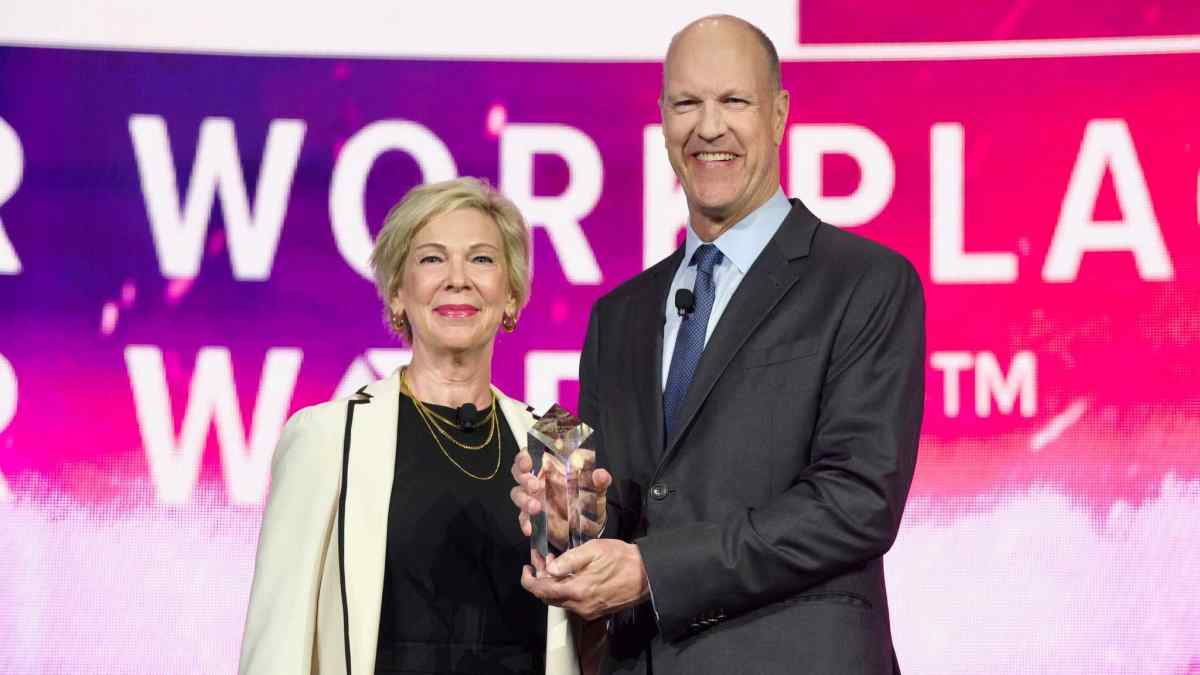
Charles Lowrey, chairman and CEO of Prudential Financial, is the winner of the inaugural William G. McGowan Ethical Leader of the Year Award.

Lowrey received a $25,000 cash prize to donate to a nonprofit of his choice. He will be giving the funds to the New Alliance in support of Prudential’s various community, education and workforce develop initiatives.

Diana Spencer, executive director of the McGowan Fund, which presented the award, recognized Lowrey during the June 13 general session at the SHRM Annual Conference & Expo 2022 (SHRM22).

The McGowan Fund initiated the William G. McGowan Ethical Leader of the Year Award to encourage principled leadership. Each candidate was nominated by a colleague, assessed by a selection committee of peers and evaluated on their ethical leadership.

“For the 115 million workers and their families to the 300,000 HR professionals represented by SHRM, we know that ethical leadership matters,” Spencer said. “Lives depend on it. Communities depend on it. Equity depends on it. The environment depends on it. Our world needs ethical leaders today more than ever.”

Under his leadership, Spencer said, Lowrey has made Prudential Financial “the company that people look up to as a role model for how to be highly successful in business and do so with values-based decision-making today.”

Lowrey has served as executive vice president and chief operating officer of international businesses at Prudential as well as executive vice president and chief operating officer of U.S. businesses. He also served as president and CEO of PGIM, Prudential’s global investment management business, and earlier as CEO of PGIM Real Estate.

Lowrey emphasized HR’s important role in creating a culture of ethical leadership.

“The example you set as leaders of people and as stewards of human capital can make all the difference,” he said. “Together, all of us can Cause the Effect. Each of you individually, in your own way, can Cause the Effect.”

“Cause the Effect” was the theme of SHRM22.

McGowan was an entrepreneur who headed telecommunications giant MCI for 24 years until his death in 1992. He launched the campaign that ended AT&T’s monopoly in 1984. The William G. McGowan Charitable Fund was established after his death to provide financial support to organizations that reflect the visions, concerns and life experiences of its benefactor.

Funds are distributed in grants for three program areas—education, human services, and health care and medical research—with priority given to programs that have demonstrated success, have measurable outcomes, plan for sustainability, and aim to end cycles of poverty and suffering.

“The SHRM Annual Conference & Expo is the largest convening of HR professionals in the world. We wanted to use this opportunity to showcase SHRM’s commitment to more than just the words, but the actions of ethical leadership,” said Johnny C. Taylor, Jr., SHRM-SCP, the Society for Human Resource Management’s (SHRM’s) president and chief executive officer, in a news release about the award. He was among the panel of judges who selected the award winner. 

“We at SHRM believe that better workplaces lead to a better world,” Taylor added, “and that it is important to use our stage to demonstrate HR’s dedication, as a profession, to ethical leadership.”

How Mass Shootings Are Putting Workplace Safety in the Spotlight

In the wake of a slew of mass shootings, which are characterized by four or more people getting injured or killed, many HR leaders are scrutinizing workplace safety plans. In 2022, the United States has experienced more than 250 mass shootings as of June, according to the Gun Violence Archive. This can be compared to 700 for the whole year in 2021, 611 in 2020, and 417 in 2019. 

REPORT: Employee Engagement and Experience for the Post-COVID World

In the Headlines

Recently, high-profile shootings at Tops Supermarket in Buffalo, New York and Robb Elementary School in Uvalde, Texas have gripped citizens and sent shockwaves across the nation. These tragedies sparked conversations about security and gun control. 

Another mass shooting in Maryland hit close to home for workers. Joe Louis Esquivel, 23, of West Virginia reported to work at Columbia Machine, Inc., an 80-year-old manufacturer of concrete products equipment in Smithsburg, Maryland, for a normal shift. He later retrieved a weapon from his vehicle and killed three people and injured one person in a rampage that began in the break room, according to USA Today.

READ: What Is Mental Health and Wellness in HR? 

On cable news, analysts began talking about how average citizens can protect themselves as best they can in the absence of common sense gun laws. Frank Figliuzzi, former federal law enforcement agent, stressed that HR professionals must anticipate how employees might react to news about layoffs, pay cuts, or getting fired. Noticing red flags and the potential for violence is yet another skill Human Resources must add to the toolbox. 

READ: CHROS: Welcome to the C-Suite

HR and Workplace Safety

Other incidents have also put workplace safety in focus. The Labor Movement began, in part, because of poor workplace conditions that led to fires and other hazards that endangered the lives of workers.

READ: Pros and Cons of Labor Unions

When the 9/11 attacks happened in 2001, security officers in offices in New York City followed protocol and forced office workers to remain in buildings – even on high floors – instead of having them evacuate. In the days after 9/11, security swiftly changed its plans and workers began evacuating immediately upon being alerted to bomb threats, which were common for weeks afterward. 

More recently, COVID-19 posed a health hazard to workers. Although some front-line workers had no choice but to report to work in an office, supermarket, manufacturing plant, or hospital, etc., HR leaders quickly devised plans and followed Centers for Disease Control (CDC) guidelines to enforce mask wearing, social distancing, and good hygiene. Some had staggered schedules, so fewer people would be inside together at the same time. Just about everyone had plans for disinfecting the office. Later, they encouraged vaccination.

Now, the shootings are cause for concern. Tension is high already. The economy is rocky, and inflation is high. Layoffs may be coming, and the pandemic revealed a brutal mental health crisis. This combination of influences outside the control of organizations should send up the red flag. 

READ: How Inflation Influences Layoffs

Workplace Safety Plans for Active Shooters 

The FBI defines an active shooter as someone engaged in killing or attempting to kill people in public spaces in a random fashion. The Department of Homeland Security published an online booklet about how to prepare for an active shooter, which can serve as a starting point for a plan. 

For instance, DHS suggests HR works with a training department (if one exists), facility owners or operators, the property manager, and local law enforcement and emergency responders to come up with an effective plan. The plan, according to the government, should include an emergency evacuation route, listed responsibilities of different parties in the case of an emergency, and step-by-step instructions about who to call for help and when. 

Practicing with mock active shooter events is a good way to prepare the team. HR professionals in tandem with security and local law enforcement can lead such drills. This is a chance for people to learn their responsibilities, locate hiding places, and learn evacuation routes. 

READ: What Is a Chief Wellness Officer in HR? 

More importantly, DHS suggests people keep tabs on their colleagues, make mental health a priority, check in with people, and recognize and act upon red flags. “Fostering a respectful workplace” is on top of DHS’ prevention list. Clearly, workplace culture and the transformation taking place, which has employees gaining leverage, is part of the conversation on workplace safety, too. 

Photo by Pixabay for Pexels

SHRM’s Taylor Tells Audience: Be a Thermostat, Not a Thermometer

?When looking to truly Cause the Effect in their workplaces, HR professionals are well-equipped to do so by functioning more like thermostats than thermometers for their companies and employees.

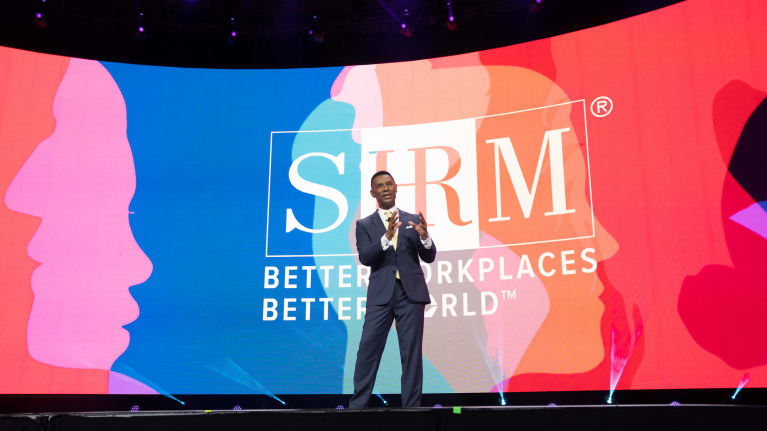
The theme to the SHRM Annual Conference & Expo 2022 in New Orleans—Causing the Effect—was woven throughout the general session “Rise and Shine: HR’s Defining Moment Is Now!” Society for Human Resource Management (SHRM) President and Chief Executive Officer Johnny C. Taylor, Jr., SHRM-SCP, addressed more than 15,000 attendees live and online on June 13.

“When thinking about what HR can—and must—do with all of the power we have,” Taylor said, “I think of the biblical quote, ‘To whom much is given, much will be required.’ We have all been given the power to impact people’s lives for the better, and therefore we are obligated to act. COVID-19 presented a once-in-a-lifetime opportunity for the HR profession to show our value and to be valued.”

That goes for all 316,000 SHRM members globally.

Change Happening at Incredible Velocity

History shows that crises accelerate change, and the pandemic fits into that category, Taylor said.

“But never have we experienced change with so much velocity,” he said.

And while a thermometer can measure the state of things, it’s a thermostat that regulates it, creating that change. HR professionals must be the thermostats today and going forward, Taylor emphasized.

“We all must now feel the deep-seated urgency to drive change, rather than be driven by it,” Taylor said. “Because change accelerated exponentially over the last two years, [HR professionals] had to suit up every day, every minute, every second just to keep up. There was no time to think … or even blink. We were forced to replace the important with the urgent—because now, everything was urgent.”

Taylor addressed the full body of HR by exclaiming that even the smallest, seemingly trivial, administrative personnel work matters for employers and employees.

He shared that futurist Jason Silva, when recently asked, “What’s the new definition of billionaire?” responded that it’s someone who positively affects the lives of a billion people. Not make a billion dollars, mind you, Taylor said, but touch a billion lives. And HR has the opportunity to do so.

Rising from Receptionist to Director of People

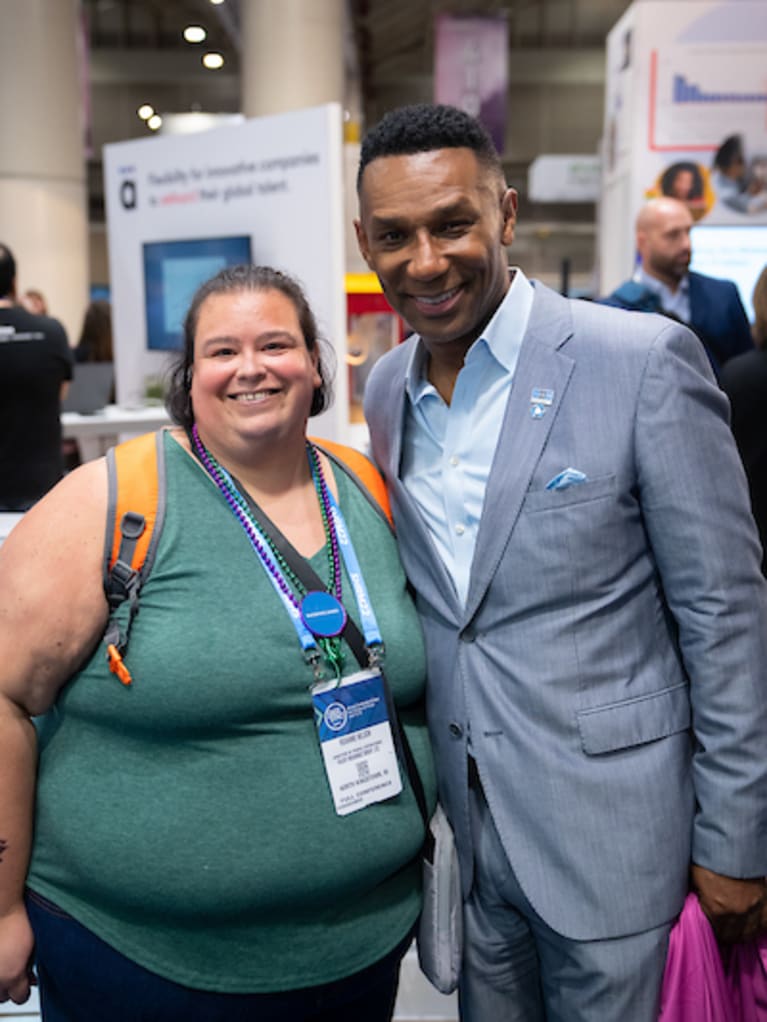
Roxanne Nelson is photographed with Johnny C. Taylor, Jr. Taylor then put the spotlight on one attendee: Roxanne Nelson, director of people operations for Falvey Insurance Group, based in North Kingston, R.I., whom he had met the day before in the Expo hall.


Nelson began her career at Falvey 22 years ago as a receptionist. She soon seized an opportunity to do entry-level work for the company’s HR department. Her drive led her up the department ladder, step by step, and about six weeks ago, she was named its director of people operations.

“I would never have been able to make that climb without the support of my company, my CEO and SHRM,” she told SHRM Conference Today after the general session. “I felt so proud to be mentioned by [Taylor]. It’s not something you can ever really prepare for, but it meant a lot.”

Mental Health: 1 in 4 Are Hurting Every Day

Taylor homed in on a particular issue that provides HR with “the quintessential opportunity” to act as a thermostat: mental health.

He challenged the audience, asking, “Is there an issue today more in need of thermostats than workplace mental health?”

The numbers bear it out: Nearly 1 in 4 workers say that they are feeling down, depressed or hopeless. And these sentiments are not sometimes, but often. Taylor even suggested that those survey numbers could be underreported.

“Because of the stigma still associated with mental health, people aren’t always fully forthcoming when responding to surveys, to their families, to their co-workers or to themselves.

“HR leaders must listen well. And in HR, ‘listening’ is done with your eyes and your ears. We oftentimes have to observe our employees to hear what they’re saying as well as what they are not saying,” Taylor said.

Beyond listening, HR professionals can drive change in their workplaces by advocating for changes to benefits and support for mental health. For example, more than one-third of workers report they would choose mental health benefits over higher pay, yet fewer than one-third of HR professionals say that offering mental health resources is a high priority for their organizations, according to SHRM’s Mental Health in America: A 2022 Workplace Report.

“When you think that many of your employees place higher value on mental health benefits over higher pay, this isn’t to be interpreted as just a data point—it’s a cry for help. Let’s help them,” Taylor said.

If people were machines, HR’s job would be easy, he added, because if a machine breaks down, it’s either fixed or replaced.

“But people aren’t machines,” Taylor said. “And we aren’t in the machine resources business. Human beings are fallible, imperfect and are often prone to bad judgment or poor decision-making. But with all that, people are also our greatest resource—the greatest computer ever made.”

Culture Prevents Workers from Heading for the Exits

Taylor then turned to company culture.

“Many people derive their identity from the work they do, where they do it and whom they serve,” he said. The pandemic allowed workers to re-evaluate what they really want from their workplaces and their employers, and many headed for the exit.

“Workers today are demanding more from their work and their lives. Many were suffering through not just a medical crisis or a financial crisis, but a crisis of identity, purpose, value, validation,” Taylor said. “They’re not just asking, ‘What am I doing, where am I doing it and for whom am I doing it?’ but ‘Why am I doing it at all?’

“They are demanding a rewrite of the outdated social contract between employer and employee, sparking an unprecedented talent crisis. The good news is crisis always gives our organizations a chance to re-examine their culture, their identity, both internally and externally,” he said.

Taylor said this will happen when we take responsibility for building inclusive, empathetic and resilient cultures that highlight agility, adaptability and alignment. “This will require thinking differently by us, the HR profession. Our success as HR professionals comes from building unity out of diversity, and that requires thinking like a thermostat, not a thermometer, right from the start,” he said.

Credentialed Employees Thrive

Last, Taylor told the audience about the value of credentials—now more than ever.

When the SHRM Foundation surveyed executives, managers and HR professionals on their views about alternative credentials (such as training certificates and industry certifications), 50 percent of executives placed a high value on them when making hiring decisions for open positions.

“Yet, only 15 percent of HR professionals felt the same,” he said. “That 35-point difference between how HR perceives alternative credentials and how business executives perceive them is a problem.”

Lisa Furlong, SHRM-SCP, human resources manager for Eternal World Television Network in Washington, D.C., said of the general session, “It was great to hear how COVID-19 really shed light on what we do as HR professionals and that others learned our roles. [Because of the situation], many more employees and management reached out to us and coming to see HR was no longer looked at like you had to go to the principal’s office.”

Kimberly Lee, senior director of organizational strategy and development at PowerSchool in Folsom, Calif., added, “It was interesting to learn about what employees value in terms of mental health benefits and what executives are doing about it. The fact that employees are more wanting these benefits over higher pay was interesting. Also, it felt good to hear that we’re not in the machine relations business, we’re in the human aspect of it—with everything we do.”

Frank Mota, director of human resources at Microfabrica in Van Nuys, Calif., said, “This new definition of billionaire is impactful because it’s more about helping others than having more money.”

Hoping Underperformers Will Improve Doesn’t Work

?A self-proclaimed jokester, presenter Randy Anderson began his concurrent session, “Confronting Lovable Underperformers and Landmine Employees” by stating, “I want you to fire all of your underperformers.”

Adding, “Wouldn’t it be great if you could do that, because today, there are so many of them.”

Anderson, founder of E3 Professional Trainers in Lubbock, Texas, told his SHRM Annual Conference & Expo 2022 audience on June 13 in New Orleans that firing all underperformers simply is not doable, but when companies and their HR teams don’t quickly correct those situations, they will create a persistent problem that negatively affects many facets of their operations.

“Your good people will leave, and those who do stay will change their work habits, so your companies’ standards will fall and mediocrity will become acceptable,” Anderson said.

Nurturing Can Work for Some Employees

He said managers’ typical responses are to ignore the situation, hoping it gets better; begin protecting and defending these underperformers; or nurture the employees.

The first two are ineffective, but the third could lead to improvement—if the employees recognize their deficiencies and are willing to work toward getting better.

“Nurturing requires a structured plan with clear goals and expectations and steady feedback from the supervisor,” he said.

But don’t be surprised if employees become defiant or act surprised when presented with that plan, Anderson added.

“Some will even start an internal PR campaign in the office, telling co-workers about management’s ineffectiveness,” he said.

No Employee Is Irreplaceable

Anderson said managers must realize that there are no employees who are irreplaceable. “If you think that, then the employee is in full control of their situation,” he said.

Instead, managers should look for signs of progress from employees and extend grace periods to workers who they can see “are trying.”

Unfortunately, if the manager doesn’t give regular—almost daily—attention to some of those staff members, they will often resort to their former, unproductive ways. At that point, managers and supervisors must decide if they want to help them to succeed or help them to leave.

Seriously. Maybe a Promotion

It could be a matter of the employees being placed in the wrong position, one that doesn’t allow them to use their strengths. Sometimes a position’s responsibilities shift due to changing circumstances, setting workers up to not do well, he said.

Anderson recalled one example where a salesperson was not particularly strong at giving attention to details, but she was likable, so he gave her a raise and made her a receptionist—a position she’s thrived in to this day.

Assess First, Then Create an Action Plan

To measure whether a worker could benefit from a change, a manager should consider whether the employee has the right tools and training  has sound teammates, and the managers should support the employee’s current situation. Also consider, Anderson said, if the supervisor is the adversary in this situation.

The key to helping underperformers is presenting them with an effective action plan, Anderson said.

That includes conveying the specific things the employee must do or the behaviors they must change and setting actionable goals.

“Let them know they can go about making the change in whatever manner they wish; in other words, it doesn’t have to be done the supervisor’s way, as long as the employee doesn’t go to court, go to jail, go to the hospital or way overspend to make it happen.”

He said clarity is “vital” so that the employees know how they will be measured and what their rewards will be if they meet their goals—and what the consequences will be if they don’t.

Anderson suggests supervisors hold regular one-on-one meetings with the employees to hold them accountable.

When companies take these proper, timely, proactive steps, they can often resolve underperformer situations.

“We heard a lot from companies that said one benefit to the pandemic and its layoffs was that they were able to get rid of a lot of people they had been meaning to let go,” Anderson said. “It should never get to the situation where a life-changing event is needed to properly manage employees.”

Paul Bergeron is a freelance writer based in Virginia.

Be Self-Aware to Make More-Ethical Decisions

?HR professionals need to protect staff in an ethical way, even through such difficult times as terminations and layoffs. To do this, you need self-awareness and the ability to separate personal feelings from business priorities, according to Chas Fields, senior partner in the HCM advisory group at Ultimate Kronos Group (UKG) in the Dallas-Fort Worth area.

Self-Reflection for Self-Awareness

Speaking at the SHRM Annual Conference & Expo 2022 in New Orleans on June 13, Fields asked attendees to reflect on the following questions:

  • When am I at my best?
  • What kind of person do I want to be today?
  • What situations make me feel terrible, and what do they have in common?
  • What activities am I doing when it feels like time flies by?
  • What is working well in my life and work today?
  • If I had a magic wand, where would I be in three months?
  • If I change nothing, what will my life look like three months from now? How does that make me feel?
  • What actions, if taken, would make me proud of myself, regardless of the outcome?
  • When negative thoughts arise, how do I deal with them?
  • How do I stay grounded when I feel overwhelmed?
  • What motivates me?

Distinguishing Ethics from Morality

Fields said HR professionals can make more-ethical decisions at work if they’re able to distinguish ethics from morality.

“You have to be able to separate the personal from the professional,” Fields said. That will give HR “clarity to answer hard questions.”

Ethics are external rules that may vary between environments, he noted, while morals are personal principles that rarely change.

‘Question Everything’

Fields urged attendees to “question everything,” including years-old mission statements and decisions made routinely each day. Ask whether they are ethical, he said.

Fields added that in reviewing an organization’s ethical standards, HR should question whether the standards are:

  • Honest.
  • Integral.
  • Impactful.

Ethics should start at the top, and leaders should be sure to listen to workers, according to Fields. He has seen board members make changes without asking employees how those changes will impact them; then when companies have difficulty with retention,  they ask HR to “fix this.” Fields noted that in a UKG survey, 86 percent of employees thought that people in their organizations were not heard fairly or equally.

Transparency

As part of an ethical workplace, employers should be as transparent as possible, Fields added. If expectations shift, tell workers, he said.

Employees should know what their pay band is and what their promotion opportunities are, he added.

Moreover, make ethical decisions as employees juggle their demands outside the workplace with those faced on the job. If a parent must be late to work because a child has to be taken to an appointment, the employer should “meet the employee where they’re at,” Fields stated.

That said, the employee should know that they are expected to show up when they said they would, and they should stay later to make up the time.

States Tighten Rules on Noncompete Agreements

?Laws governing the use of restrictive covenants have been changing recently, so HR professionals and employers need to stay abreast of updates that occur in their state.

Gregory Hare, a lawyer with Ogletree Deakins in Atlanta, presented some practical tips and best practices for using restrictive covenants, such as noncompete agreements, nondisclosure agreements and nonsolicitation agreements, at the SHRM Annual Conference & Expo 2022 in New Orleans and virtually on June 13.

State Restrictions

“States are making it harder” to use noncompete agreements, but restrictions vary by state, Hare noted.

At the same time, the Biden administration has “really been harping on this,” arguing that noncompete agreements are an unfair restriction on trade or an unfair suppression of wages, Hare said. “They are pushing this rock up the hill.” But he doesn’t expect to see federal regulations prohibiting the use of noncompete agreements in the near future.

In some states, you can’t enforce a noncompete agreement unless the person worked for your company for at least two years. Some states don’t allow companies to enforce noncompete agreements unless the person was a high earner, making above a certain amount in annual salary.

Some states don’t permit noncompete agreements unless you tell employees about it on their first day of employment. In other cases, you can introduce a noncompete agreement when an employee gets a promotion to a certain level within your company, such as moving up from midlevel management to executive status, Hare said.

Depending on state law, you might be able to introduce a noncompete agreement as part of your conditions for accepting severance pay. “Never give money away for free. If you’re going to give somebody severance pay, make sure you get something in return,” Hare said.

If you fired the employee, a noncompete clause still would be enforceable in most states, Hare said.

‘Think Strategically’

Before you ask employees to sign a noncompete agreement, think carefully about what you’re trying to accomplish and whether it’s worth it. “Think strategically about do you really need to put this person on ice, and is it worth the time and effort to put this person on ice with a noncompete agreement?” Hare advised. “Some people are a really significant loss to your organization when they leave. Some, not so much.”

Maybe the person is the face of your business in four states or is an executive who does a lot of relationship managing. Then it might be worthwhile to give the person a large bonus to sign a noncompete agreement, Hare explained.

Nuts and Bolts of Noncompete Agreements

To be enforceable, a noncompete agreement has to be limited to two years or less, the state or region the person worked in, and the role the employee held at your organization, Hare said. One way to avoid making it overly broad would be to include a paragraph that names certain states where the noncomplete clause is unenforceable.

Make sure the noncompete agreement is saved as a digital record, not just a paper in someone’s file cabinet because that can easily be stolen. Noncompete agreements and other restrictive covenants should be separate from your company’s employee handbook because the handbook is not an employment contract, Hare advised.

You should ask all employees to sign a nondisclosure agreement that prevents them from taking your data when they leave, Hare recommended. “You always want to protect your data. The data, the secret sauce, is really important,” he said.

Before you hire someone, always ask if there are any restrictive covenants that would affect the person’s ability to work for your organization, Hare added.

Noncompete Agreements Can Plug Holes in Nonsolicitation Agreements

Nonsolicitation agreements prevent employees from taking their current set of customers with them when they leave your organization.

What if someone announces on an online platform like LinkedIn that he or she changed jobs and looks forward to working at a new company? Many connections who read that announcement were probably customers or potential customers, and maybe your company lost a number of customers as a result. Does that count as violating a nonsolicitation agreement?

“The courts are very confused about that because they don’t know what to do with it,” Hare observed.

A noncompete agreement is the way to prevent that scenario from happening, since a “nonsolicitation clause is not going to be enough in that situation,” Hare observed. Defining who is a business prospect is tricky and not clear in the courts yet, he said.

6 Ways to Become a More Empathetic Organization

?The Great Recession has caused many workers to become increasingly particular about what they look for in an employer. As a result, companies have been scrambling to identify ways to recruit and retain talent.

But one way employers can improve these efforts: becoming more empathetic.

About 97 percent of workers believe empathy is an essential quality of a healthy workplace culture, and 92 percent said they specifically look for organizations that demonstrate empathy when seeking a job, according to a 2021 survey by the Society for Human Resource Management (SHRM).

On June 13, Jeremy York, SHRM-SCP, vice president of talent strategy success for HR consulting firm Purple Ink LLC in New Orleans, discussed this topic while leading a concurrent session, “Empathy: The New Work Culture Norm,” at the SHRM Annual Conference & Expo 2022 in New Orleans.

“Empathy is an investment in our people,” York said. “It creates a culture where people actually want to come to work. And they feel comfortable bringing their whole selves to work.”

Empathy is critical to leadership, he explained. It helps to build and sustain positive workplace relationships; foster diversity, equity and inclusion; encourage cooperation and collaboration; and facilitate conflict management.

Workers are tired of being treated as numbers rather than human beings, York said. In many instances, the dynamic between employer and employee is a one-way relationship: Leaders can demand their subordinates take on additional projects or work overtime, but when workers want time off for personal commitments, they must request it—and it may become an issue if rejected.

“I call the Great Resignation ‘the Great Awakening,’ ” York said. “People are starting to realize that if you don’t show empathy, employees are going to leave.”

How to Build Empathy

What role does empathy play in the workplace? And why does it matter?

Empathy is about understanding your workers, York said. It is a key part of emotional intelligence and effective leadership, and it can improve human interactions, leading to more effective communication and positive outcomes.

York offered six ways organizations can become more empathetic:

  • Listen to your workers. Actively listen to hear the meaning behind what others are saying, pay attention to nonverbal cues, reflect the feelings expressed and summarize what you are hearing.
  • Encourage genuine perspective-taking. Managers should consistently put themselves in the other person’s place. This can be applied to solving problems, managing conflict or driving innovation.
  • Cultivate compassion. Verbal encouragement and motivation exemplify compassion. Communicate openly, express yourself clearly to others, and be aware of the emotions and thoughts of others—your words can make or ruin their day.
  • Organize empathy training. Empathy skills can be taught, and one of the most effective ways to broaden adoption is to arrange for empathy training for your employees. You can look for a provider in your area and arrange a session.
  • Tweak your hiring process. Do you look for empathy in job candidates? Be intentional about screening for empathy by drafting interview questions that encourage applicants to show how they practice empathy.
  • Reward empathy. Acknowledge an employee when they exhibit empathy. You can do this by making a public announcement referencing how the employee displays strong empathy skills.

Body language is an integral pillar of empathy. For example, if a worker is explaining a work task or talking about an aspect of their home life, managers need to put away their phones, computers and other distractions. Attentiveness shows sincerity, York said.

It’s also important for companies to talk about empathy with their managers and workers. Let your workforce know that empathy matters and teach them that giving time and attention to others enhances job performance and improves effectiveness.

“This isn’t rocket science,” he said. “This is us treating people like people.”

Roadblocks to Empathy

Fawn Seifrit, HR manager for the Berkshire Country Club who travelled from Reading, Pa., to attend the conference, said acknowledging the challenges of empathy and “transitioning the focus away from ourselves and to the employees” was a big takeaway from York’s session.

“As HR professionals, we’re so worried about us being successful and what we need to be successful,” Seifrit said. “But in the process, we’re not fully showing empathy to the other person.”

Exhibiting empathy isn’t always easy. York outlined several roadblocks to achieving empathy, including:

  • Feeling the pressure. When our brains are under pressure, we have a hard time distinguishing between our own emotional state and the emotional state of others.
  • Emotions are contagious. When we become agitated, others are more likely to react to our agitation, with similar emotions.
  • Snap decisions encourage projection. Making decisions under pressure also makes us less likely to accurately assess a situation, and we begin to project our own emotions onto others.
  • Defensiveness is self-protection. It is easy to start taking things personally when we must empathize with someone who is suffering.
  • The “stranger effect.” It is easier to empathize with people we already know.

York explained that the stranger effect is of particular importance because people are conditioned to interact with people with whom they share similar interests.

“But If we learn to be around and comfortable with people from different backgrounds, that can help us be more comfortable with different people, build relationships and develop trust,” York said, noting that embracing people of different cultures can also improve recruitment and retention efforts.

He also said empathy is not an excuse for poor job performance. Companies can show empathy and still hold employees accountable for their work. For example, managers can suggest remote-working options if the worker is having trouble securing child care, while still holding the worker accountable for completing projects and attending meetings virtually.

“Many leaders today do not show empathy, but it’s important in today’s climate,” he said. “We don’t focus on empathy or people enough. That needs to change.”

San Francisco Issues Proposed Rules for Revised Family Friendly Workplace Ordinance

?On May 27, the San Francisco Office of Labor Standards Enforcement (OLSE) issued its “Proposed Rules Implementing the Family Friendly Workplace Ordinance (as amended).” The OLSE also issued a notice of proposed rulemaking. The city will be accepting public comments through June 16. The Family Friendly Workplace Ordinance (FFWO) applies to employers with 20 or more employees and takes effect July 12.

The city’s Board of Supervisors initially passed the FFWO on Oct. 8, 2013, and it became effective Jan. 1, 2014. The Board of Supervisors substantially revised the FFWO on March 14, imposing mandatory requirements on employers.

Under the amended FFWO, a covered employer must enter into a good-faith interactive process with an employee who requests a flexible or predictable work arrangement to assist with care for any of the following:

  • A child or children under the age of 18;
  • A person or persons with a serious health condition in a family relationship with the employee; or
  • A person (age 65 or older) in a family relationship with the employee.

The FFWO requires that employers establish “undue hardship” in order to deny an employee’s request.

The proposed rules address various topics, including who constitutes a covered employer or covered employee, as well as the means by which an employer may verify an employee’s caregiving responsibilities.

The proposed rules also explain factors that the OLSE may consider when evaluating an employer’s “undue hardship.” Under the proposed rules, an employer would not need to “alter or impede [its] business operations in a manner that would cause significant expense or operational difficulty.” The proposed rules provide several examples of undue hardship, including an employee’s schedule request that would have a “detrimental effect” on the employer’s ability to meet customer demands, a request that would require the employer to pay overtime, or a request that would result in an employee working without needed supervision.

The OLSE has proposed administrative penalties of the greater of (1) no more than $50 per day for each day a violation occurred, or (2) “up to the cost of care the [e]mployee or person whose rights were violated incurred” as a result of the employer’s violating the employee’s rights. The OLSE also may impose the greater of (1) $50 per day for each day a violation occurred, or (2) “up to the [c]ity’s costs for the investigation and remedying [of] the violation.”

In addition to the proposed rules, the OLSE’s Family Friendly Workplace Ordinance webpage includes frequently asked questions (FAQs) about the FFWO, a sample employee FFWO request form, and an OLSE presentation explaining the FFWO.

Charles L. Thompson, IV is an attorney with Ogletree Deakins in San Francisco. © 2022 Ogletree Deakins. All rights reserved. Reposted with permission.

Subscribe to our Newsletter