Starbucks Ordered to Rehire Fired Union Activists

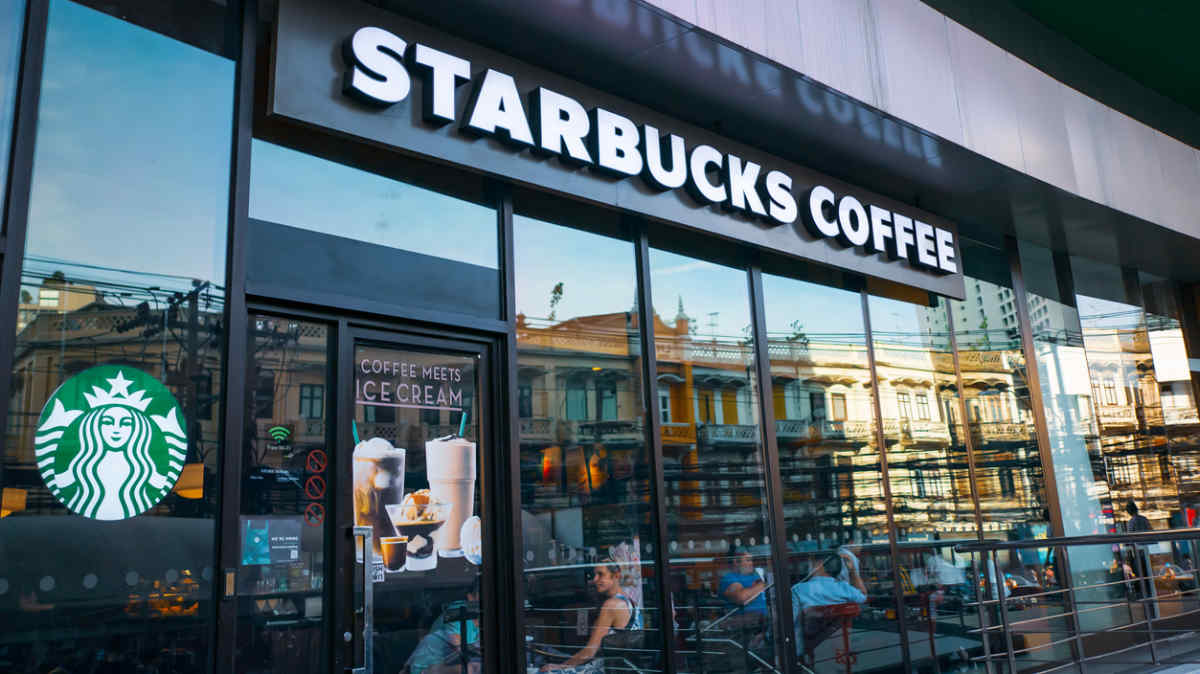
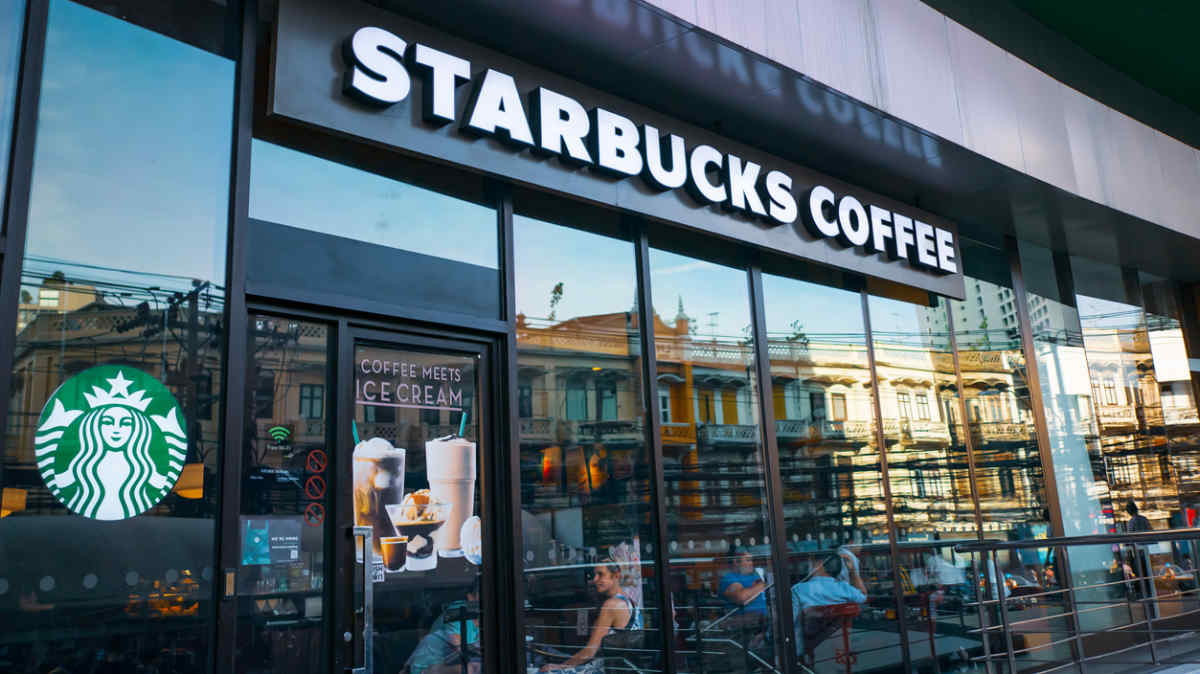
?A federal district court ordered Starbucks on Aug. 18 to rehire seven workers that it fired after learning about union organizing efforts at a Memphis, Tenn., store, according to the National Labor Relations Board (NLRB). We’ve gathered articles on the news from SHRM Online and other outlets.

NLRB Prevails on Petition for Temporary Relief

In the NLRB’s petition for temporary relief, the board stated that after the organizing effort, Starbucks directed coercive measures at employees. These included disciplining the employee responsible for starting the campaign; more closely supervising its employees; closing the area of the store on days organizers had invited the public and customers to come show support for the campaign; and removing all pro-union materials from the community bulletin board inside the store, including notes from customers expressing support for the campaign, according to the NLRB. Then, following increased media coverage and public support for the campaign, Starbucks fired seven union activists on the same day, including five of the six members of the union organizing committee.

(NLRB)

Starbucks Contests Ruling

“We strongly disagree with the judge’s ruling in this case. These individuals violated numerous policies and failed to maintain a secure work environment and safety standards,” Starbucks said in a statement. “Interest in a union does not exempt partners from following policies that are in place to protect partners, our customers and the communities we serve.” The company plans to appeal the decision.

(NPR)

Policies in Question

Policies that the fired employees allegedly broke included going behind the counter while off-duty and unlocking a locked door to allow an unauthorized person to enter the store while off-duty. The NLRB argued Starbucks fired the workers based on policies it did not consistently enforce, saying they were a pretext for opposition to unionization.

(The Hill)

NLRB General Counsel’s Statement

“Today’s federal court decision ordering Starbucks to reinstate the seven unlawfully fired Starbucks workers in Memphis is a crucial step in ensuring that these workers, and all Starbucks workers, can freely exercise their right to join together to improve their working conditions and form a union,” Jennifer Abruzzo, NLRB general counsel, said in a statement.

(The Washington Post)

Unionization at Starbucks Challenged

More than 200 Starbucks stores have voted to unionize since December 2021. Starbucks maintained that National Labor Relations Board employees secretly coordinated with union organizers near Kansas City, Mo., and asked the agency to stop mail-in votes across the country until there has been a full investigation.

(SHRM Online) and (NPR)

Unionization Gains Momentum at Trader Joe’s

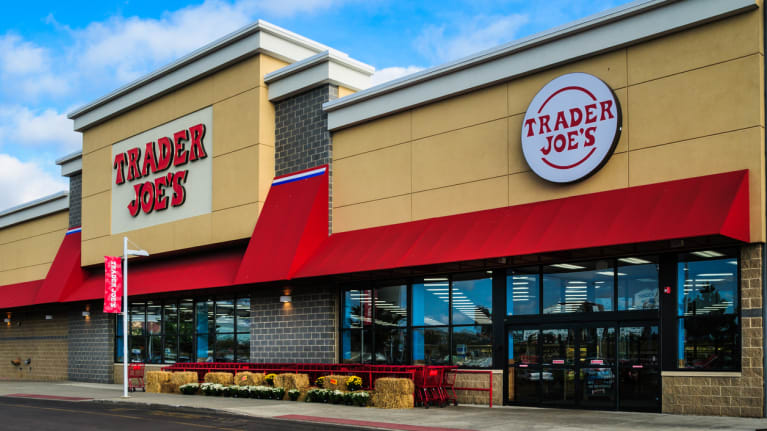
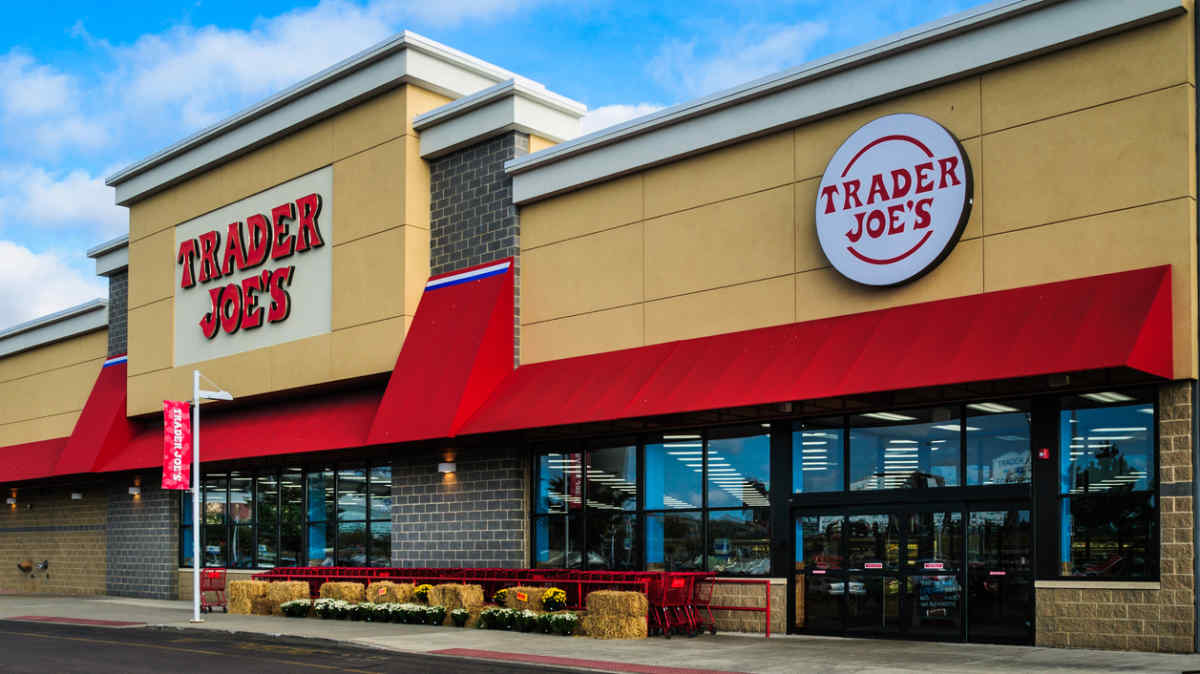
?The unionization movement has spread to Trader Joe’s, where a second store recently formed a union. Union organizers are hoping the movement takes off at other company stores. We’ve gathered articles on the news from SHRM Online and other media outlets.

How Popular Will Unionization Become?

A Trader Joe’s in Minneapolis became the second unionized location in the U.S. on Aug. 12, following a Massachusetts location organizing in July. An organizing drive is forming at a Trader Joe’s in Boulder, Colo. Some wonder whether the unionization efforts will become as widespread as they have at Starbucks.

(Vox)

Reasons for Organizing

Organizers at the Massachusetts store cited a host of reasons to unionize, including health care and retirement benefits that had become less generous, and health and safety issues arising from the COVID-19 pandemic. Management informed workers earlier this year that the 401(k) contribution would be halved for employees who had worked for the company less than 10 years.

(The New York Times) and (HuffPost)

NYC Store Abruptly Closes

A Trader Joe’s wine store in New York City reportedly abruptly closed Aug. 11 following monthslong unionization efforts. The United Food and Commercial Workers said it was ready to file unfair labor practice charges with the National Labor Relations Board. Trader Joe’s did not respond to inquiries about the closure.

(HuffPost)

Trader Joe’s Statement

In a statement referring to the Minneapolis vote, Trader Joe’s spokeswoman Nakia Rohde said, “While we are concerned about how this new rigid legal relationship will impact Trader Joe’s culture, we are prepared to immediately begin discussions with their collective bargaining representative to negotiate a contract.”

(The New York Times)

Unionization at Starbucks Challenged

More than 200 Starbucks stores have voted to unionize since December 2021. Starbucks maintained that National Labor Relations Board employees secretly coordinated with union organizers near Kansas City, Mo., and asked the agency to stop mail-in votes across the county until there has been a full investigation.

(SHRM Online) and (NPR)

New Unions Spring Up

Employees have voted this year for first-ever unions at an Amazon warehouse, an Apple store, a Google Fiber contractor, Kickstarter and REI. About two-thirds of Americans say they support unions. Nonetheless, union participation remains low, near 10.3 percent of the workforce in 2021, down from 20 percent in 1983, according to the Bureau of Labor Statistics. At its height in 1954, union membership was near 35 percent.

(CNBC)

Amazon Questions Legitimacy of Unionization Vote

Earlier this year, Amazon narrowly led in a revote of a union drive at a Bessemer, Ala., warehouse, but contested ballots remain. Nonetheless, Amazon workers voted to unionize a Staten Island, N.Y., warehouse on April 1. Amazon is contesting the election.

(SHRM Online) and (SHRM Online)

Court Rejects Union’s Attempt to Block Unilateral Pay Raise

?Takeaway: While this case dealt specifically with a railroad employer, the 8th Circuit’s reference to the Norris-LaGuardia provision regarding a party’s failure to make “every reasonable effort” to settle a labor dispute is significant to all employers and unions. It points out that a court cannot enter the fray on behest of a party that has not made reasonable efforts to resolve the situation first. To do so would violate the Supreme Court’s admonishment that a court should avoid “freewheeling judicial interference in labor relations.” 

?The critical issue in determining whether courts can become involved in a labor dispute, including one over an employer’s pay raise made unilaterally after negotiations broke down, is whether the parties have made every reasonable effort to resolve the dispute without judicial involvement.

In a procedurally complex labor-related litigation, the 8th U.S. Circuit Court of Appeals was able to distill two Section 6 notices, one “self-help” action, a motion for preliminary injunction and an interlocutory appeal into one concise point: before seeking the court’s assistance, parties to a labor agreement must make every reasonable effort to settle their dispute by all available means.

A railroad employer and union were parties to a collective bargaining agreement (CBA). In August 2019, because the railroad was having trouble attracting and retaining employees at a daily rate of $271 under the CBA, it offered to increase the daily rate to $300. In October 2019, union members rejected that proposal.

Procedural History

On April 1, 2020, the union served a notice on the railroad under Section 6 of the Railway Labor Act (RLA), ostensibly seeking to bargain about certain provisions under the CBA. The effect of that notice was to prolong the existing terms of the CBA, regardless of the CBA’s termination date.

The parties did not meet for an initial conference on the Section 6 notice until Jan. 15, 2021. The parties did not meet again until March 24-25, 2021, at which point the union left the bargaining session, saying it did not want to schedule any further conference.

On May 3, 2021, the railroad reached out to the union suggesting continued negotiations, but the union did not respond.

On May 4, 2021, the railroad served a Section 6 notice on the union, proposing certain specific changes to the CBA, including its previously proposed amendment to the daily pay rate. The union failed to respond to that notice within the time allotted under the RLA.

The railroad gave notice to the union on June 5, 2021, that because of that failure, the railroad planned to resort to “self-help” and would increase the daily pay to $300, effective June 16, 2021.

On June 14, 2021, the union filed a legal action for a preliminary injunction, asking the court to order a return to the status quo and to preclude the pay increase. The district court denied the preliminary injunction on July 19, 2021.

The union appealed the district court’s denial to the 8th Circuit on Jan. 12, 2022. On June 24, 2022, the 8th Circuit upheld the lower court’s decision.

Rationale

The 8th Circuit found that:

  • The railroad’s Section 6 notice was a valid effort to settle the dispute between the parties.
  • The union’s failure to respond to the notice in a timely manner was a failure of its duty to reasonably engage in bargaining.
  • The railroad’s self-help efforts were done with appropriate notice to the union.
  • The union failed to take advantage of other available remedies available under the RLA—such as the use of the Federal Mediation Board’s services.

The court underscored the fact that the RLA imposes a “judicially enforceable legal obligation on railroads and employee unions to bargain in good faith.” It also pointed out that under another federal labor law statute, the Norris-LaGuardia Act, courts are precluded from imposing an injunction, other than under circumstances strictly outlined under that act.

Further, the Norris-LaGuardia Act contains an additional provision cited by the court: “No … injunctive relief shall be granted to any complainant who has failed to comply with any obligation imposed by law which is involved in the labor dispute in question, or who has failed to make every reasonable effort to settle such dispute either by negotiation or with the aid of any available governmental machinery of mediation or voluntary arbitration.” 29 U.S.C. §108 (emphasis added by the court).

Therefore, after extensive analysis of the applicable labor law—including the seeming disparity between the RLA’s reference to “judicial enforcement” and the Norris-LaGuardia’s prohibition on court injunctions for maintaining the status quo—the 8th Circuit found that a party seeking an injunction to enforce the status quo must first satisfy the Norris-LaGuardia Act’s “every reasonable effort to settle” requirement. Based on that analysis, the 8th Circuit upheld the lower court’s denial of the injunction sought by the union.

Internat’l Assn of Sheet Metal, Air, Rail, and Transportation Workers v. Iowa Northern Railway Co., 8th Cir. No. 21-2608 (June 24, 2022).

Maria Greco Danaher is an attorney with Ogletree Deakins in Pittsburgh.

Mexico: New Guidelines on Union Democracy Released

?On July 26, the Governing Board of Mexico’s Federal Center for Conciliation and Labor Registration unanimously approved the General Guidelines for Union Democracy Procedures, which standardize labor relations criteria for unions, companies and the Federal Labor Center itself. This document, which has gone somewhat unnoticed, addresses relevant aspects of union organizing and will be mandatory the day after its publication in the Official Gazette of the Federation.

The following are the most notable aspects of the new guidelines:

  • The guidelines are applicable only to the election of union leadership and union sections, the execution of the initial collective bargaining agreement or the revision of a collective bargaining agreement, and not for determining the legitimacy of the union itself.
  • The position of “union electoral observer” is created, which will be the person accredited by the center to participate in the observation of any procedure regarding union democracy.
  • Voting electronically is allowed when any of the following circumstances occurs: (a) voters’ place of work or residence is geographically dispersed, (b) the vote involves a union with a massive affiliation, (c) the vote is intended to be carried out simultaneously in two or more states and (d) when any other circumstance that justifies its use is proven.
  • The use of cameras in the workplaces during the processes of union democracy is specified, clarifying that there should be no electronic devices with which the voter or any other person can photograph or record the vote or violate its secrecy.

The new document is the result of two years’ worth of union election analysis and review of the various claims found in labor complaints filed in the framework of the United States-Mexico-Canada Agreement (USMCA), under the rapid response mechanism. Although a question remains over whether the guidelines exceed Federal Labor Law regulations and are therefore unconstitutional, the document is a useful instrument in the face of the changing era of labor relations that Mexico is experiencing.

Jorge Sales Boyoli and Erick Fernandez Mata are attorneys with Littler in Mexico City. © 2022 Littler. All rights reserved. Reposted with permission of Lexology.

Starbucks Will Appeal Dismissal of Charge Against Union Organizers

The National Labor Relations Board (NLRB) has thrown out a charge by Starbucks that union organizers in Phoenix violated the National Labor Relations Act (NLRA), but the company will appeal. We’ve gathered articles on the news from SHRM Online and other media outlets.

Starbucks’ Claims

Starbucks claimed the pro-union employees unlawfully threatened workers and customers at a shop in Phoenix. Workers blocked the store’s entrances, made threats, yelled profanities and pounded on the store’s windows, the company maintained. But the NLRB rejected these assertions, finding that demonstrators remained on the sidewalk and didn’t touch any employees or customers. Although more than 200 of Starbucks stores have voted to unionize since December 2021, employees at the Phoenix store voted against unionization.

In the company’s statement saying it would appeal, Starbucks said, “We disagree with the NLRB’s ruling and will appeal as we continue our efforts to protect our partners and allow for their voice to be heard.”

(AP via ABC News)

Union Organizers’ Goals

Union organizers hope to get higher pay, more hours and improved safety, which has become more important during the coronavirus pandemic. They also want more say in what their work lives are like, to have more discussions with executives and feel more appreciated.

In a statement, Starbucks has said, “We are listening and learning from the partners in these stores as we always do across the country.” Starbucks has approximately 9,000 stores in the U.S.

(Vox)

Organization Movement’s Origins

A barista who was also a Rhodes scholar helped unionize the Buffalo, N.Y., store that was the first one to organize. She had first broached the idea of a union with a colleague last summer, speaking of the need for more generous benefits, more consistent scheduling and a fairer promotion system, in addition to better pay.

(The Washington Post) and (SHRM Online)

Employer Rights

Often overlooked, employer rights under the NLRA include not only alleging that a union has violated the law, but disputing a union’s election petition, objecting to organized labor’s conduct during the run-up to a union election and filing an objection with the board over the conduct of the election.

(NLRB) and (Mashed)

D.C. Circuit Reverses Rulings that Browning-Ferris Wasn’t Joint Employer

?On July 29, the U.S. Court of Appeals for the District of Columbia Circuit overturned National Labor Relations Board (NLRB) rulings that Browning-Ferris Industries of California wasn’t a joint employer, reviving a dispute that may ultimately influence planned rulemaking on the definition of who is a joint employer.

Browning-Ferris does business as Newby Island Recyclery, and employs about 60 workers in Milpitas, Calif. Browning-Ferris contracts with Leadpoint Business Services, which provides Browning Ferris with approximately 240 additional recyclery workers. In 2013, Sanitary Truck Drivers and Helpers Local 350, International Brotherhood of Teamsters filed a petition with the NLRB to represent Leadpoint’s recyclery workers and asserted that Browning-Ferris and Leadpoint are joint employers of Leadpoint’s workers, making Browning-Ferris workers represented by the union as well. Browning-Ferris rejected this contention and this long-running litigation, which now has been sent back to the NLRB, ensued.

We’ve gathered articles on the news from SHRM Online and other outlets.

‘Multiple Overlapping Errors’

The NLRB made “multiple overlapping errors” when it declined to apply an Obama-era standard for joint employment to decide whether Browning-Ferris co-employed Leadpoint Business Services employees, the D.C. Circuit ruled.

(Bloomberg)

Importance of Who Is a Joint Employer

The definition of joint employer affects such determinations as which employees can unionize and who they can sue.

(SHRM Online)

NLRB Intends to Address Definition of ‘Joint Employer’

The NLRB indicated in this year’s spring regulatory agenda its intention to consider the definition of “joint employer” in future rulemaking.

(SHRM Online)

Anticipated Changes

The NLRB may revert to the standard for “joint employer” that existed prior to a 2020 rule, which currently is in effect. Under this rule, “an employer … may be considered a joint employer of a separate employer’s employees only if the two employers share or codetermine the employees’ essential terms and conditions of employment.” According to this definition, the entity must have direct and immediate control over at least one essential term or condition of employment to be a joint employer.

(The National Law Review)

Previous Standard

The previous standard was issued in Browning-Ferris I in 2015, where the NLRB held that evidence of indirect control can establish joint-employer status. But in 2020, the NLRB held that it was unjust to apply its standard in Browning-Ferris I to the company, announced a revised joint-employer test and held that the company was not a joint employer (Browning-Ferris II). The union asked the board to reconsider Browning-Ferris II, but the NLRB denied the motion (Browning Ferris III). The recent decision vacated Browning-Ferris II and Browning-Ferris III. The 2020 rule did not apply to this dispute.

(D.C. Circuit)

NLRB and FTC Will Cooperate to Advance Workers’ Rights

?National Labor Relations Board (NLRB) General Counsel Jennifer Abruzzo and Federal Trade Commission (FTC) Chair Lina Khan entered a memorandum of understanding on July 19 to form a partnership between the agencies that will advance workers’ rights. We’ve gathered articles on the news from SHRM Online and other outlets.

Agreement’s Objectives

The agreement enables the NLRB and the FTC to collaborate by sharing information, conducting staff cross-training and partnering on investigative efforts within each agency’s authority. Areas of mutual interest for the two agencies include labor market developments relating to the gig economy, such as misclassification of workers; the imposition of one-sided and restrictive contract provisions, such as noncompete and nondisclosure provisions; and the ability of workers to act collectively.

(NLRB)

Memorandum’s Effect on Merger Review Process

The FTC now can share with the NLRB some information it obtains from companies in the merger review process. The NLRB then could review the documents—which it otherwise would not have access to—for evidence of National Labor Relations Act (NLRA) violations like union busting, said Hiba Hafiz, a professor at Boston College Law School.

(Bloomberg Law)

FTC’s Possible Regulation of Noncompete Agreements

Khan recently told the Wall Street Journal that regulating noncompete agreements “falls squarely in [the FTC’s] wheelhouse.” She has shared her view that noncompetes should be banned nationwide and that the FTC has the authority to do so. If the FTC takes steps to ban or otherwise limit noncompetes under the FTC Act, there likely will be litigation challenging such regulations.

(The National Law Review)

Broader FTC Initiative

The FTC said that the agreement “is part of a broader FTC initiative to use the agency’s full authority, including enforcement actions and commission rulemaking, to protect workers.” The agency has previously announced it is factoring in additional facets of competition in its merger reviews, including how a proposed merger is affecting labor markets. The FTC’s initiative is part of a broader Biden administration effort to prioritize antitrust enforcement in labor markets. 

(Wilson Sonsini)

NLRB Collaborating with DOL

Earlier this year, the NLRB announced that it was collaborating with the U.S. Department of Labor’s (DOL’s) Wage and Hour Division to improve enforcement of the laws administered by each agency. The Wage and Hour Division enforces the Fair Labor Standards Act (FLSA) and Family and Medical Leave Act. The NLRB administers the NLRA.

“This is a coordinated leap by the administration to not only more aggressively enforce the FLSA and NLRA, but to pursue each agency’s effort to expand the scope of who’s a joint employer and narrow the scope of who’s an independent contractor,” said Rob Boonin, an attorney with Dykema in Ann Arbor, Mich.

(SHRM Online)

NLRB Now Working with DOJ

The NLRB and U.S. Department of Justice (DOJ) also have announced a partnership to protect workers. Their collaboration will focus on protecting workers harmed by misclassification of employees; interference with the rights of workers to obtain fair market compensation and collectively bargain; and the imposition of restrictive agreements, such as noncompete, nonsolicitation and nondisclosure provisions.

(NLRB)

Union Election Petitions Soar

?Union election petitions rose 58 percent between Oct. 1, 2021, and June 30, according to the National Labor Relations Board (NLRB). We’ve gathered articles on the news from SHRM Online and other outlets.

Nearly 2,000 Petitions Filed

Union representation petitions filed at the NLRB rose to 1,892 from 1,197 during the first three quarters of fiscal year 2022. By the end of May, petitions filed in fiscal year 2022 had exceeded all fiscal year 2021 petitions. A representation petition is filed with an NLRB field office to have the agency conduct an election to determine if employees want to be represented by labor.

(NLRB)

Is Labor on the Verge of a Resurgence?

After decades of declining union membership, unions might be on the verge of a resurgence. Employees have recently organized unions at Amazon, Apple, Starbucks and elsewhere. Applications for union elections are on pace this year to reach their highest level in a decade.

(The New York Times)

Rhodes Scholar’s Role in Unionizing Starbucks

A Rhodes scholar helped lead the movement to organize a Starbucks in Buffalo, N.Y., participating in efforts to organize the first Starbucks store in the U.S. to unionize.

(The Washington Post)

Is Upturn for Labor Real?

Despite the recent statistics, some analysts point to data that union membership is continuing to decline. Union membership is now at the lowest level on record, they say, driven by more states passing right-to-work laws.

(Mackinac Center for Public Policy)

Unionization in Staten Island Challenged

After a grassroots union’s victory over Amazon during a vote in Staten Island, N.Y., tough decisions lay ahead for the company, including how it would respond to the conditions that allegedly led to the unionization vote. Safety, higher wages, more paid breaks and more vacation all were at issue. The company has challenged the vote, maintaining that union leaders bribed workers to vote for the union and harassed those who didn’t support labor.

(SHRM Online) and (CNBC)

House Passes Labor-Friendly Provisions

?The U.S. House of Representatives on July 14 passed several labor-friendly amendments as part of the National Defense Authorization Act (NDAA) for fiscal year 2023. The amendments now move to the Senate, where passage is uncertain. We’ve gathered articles on the news from SHRM Online and other media outlets.

Union-Friendly Amendments

One approved amendment to the NDAA would prohibit the U.S. Department of Defense from contracting with “union busting” employers. The House also approved an amendment that would give preference to contractors with union neutrality agreements. In addition, the House approved a proposal to make all agencies boycott contractors with two or more Fair Labor Standards Act violations in the past five years.

(Bloomberg Law)

Employer Opposition

Some employer groups opposed the labor-friendly amendments. The Coalition for a Democratic Workplace wrote a letter saying the proposals “do not belong on this bill.” Littler’s Workplace Policy Institute heads Shannon Meade and Michael Lotito wrote, “These partisan labor amendments contain previously failed policies that are overreaching and overly restrictive.”

(Bloomberg Law)

Prior Successful Ban-the-Box NDAA Amendment

NDAA amendments have previously included labor-friendly amendments. A prohibition against employers with federal contracts asking about a job applicant’s criminal history—part of a defense funding bill signed in late 2019—took effect in the last days of 2021. The “ban-the-box” provision was inserted into the NDAA for fiscal year 2020 and signed by former President Donald Trump. The provision means that federal contractors can no longer inquire about an applicant’s criminal history before extending a conditional job offer. The provision is intended to make it easier for people with a criminal record to gain employment.

(SHRM Online)

Paid Parental Leave Law for Federal Employees

The NDAA for fiscal year 2020 also included provisions for many federal employees to be eligible for paid parental leave. The new law doesn’t cover paid leave for medical reasons or employees outside the federal government.

(SHRM Online)

Billion-Dollar Entitlement

The paid parental leave entitlement is valued at about $1 billion a year. The right will let most federal employees take paid time off for part or all of 12 weeks over a 12-month period, effective with births, adoptions or foster placements. Previously, these workers could take 12 weeks of unpaid time available under the Family and Medical Leave Act.

(The Washington Post)

Few Men Take Much Parental Leave

When employers offer paid time off to new parents, the percentage of women using maternity leave following the birth or adoption of a child is likely to be at or near 100 percent, while only a fraction of men take all the paternity leave available to them. Researchers at Ball State University have found that less than 5 percent of men take two or more weeks of parental leave.

(SHRM Online)

Viewpoint: Voluntary Recognition of a Union Soon May No Longer Be Voluntary

?What would you do if you were presented with union cards signed by a majority of your employees? If you’ve been taught well, you’d know to not look at the cards and to demand that an election be held. But if National Labor Relations Board (NLRB) General Counsel Jennifer Abruzzo has her way, employers will lose this right. In fact, employers will be forced to recognize the union and begin bargaining without ever letting their employees vote for or against the union.

Abruzzo is seeking to convince the NLRB to resurrect a board standard that was rejected more than 50 years ago: the Joy Silk doctrine. The Joy Silk doctrine would drastically alter 21st century unionization efforts, enabling unions to bypass union elections in nearly all cases.

What Is the Joy Silk Doctrine?

The Joy Silk doctrine is an antiquated NLRB rule that forces employers to bargain with the union once they receive union cards signed by a majority of their employees. The only exception is if the employer can demonstrate good-faith doubt as to majority status of the union. Currently, employees have a right to determine union representation by a secret-ballot election, which is waived only if employers commit gross unfair labor practices serious enough to make a fair election impossible. Reviving the Joy Silk doctrine would be a monumental shift that would decimate employers’ rights.

If Joy Silk is reinstated, employers cannot insist on elections unless they have good-faith doubt about the majority status of the union.

What Is Good-Faith Doubt?

Good-faith doubt is demonstrable evidence that the union does not have majority support of an employer’s workers at the time the union makes its demand to be recognized. This means employers cannot rely on gut instinct or conversations with a minority of employees. Not even evidence of unfair union pressure may be sufficient to cast good-faith doubt on the union majority. In fact, some old cases held that even certain misrepresentations made by the union to employees are not sufficient to assert good-faith doubt.

Proving Good-Faith Doubt

Below is our four-step strategy for establishing that good-faith doubt exists:

1. Maintain a clear denial of union majority. An employer should maintain a clear denial of the union majority from the moment it learns of union activity until the election is held. If the employer is caught admitting it believes the union has the majority support of employees, it will lose any ability to assert good-faith doubt. In other words, if it comes out that the employer told someone that it believes the union has the majority, the employer probably is going to have to bargain with the union without ever holding a union election.

2. Do not ever express doubt about the denial of the union’s majority status. This second point is an extension of the first: Avoid all conversations about the union majority status. If the employer is caught saying something incriminating, that statement can be used against the employer and may result in the company being forced to begin union bargaining.

3. Understand and avoid unfair labor practices. It is imperative that the senior management team understands what unfair labor practices are. Unfair labor practices (ULPs) are violations of the federal law involving unions. These violations are often called “TIPS,” which stands for prohibited threats, interrogation, promises and surveillance, as well as spying on any nonsupervisory employee in response to union activity.

Understanding what ULPs are is obviously not enough; the senior management team also must know how to avoid them. Any ULP can be construed by the NLRB as the company exhibiting bad faith. If the company is showing bad faith, the board can conclude that that is what motivated the refusal to recognize the union, and thus the employer lacked a genuine good-faith doubt about the union majority.

4. Express good-faith doubt immediately. Even if an employer does all of the above, it must be ready to articulate its good-faith doubt to the union immediately and later, if litigation ensues, to a judge.

If the employer engages with employees frequently and they convey they don’t believe the company needs a union or they don’t want one, this may be evidence enough to warrant good-faith doubt.

If there are visible signs that the union lacks support, this may also allow the employer to assert good-faith doubt. Some examples include union strikes with remarkably low turnout, posters around the workplace indicating a lack of union support or any other open indications that employees are not supporting the union.

Good-faith doubt also can be based on certain kinds of significant illegal or fraudulent union activity. For example, if an employer has serious grounds for believing the union forged documents, this can constitute good-faith doubt. Remember, it cannot be a baseless accusation. There must be evidence the employer is aware of at the time the union presents it with the union cards.

If enough employees tell the employer that the union retained their signatures by threatening them, that may be cause for good-faith doubt. However, the union must have procured enough cards through fraud, force or threats that it would lose the majority.

How Do I Avoid All of This?

An employer should vigilantly look for signs of union activity. Company leaders who want to avoid creation of a union should tell the entire staff of the good things the employer does and how it has done all this without a union. An employer that doesn’t want a union should explain why it thinks unions would be detrimental to its employees. By doing this, you may create good-faith doubt should a union demand recognition and the Joy Silk doctrine be revived.

Robert G. Brody and Luis A. Torres are attorneys with Brody and Associates, which is based in Westport, Conn.

Subscribe to our Newsletter