

Ask HR: Can Employers Limit Religious Displays in Employees’ Work Areas?

SHRM President and Chief Executive Officer Johnny C. Taylor, Jr., SHRM-SCP, is answering HR questions as part of a series for USA Today.
Do you have an HR or work-related question you’d like him to answer? Submit it here.
A couple of my co-workers and I display religious items in our office at work. One of the supervisors in an adjacent department went out of her way to disparage my co-worker’s collection of prayer beads he has on display as not appropriate for the office environment. Is this really a thing? Can a company limit how we decorate our work areas? —Izzie
Johnny C. Taylor, Jr.: Hearing such disparaging remarks about your co-worker’s prayer beads is understandably upsetting, especially if the supervisor is targeting a single religion. Regarding displaying religious items in the workplace, companies generally have discretion over what employees can display, and their policies may vary.
Employers may have policies allowing or restricting the display of religious items. These guidelines could differ for private workspaces versus common areas, and some companies might impose size limitations on such displays. It’s important to note that if a company restricts the exhibition of items from one religion, the same rule must apply to all faiths to avoid discrimination.
Disparaging an employee for their religious beliefs is never acceptable and could be considered workplace harassment. Ridiculing someone based on their faith goes against the principles of a respectful and inclusive work environment.
I encourage you to review your company’s employee handbook to see if specific policies address religious expression in the workplace. Additionally, consider reaching out to your HR department for guidance on the company’s rules and regulations regarding displaying religious items.
If you need clarification on your company’s policies or experience further issues, engaging in open communication with HR or other appropriate channels within your organization may be helpful. Understanding and respecting diverse beliefs is crucial for fostering a positive workplace culture.
I am on FMLA [Family and Medical Leave Act] leave for two to three months as I resolve a personal medical issue. Can I still submit FSA [flexible spending account] reimbursement for my medical expenses incurred while I’m away? —Markita
Johnny C. Taylor, Jr.: I appreciate your proactive approach to managing your medical situation and seeking clarification on FSA reimbursement during FMLA leave. This is a matter many workers face and seek guidance and clarification on.
The ability to submit medical expenses for reimbursement through your FSA during FMLA leave depends on the specific circumstances of your benefits and contributions.
Here are a few scenarios to consider:
- Continued contributions and coverage. If you are still receiving pay from your company during FMLA leave, your contributions to the medical FSA should continue. In this case, your FSA coverage should also persist, and you can request reimbursement for medical expenses incurred while away.
- Employer contributions during unpaid FMLA leave. If your company is not paying you during FMLA leave but has agreed to make contributions to the medical FSA on your behalf, your coverage should still be active. Consequently, you can submit reimbursement requests for medical expenses.
- No contributions from you or your employer. If neither you nor your employer contribute to your FSA during FMLA leave, you may not be able to submit reimbursement requests for expenses incurred.
- Changes in FSA election. If you changed your FSA election to discontinue or terminate the FSA during your leave, you may be unable to submit reimbursement requests for medical expenses incurred during the FMLA period.
Remember that reimbursement is typically limited to the amount you elected at the beginning of the plan year. If you’ve already exhausted your FSA balance before your FMLA leave began, reimbursement requests may be rejected.
I recommend contacting your HR department for a precise understanding of your situation. They can provide specific details about your benefits, contributions and eligibility for FSA reimbursement during FMLA leave. Your HR team is there to assist you and ensure you have accurate information tailored to your individual circumstances. I wish you a full recovery during your FMLA leave.
Ask HR: What Do I Do If I’m Struggling with Burnout?
SHRM President and Chief Executive Officer Johnny C. Taylor, Jr., SHRM-SCP, is answering HR questions as part of a series for USA Today.
Do you have an HR or work-related question you’d like him to answer? Submit it here.
My job has floated from crisis to crisis. I went from occasionally working long hours to almost exclusively working late nights and weekends. I haven’t had more than two consecutive days off in seven months. Lately, I have been sluggish in effectiveness and unmotivated. I’m wondering if these are early signs of burnout. Who can I talk to if I think I’m approaching burnout? —Carla
Johnny C. Taylor, Jr.: Facing these challenges is difficult, and I appreciate your openness in seeking guidance. It’s clear that the demanding workload, long hours and ongoing stress can undoubtedly contribute to burnout. The World Health Organization defines burnout as a state of emotional, physical and mental exhaustion caused by prolonged exposure to excessive stress.
Having an open conversation with your boss is crucial. They can direct you to resources designed to alleviate burnout, such as an employee assistance program (EAP). Your boss can also assist you in prioritizing your workload and collaboratively brainstorm ways to reduce work stress. Remember, you may not be alone in feeling this way, and talking to others about it can be a significant stress reliever. Sometimes, it helps just knowing others can identify with what you are going through.
You can also take some steps on your own to identify and manage burnout. Look for the following signs:
- Exhaustion. This includes emotional, physical and cognitive fatigue.
- Increased irritability. You may become more easily frustrated or agitated.
- Decreased motivation. You might feel detached or less invested in both your personal and professional life.
- Frequent mistakes. You might find yourself making errors or feeling incompetent more often.
Recognizing these symptoms is a significant step toward addressing burnout. To help alleviate your situation, consider making key lifestyle changes:
- Prioritize self-care. Get a good night’s sleep, eat a balanced diet and exercise regularly. Taking care of your health is essential, even when it feels like you don’t have time.
- Implement healthy work habits. Take regular breaks throughout the day, set clear boundaries for your work hours and try to take time off whenever possible.
- Declutter and organize. Clear up both your workspace and your home environment. A clean and organized space can positively impact your mental well-being.
- Practice saying no. Don’t hesitate to decline additional tasks or responsibilities when you’re already stretched thin.
- Explore relaxation techniques. Consider journaling or meditation to help manage stress.
In taking these steps, you can start on the path to mitigating burnout and regaining your sense of well-being. It’s essential to prioritize your health and find the support you need during challenging times.
The company I worked at for six years recently closed. During my time there as a project manager, I made many contacts and relationships with clients, vendors and co-workers in my industry. However, I’ve never leaned on them for career support. What’s the best way to approach them for help in my job search? —Dragan
Johnny C. Taylor, Jr.: I’m truly sorry to hear about your company’s closure, and I appreciate your question. Building and leveraging relationships in your career field is acceptable and a smart move when you’re in a job search. Your network can be an invaluable resource as you navigate this transition.
Start by reaching out and defining your career goals and the type of opportunities you seek. Knowing what you want will help your contacts understand how they can assist you better.
Next, reconnect with your former co-workers, clients and industry contacts. Reach out for a friendly chat over coffee or a phone call, or even through social media. The focus here should be on rebuilding the connection rather than immediately asking for a favor. Also, consider joining a professional association related to your industry. It’s a great way to meet new people and stay updated on industry trends.
When you engage with your network, share your career aspirations and ask for their advice. People appreciate being consulted for their expertise. They may even recommend training or conferences to help you enhance your skills and expand your network further. If you plan to use someone as a reference in your job applications, ask for their permission. It’s a courtesy that can maintain trust and respect in your relationship.
Networking isn’t just about finding a job, it’s about nurturing relationships. Even after you secure a new position, try to stay in touch. You never know when you might be able to help them in return.
Remember, seeking help and recommendations from your professional network is not a one-way street. It’s a give-and-take relationship, and everyone goes through different phases of needing assistance and offering it. So, don’t hesitate to reach out to your contacts; they can provide valuable insights and support during your job search. Your efforts to cultivate these relationships will pay off in the long run.
Ask HR: Should I Recommend My Girlfriend for a Job at My Company?


SHRM President and Chief Executive Officer Johnny C. Taylor, Jr., SHRM-SCP, is answering HR questions as part of a series for USA Today.
Do you have an HR or work-related question you’d like him to answer? Submit it here.
My company has struggled to fill a position for months. I’ve been tempted to recommend my girlfriend for the job, but I worry about creating an awkward or problematic work dynamic. Should I be worried about how this might play out? —Tyler
Johnny C. Taylor, Jr.: It’s not uncommon for individuals to find themselves in situations where they can potentially recommend a personal connection for a job within their organization. However, your concerns about the impact on the workplace dynamic are valid and should be taken seriously. With the right approach, this can all work out for the best and avoid any potential snafus.
Start by thoroughly reviewing your employer’s policies on personal relationships. Most organizations have guidelines regarding hiring family members, but some also address the employment of significant others. Get clarity on what is permissible and what isn’t.
Often, restrictions on personal relationships in the workplace are based on potential conflicts of interest. Employers typically aim to avoid situations where close personal relationships intersect with supervisory roles or decision-making beneficial to individuals with emotional ties. Evaluate whether the position you’re considering recommending your girlfriend for involves any conflicts of interest.
Perhaps most importantly, transparency is vital. If you decide to recommend your girlfriend, be honest with your employer about your relationship from the outset. Concealing it can lead to mistrust and speculation among your colleagues. Transparency will also ensure that your employer can make an informed decision about how to proceed.
It’s best to recommend your girlfriend for a role where neither of you will be in a direct supervisory position over the other. This will minimize the potential for favoritism or the perception of bias in decisions related to her employment.
If your girlfriend is hired, it’s essential to maintain professionalism at all times. Avoid showing favoritism or providing preferential treatment. Establish clear boundaries to separate your personal and professional lives.
Establish clear guidelines with your girlfriend on how you will handle workplace interactions and conflicts. Discuss how you’ll manage situations where personal issues may affect your work or vice versa.
Pay attention to the workplace dynamics around you. If you notice any signs of discomfort or concern from colleagues, address them promptly and professionally. Open communication can help mitigate any perceived issues.
While it’s not inherently wrong to recommend your girlfriend for a job, it’s essential to approach the situation cautiously and follow your company’s policies and guidelines. Keeping your relationship above board, maintaining professionalism and being transparent will help create a more harmonious work environment. Ultimately, finding a safe middle ground that respects both your personal relationship and the workplace dynamics is key to making this situation work.
I took a three-year leave from my career to move back home and care for my ailing mother. How can I re-enter today’s job market after taking time away? —Karam
Johnny C. Taylor, Jr.: Firstly, dedicating three years of your life to care for your ailing mother is a noble and selfless act, and it’s understandable to feel apprehensive about re-entering the job market after this break. Rest assured, though, you can successfully make this transition with the right approach.
Here are some critical steps to help you navigate your return to the workforce:
- Take stock of your previous career experience and the skills you possess. Understand what made you successful in your previous roles and how those skills can translate into the positions you are targeting.
- Be sure to update your resume with any relevant experience you gained while away. This could include seminars, webcasts, workshops, or books you’ve read related to your field. Highlighting your commitment to continuous learning is a great way to show your dedication to staying current.
- If your industry has evolved during your absence, consider taking relevant courses or obtaining certifications to showcase your updated competencies. This can demonstrate your commitment to professional growth.
- Soft skills such as communication, time management and organization are coveted. Cite examples of how you’ve utilized these skills in your previous roles and during your caregiving experience.
- If you engaged in any volunteer work during your time off, especially related to your desired field, highlight this in your resume. Volunteer work can demonstrate your transferrable skills and your commitment to giving back to the community.
- Reach out to your former colleagues and managers in your field of interest. Inform them about your intention to return to the workforce and inquire about any opportunities or insights they may have. They can be valuable advocates and provide you with leads.
- Leverage your professional network to assess the industry’s current state. Understanding the challenges and opportunities can help you tailor your approach and expectations accordingly.
- Temporary or contract positions can be a great way to ease back into the workforce. They allow you to showcase your skills and build confidence while reacclimating to work demands.
Remember, re-entering the job market may take some time and effort, but with your determination and the support of your network, you can successfully transition back into a fulfilling career. Stay positive, stay persistent and believe in your abilities. Your caregiving experience has likely equipped you with resilience, adaptability and empathy—highly valued qualities in any workplace.
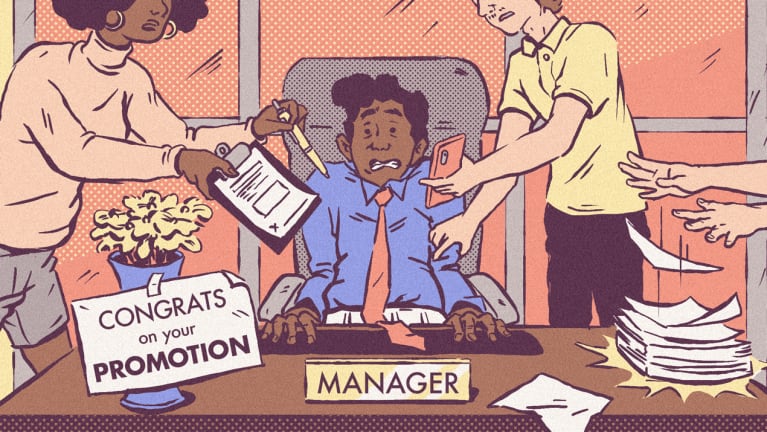
First-Time Managers Are Often Ill-Prepared for Their New Role
Exchange Day Celebrates, Promotes Value of International Work Programs


If you notice groups of international students, workers or trainees cleaning up a local park, collecting and packing donations for people in Ukraine, or enjoying a picnic on the beach on Aug. 7, they might be celebrating the ninth annual Exchange Day.
This day notes and promotes the value of educational and cultural exchange programs offered by U.S. organizations hosting a wide range of international participants—from Fulbright Scholars to au pairs to foreign professionals who are undergoing training or conducting research. It’s also a way for current and past participants and their employer hosts to give back to their local communities while socializing, according to the Washington, D.C.-based Alliance for International Exchange.
The day’s aim, said Mark Overmann, the Alliance’s executive director, is “about ensuring the participants have the most immersive, culturally rich experience they can while they’re in the U.S. … and bring American culture to them and their culture to us.”
The Alliance serves as a facilitator, providing materials and tools to host employers planning Exchange Day events, senior associate Gabrielle Cascio said.
“This day has double impact and is even more exciting for me,” said Cascio, a former Fulbright Scholar who taught English in Bulgaria as an exchange student. “Now I try to go as many [Exchange Day] events as possible.”
[SHRM resource: J-1 Visa Sponsorship]
These events take a variety of forms.
Last year, more than 75 Exchange Day events were held across 27 states and Washington, D.C. Activities included assisting at an animal shelter; working at a local zoo; collecting and donating canned food; and cleaning a church, as well as local parks and waterways.
A host organization in New York City held a “Governors Island Adventure” featuring a catered lunch and ferry ride, an educational session about the city’s harbor ecosystem, and bikes for exploring the island. Other host organizations have held picnics, luaus, and other social or cultural activities.
“In cases of local service events, it’s a way for the participants to learn more about the community, have a cultural experience that is very central to the American identity of giving back, and … there is some teaching of the community of who they are,” while including a fun element such as a picnic, Overmann said.
J-1 Visa Program
This year, SHRM, a longtime J-1 visa sponsor, will have its J-1 staff members and five local exchange visitors volunteer at the Capital Area Food Bank in Washington, D.C. Participants have come from India, Indonesia, Mexico, Peru and South Africa. They are doing internships or undergoing training at businesses in the D.C. area, including a hotel, a boutique architectural firm and several restaurants.
The J-1 Visa Program—officially known as the Exchange Visitor Program—has served as a diplomatic tool of U.S. foreign policy since its establishment as part of the Mutual Educational and Cultural Exchange Act of 1961. Its mission is to increase understanding between Americans and people from other countries.
The J-1 visa classification is used for exchange students and professionals who come to the U.S. to conduct research, consult, receive training or graduate medical education, teach, observe, or demonstrate special skills.
Information on how to participate in Exchange Day is available on the Alliance site. The site also includes a style guide for branding purposes, templates for print materials and social media recommendations.
Other SHRM resources:
SHRM Leads Amicus Brief in Support of J-1 Visa Exchange Visitor Programs, SHRM press release, Aug. 11, 2020.
SHRM Blog: A Conversation with SHRM Exchange Visitor and HR Professional Marion Anderson, SHRM Blog, Aug. 4, 2020.
What Employers Need to Know About Working with J-1 Visa Sponsors, SHRM Online, Jan. 30, 2018.
What Employers Need to Know About the J-1 Visa for Interns and Trainees, SHRM Online, Jan. 29, 2018.
Douse College Burnout with These Tips for the New School Year



Learning how to prevent—or deal with—burnout is an important lesson for U.S. college students as they soon head to school for the 2023-2024 academic year. Burnout was very real for Jessica Blodgett, SHRM-CP, while studying for a master’s degree in human capital analytics and technology at New York University (NYU).
“This is something I struggled with a lot,” said Blodgett, who today is director of people, culture and communities at CMMB, an international nongovernmental organization. “I didn’t take advantage of student leadership and extracurricular opportunities” while studying international business at Berkeley College, “so I overdid it in grad school.”
She was active as a dean’s scholar, working with a group of seven high school students throughout the year to prepare them for college, and she volunteered with nonprofit New York Cares, conducting mock interviews for Spanish-speaking individuals. Blodgett also was part of a small group from the Human Capital Department of NYU’s School of Professional Studies that traveled to Buenos Aires, Argentina, to learn how human capital analytics and technology can be applied to the future of work.
“Working full time, being a full-time student, and being a student leader,” including serving as treasurer for the SHRM student chapter, “I was forced to learn how to stop saying ‘yes’ to everything and learn how to check in with myself and the priorities I was giving my time and attention to,” Blodgett said.
What Is Burnout?
Burnout is different from stress, which is usually more of a short-term feeling. Burnout evolves over time and typically is the “culmination of several stressors that slowly build until the person can’t manage anymore,” according to the American Counseling Association.
Symptoms include a lack of focus, low energy, sleeping through or no longer attending class, and not sleeping or eating. Students dealing with burnout also may quit attending organizations where they were involved, said Amy Yarlett, director of advising and retention systems at Widener University. The private university in Chester, Pa., is located outside of Philadelphia and had 5,416 students during the 2022-2023 school year.
“Those are definitely signs you want to be aware of to make sure they’re getting the help they need to turn this around,” Yarlett said. “We see this a lot from mid-semester to the end of the [15-week] semester” for first-year students.
“Trying to balance it all is definitely a challenge for college students, especially for first-year students,” who can find the freedom of being on their own challenging. “And each year course requirements get more challenging,” she said.
Seniors looking to land their first job out of school while completing their graduation requirements can experience burnout, and course loads for students in general also can factor into burnout, Yarlett added.
For example, nursing students often start their clinicals in their junior year. The clinicals can run for 10 to 12 hours per shift and may include evening or weekend hours. Trying to balance the clinicals in addition to other course work can cause students to feel burned out, she said.
Most Widener classes are fully in person, with online classes mostly for nontraditional students who work during the day. However, Yarlett said she thinks online classes offer more flexibility for students who are disciplined about daily logins and follow the professor’s syllabus.
Preventing, Managing Burnout
There are a number of simple ways to avoid burnout. Yarlett offered the following tips:
- Practice good self-care: Eat balanced meals, get at least eight hours of sleep, exercise.
- Taking care of the body is the most important first step,” she said.
- Carve out time for yourself in your schedule, including taking time for mindfulness, and set boundaries.
“Setting boundaries for yourself is really, really critical for success,” Yarlett said. In addition to using a planner to keep track of your responsibilities, consider keeping a journal to record your feelings daily.
- Have structure to your day and use your peak hours to your advantage. If you are most energized in the morning, for example, use that time to focus on the studies you find most challenging.
“Without having structure, your day can be lost instantly. A schedule helps you feel in control of your day,” she said. “Holding yourself accountable allows you to feel good about what you’ve accomplished.”
- Know that location matters.
“Finding the right location to study is very, very key,” Yarlett said. “Some students need to have it completely quiet. Other people get energized by going to the library and seeing other people studying,” or having a regular study group or buddy to hold them accountable.
- Seek campus resources.
When you start feeling overwhelmed, consider talking to a resident assistant, peer mentor or academic advisor, or seek out on-campus counseling. Many colleges and universities offer free or low-cost counseling services for students who need assistance, according to The College Board, a nonprofit organization founded in 1900.
However, campus counseling centers have seen extreme increases in demand over the past decade, leading to higher caseloads for counselors, according to the American Psychological Association (APA).
“To minimize students slipping through the cracks, schools are dedicating more resources to rapid access and assessment, where students can walk in for a same-day intake or single counseling session, rather than languishing on a waitlist for weeks or months,” the APA reported.
Finding What Works for You
What works will differ for every student. Blodgett found maintaining a self-inventory helpful in keeping burnout at bay.
“I learned what I had to prioritize, and even though I had to make difficult decisions to let certain commitments go, it was the best for my mental well-being,” she said. “Another thing I do to avoid burnout is honor my ‘me-time’ rituals. Every Sunday when I was in school, I really tried to give myself that Sunday to disconnect and just pamper myself.”
The member of SHRM’s Emerging Professional Advisory Council advised students to conduct a personal inventory. This helps to give a full picture of all you have going on, what is the best and worst use of your time, and the cost or benefit of continuing those activities.
Lastly, ask yourself what energizes you, Blodgett recommended.
“What are the things that make you happy? Be fastidiously intentional about doing more of [those things] and not letting anything disrupt that boundary of self-care.”
Other SHRM Resources:
How Emerging Professionals Can Avoid Burnout, SHRM Student Resources, June 2, 2023
How to Implement an Effective Return-to-Office Strategy


While many companies have embraced remote-work arrangements, others have identified a need to bring employees back to the workplace, whether in a hybrid or entirely in-person fashion. Once the decision has been made to have employees return to the company office, a plan should be created to prepare for and minimize disruptions to the business.
Keep in mind that remote work has led many workers to feel less stressed by having more control over their lives, whether that’s greater availability to care for school-age children, increased time for meal planning and exercise, or healthier budgets due to reduced transportation and clothing costs. Losing those benefits may be disempowering and bring about added stress, which can lead to lower performance and worse mental and physical health. Employers will do more harm than good not to recognize and plan for those factors.
The following guidance can help employers develop and implement a return-to-office (RTO) strategy that is both empathetic and effective.
Define the Reasons for Returning to the Office
While leadership may feel the reasons for returning to the office are obvious, those who have been successfully working remotely may not see the benefits.
Vague assumptions about lost productivity and collaboration won’t be supported by what employees are experiencing every day. Clear and transparent reasoning will be respected and trusted—even if not agreed with—putting the onus on employees to re-evaluate their own reluctance to return.
Steps to consider:
- Use internal data to tie the in-office requirement to business objectives. Which objectives does a return support, and how? Draw clear lines as to how the return to the office will enhance outcomes. For example, if a strategic objective for the company is to offer innovative, cutting-edge products, having employees collaborating face-to-face can be more effective by allowing for more organic idea-sharing and brainstorming.
- Re-establish employee motivation for in-office work. People want meaningful jobs, so remind them how working at the same location has provided purpose in the past and will continue to do so. Were business relationships and social connections easier to grow in person? Is employees’ ability to mentor young workers, or to be mentored by those above them, more impactful by sharing day-to-day interactions? Is the shared energy of being with others something the employer will actively use for new initiatives and culture improvements?
- Review the importance of new-employee onboarding, which research has shown is more effective when done in person. If available, offer data showing that employees who have onboarded in person have a greater likelihood of higher performance and a lower rate of turnover than those who onboarded remotely.
- Evaluate the use of incentives to encourage employees to return to the office by helping offset both commuting costs and the loss of scheduling flexibility. Incentives can range from actual payments to such common perks as free meals and onsite day care.
- Be prepared to provide assistance to employees who feel that a return to a physical location directly impacts their work/life balance and ability to care for themselves and others, including children, parents and other relatives.
- Relate the impact of remote work to the health of the community. Are nearby businesses struggling with fewer people coming into offices who would buy their products and services? Will the failure of those businesses negatively affect the success of the employer (reduced municipal tax revenue for the community, difficulties recruiting to the area, etc.), potentially causing internal job losses?
Conduct a Risk Assessment
Before establishing an RTO strategy, an employer should perform a risk assessment for data analysis. Social distancing and hand sanitizer are no longer top of mind, and while safety measures and protocols should still be in place, analyzing potential challenges to the business, such as mass resignations or union organizing, will be key to an effective return strategy.
Surveying managers regarding their staffing concerns is a good place to start. Employee surveys may also prove useful—but as always, be aware of the negative impact of surveying without related follow-up action, as ignoring employee concerns can breed mistrust and disloyalty.
Steps to consider:
- Project both voluntary and involuntary employee terminations based on your return strategy, to assess staffing needs. Include anticipated employee retention costs.
- Consider the risk of union organizing due to a negative response to the return requirements.
- Investigate potential discrimination charges based on the possibility of workers with disabilities having to return; one protected class being more negatively affected than another; etc.
- Predict the impact on employee morale and any related costs needed to improve it.
- Ascertain whether the organization’s culture might be negatively impacted and the costs to abate those effects.
- Determine recruiting challenges, such as a reduced labor pool due to the lack of, or limited, remote work, resulting in increased compensation levels to attract top talent.
- Assess the strength of your health and wellness benefits to mitigate increased employee stress and related physical and mental health issues.
Develop the RTO Strategy
Using a data-informed approach, design a return strategy that best meets business objectives, employee concerns and risk abatement. Will the employer require a full five days in the office, a standardized three days in office and two at home, or a set number of expected days in the office at the manager’s and/or employee’s discretion? What are the exceptions to the in-office requirement, such as workers who need disability accommodations, employees currently living out-of-state or a set distance from the office, or other criteria? Also determine whether the return will occur in phases and how much notice is necessary to best support a successful return.
The strategy should also consider whether rewards or punishments will be used to enforce the return to the office. Either approach should be distributed equally, e.g., rewarding entire departments when a certain percentage of their employees return, or strictly enforcing the return-to-office policy and associated consequences to avoid allegations of favoritism.
Steps to consider:
- Make sure time in the office is well spent. Asking employees to return to the office only to sit at their desks for virtual meetings will likely not be well received.
- Determine whether new collaborative spaces will be created or whether there are other ways office space can be leveraged to support the objectives for returning to the office.
- Examine monetary incentives that may ameliorate certain risks found in the analysis. While leadership may find this unnecessary, consider it a cost of doing business and attach criteria as warranted. For example, offering a one-time bonus to employees can help cover expenses that a return to the office will bring, such as vehicle maintenance/repair and wardrobe updates.
- Evaluate consequences for nonreturning employees. Will there be a hard requirement to return by a certain date to remain employed, or will other options be available, such as a required return to the office only for certain jobs? If employees have the option to continue working remotely, will that impact eligibility for promotions or other opportunities?
Establish and Deploy a Communication Strategy
All communications should be clear and consistent. A good strategy will include separate messaging for people managers who will support and guide employees through the process, as well as information for all employees on key points and where to turn for more details. Ensure the RTO strategy is conveyed from the top down and that people managers are not left alone to handle the disruption.
Don’t underestimate the fear and anxiety some employees may have about returning to the office. Ongoing communication, especially with empathetic messaging, will keep employees informed and on target to meet company expectations, which can reduce stress.
Steps to consider:
- Compose initial communications for email messaging, an intranet resource page or any other communication methods commonly used by the employer.
- Prepare additional messages to quickly respond to developments such as employee backlash, issues for those who relocated during the pandemic, and warnings regarding noncompliance with company expectations.
- Include positive messaging on goals and progress, such as in-office occupancy milestones and any related incentives; successful employee events; health and wellness support; and positive organizational culture or other business objective gains. Be inclusive of those who continue to work remotely to avoid a growing disconnect among remote, hybrid and in-person workers.
The Great Compromise: Return-to-Office Gains Steam



As the COVID-19 pandemic recedes further into the rearview mirror, business leaders and HR professionals find themselves navigating the next great challenge: bringing employees back to the office.
Many companies are at odds with their employees over remote, hybrid and onsite work arrangements. While organizations determine whether remote work is still the best option for their business, many virtual employees wrestle with whether to return or jump ship if required to return onsite. HR sits at the nexus: developing policies that aim to boost employee engagement and retention, helping to establish a company culture that thrives in an uncertain economy, and working with leadership to chart a course for the business’s ongoing success.
Welcome to “The Great Compromise.” In this series of articles, SHRM Online explores the many facets of the return-to-office challenge, identifying the common ground for both employers and employees.
To understand the state of return-to-office, it’s important to look at the trends. Following the outbreak of the COVID-19 pandemic, the U.S. Bureau of Labor Statistics sought to capture data on how employers handled the myriad issues facing their workforce. The Business Response Survey captured the shift of workers back to the office from 2021 to 2022, across all industries.
Kastle Systems, a security provider that operates globally, uses the office occupancy data from more than 2,500 Kastle-equipped buildings to create its return-to-office “barometer”—tracking the utilization of offices in major metropolitan areas around the country.
For more resources on managing your company’s return-to-office, check out SHRM’s Return to Office resource hub page.
The 15-Minute Meeting
Few people, from the summer intern right up to the boardroom elite, like workplace meetings. Case in point: Billionaire Mark Cuban once told Inc. magazine, “The only way you’re going to get me for a meeting is if you’re writing me a check.”
Cuban is hardly alone. Tesla founder Elon Musk calls meetings a “blight,” and a now infamous 2015 Harris survey found that 17 percent of employees would rather watch paint dry and 8 percent would rather undergo a root canal than attend a meeting.
Managers aren’t wild about meetings, either, and they’re the ones who usually have to run them.
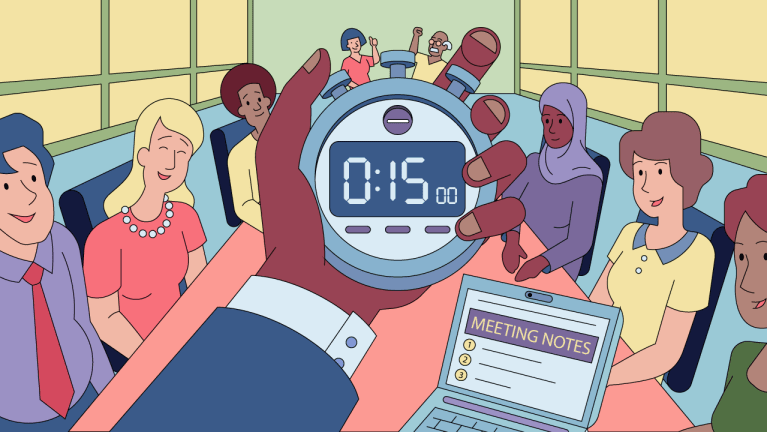
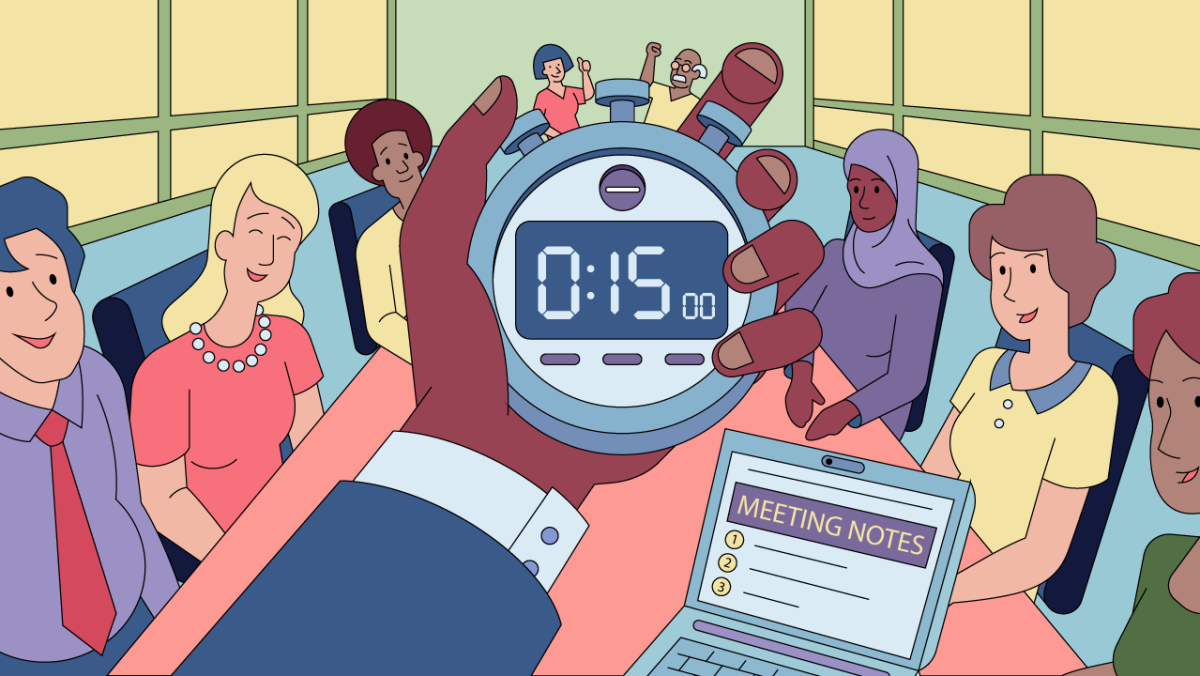
One way to make workplace gatherings more efficient and productive is to implement the “15-minute meeting.” This approach was first introduced by Berlin-based financial automation company Monite in July 2021, when the organization put in place a quarter-hour limit for managers running team meetings.
Business experts say the 15-minute meeting curbs employee burnout and boosts engagement, with which many companies have been struggling since embracing hybrid or fully remote work arrangements as a result of the pandemic.
“Fifteen-minute meetings are prime sources of efficiency,” says Dannie Lynn Fountain, a Google talent sourcer and founder of Focused on People, a human resource services company in Seattle. Research shows that 65 percent of U.S. employees agree that meetings prevent them from completing their own work, while 24 billion hours are wasted each year as the result of unproductive meetings, she notes.
For managers, learning how to plan for and run shorter meetings is good for business.
“The 15-minute meeting allows managers to focus on key points and avoid their message becoming lost in conversation,” says Michelle D. Jimenez, SHRM-SCP, director of human resources at Settlement Housing Fund in New York City. “It also allows team members to focus on those key points and not spend wasted time and dollars digging through nonessential information. This equates to higher productivity, higher return on investment and, ultimately, higher morale.”
Get Agile
Some companies have turned to a project management framework called Scrum as a model for running shorter meetings. The framework encourages short-term collaboration to tackle project goals—much like in a rugby scrum, where teammates gather shoulder to shoulder to get the ball moving in the right direction.
“The 15-minute-meeting model is lifted directly from Scrum,” says Angela Druckman, founder of The Druckman Co., a Seattle-based company that provides agile workplace training. Scrum “is used in many industries, usually in software development or information technology.”
Druckman says she spends a fair amount of time in her training classes teaching people how to run an effective 15-minute meeting.
Here are the tips she gives her clients:
Come into the meeting knowing what you want to achieve. “Meetings are most effective when they are outcome-oriented,” Druckman says. A Scrum meeting is different from a status meeting in which participants report their progress on specific tasks to a manager. “A good daily Scrum has the team members doing most of the talking—and they are talking mostly to each other, not reporting to an authority figure like a project manager.”
Keep conversations meaningful but brief. “In the daily Scrum, each team member says what they did yesterday, what they will be working on today and any [obstacles] they are experiencing,” Druckman adds. “Using these points as a framework for discussion keeps the meeting short but high-value.”
Shut down tangential discussions. Druckman reminds her clients that the daily Scrum may be a good place to identify issues, but not necessarily to solve them.
“When issues are identified that are important but not directly relevant to the goal of the daily Scrum, the person leading the meeting should ‘parking lot’ that topic so people can discuss it elsewhere,” she says. “This is the way to keep the meeting meaningful for everyone involved.”
Strive for Efficiency
Management specialists have additional ideas on how to limit meetings to 15 minutes.
Nettie Nitzberg is the chief learning and leadership officer at Saterman Connect, a New York City-based consultancy that specializes in management coaching, learning and leadership. She advises a two-step approach.
First, clarify the crucial points of the meeting:
- Decide what you, as the manager, want to accomplish. What are your priorities?
- Recognize the best and most efficient way to accomplish those goals.
- Second, lay the groundwork for an effective meeting:
- Create SMART (specific, measurable, attainable, realistic and timely) meeting objectives.
- Identify who must attend the meeting and invite only them. Others can get the notes later.
- Prepare an agenda and send it to participants in advance of the meeting.
- Share notes, materials, links and other information in advance so participants can prepare beforehand and you don’t waste time discussing details during the meeting.
- Select a person to be the timekeeper and another to be the note taker during the meeting. The note taker should record who is assigned to complete follow-up tasks by what date.
The 15-minute meeting should produce what it implies—shorter, sharper collaborations that define project goals and leave more time for workplace teams to meet those goals.
“Done right, the 15-minute meeting is a critical way to ensure we’re able to best use our workday to complete the tasks that actually move the needle,” Fountain says, “instead of spending all day in meetings and having to work after hours to catch up.”
Brian O’Connell is a freelance writer based in Bucks County, Pa.
