

What HR Needs to Know About the Metaverse

?The fact that Facebook changed its corporate name to Meta should send a signal about what at least one tech company sees for the future of digital interactions. The metaverse is an increasingly talked-about topic that refers to an alternate reality online—blurring the lines between the physical and digital environment. 

Rajat Kohli leads the end-to-end aspects of strategic business consulting and advisory engagements for Zinnov, a global management consulting firm with eight offices worldwide. “Early anecdotes show that the metaverse will influence the HR function immensely and will have strong implications across the employee life cycle, including recruitment and onboarding, employee engagement, and learning and development,” Kohli said. But the implications will be broader than for just the HR function itself. It will have a massive impact on the type of knowledge, skills and abilities companies will require across all types of positions.

“The day Meta announced that it was hiring around 10,000 people for its platform in Europe, companies across the globe started strengthening their future workforces,” Kohli said. “More than 40 percent of service providers started hiring top talent to build their metaverse vision within key technology areas including AI, Internet of things, digital twin, blockchain and 3D modeling, among others.”

Kohli added that “tech giants such as Meta, Amazon, Microsoft, Apple and Google are and continue to be heavily focused on investing in senior leaders who have vast experience in gaming; mixed, augmented or virtual reality; and multi-cloud environments—and thanks to the metaverse, HR leaders are now expected to be equipped to hire talent irrespective of their location or preference.”

The pandemic has certainly fueled the rising interest in making more meaningful virtual connections, said Chris Madsen, who leads the business development function at Engage. Engage is “a virtual communications platform that simulates the way we interact in the physical world, but without physical limitations, allowing for multi-user events, collaboration, training, education and much more,” according to Madsen. In other words, it’s a tech firm that facilitates metaverse experiences.

By now, we’re all familiar with “Zoom fatigue.” Metaverse interactions will be far different, and far better, Madsen said, allowing people to interact in 3D environments where they feel immersed in the action.

What Is the Metaverse?

While you’ve likely heard the word bandied about, chances are you’re not entirely sure what the metaverse is—let alone its implications for HR. Ask a dozen people—even if they’re all tech experts—what the metaverse is and you’ll likely get a dozen different answers.

Justin Parry, co-founder and COO of Immerse, a virtual reality (VR) technology and solutions company, offers a practical way to think about the metaverse and its implications for HR. It is, he says, “a richer and more immersive version of everything the Web and mobile currently have to offer.”

The metaverse, in short, is an immersive alternate reality. It’s an alternate reality that, Madsen points out, “is a persistent space that exists whether there’s anybody in there or not.” With the metaverse, he says, “the Web will become a 3D experience”—an experience that can be engaged with on any screen, from phones and tablets to laptops and desktop computers.

“The metaverse allows organizations to put a permanent footprint out there on the Web, where people can come in and, again, experience that company’s culture, their services, their products, in a new way—an experiential, spatial way,” Madsen said.

For some, that may be frightening. For others, exhilarating. For many companies, it will present new ways to engage with customers, clients and employees.

Experiences in the Metaverse

“When you’re in a headset, your brain truly is convinced that you’re in an environment spatially—there’s a physicality to it,” Madsen said. “If I were to meet you in VR, I would literally be reaching out my physical hand and shaking your hand and we would be interacting with that environment around us in a spatial way.” Platforms like Engage, he said, allow for those interactions to be taking place with up to 70 people “interacting at the same time, in the same space, with full 3D audio.”

Unlike in a Zoom environment, he said, where people need to go into breakout rooms to interact with each other separate from the larger group, in the metaverse, they can have private conversations while still in the larger environment. “I can say, ‘Let’s walk over 10 feet and we’ll have a private conversation,’ because spatial audio allows you to do that.”

What that does, Madsen said, is allow people to feel present with other people regardless of their geographic locations—an important aspect of remote work that has become commonplace during the pandemic and is likely to continue into the future.

Some Important Things for HR to Think About

Michelle Hague is the HR manager at Solar Panels Network USA in Denver. In that role, “it’s my job to stay ahead of the latest trends in the workplace—and the metaverse is no exception,” she said. “I know that the metaverse is going to have a big impact on HR.”

For employees, the metaverse might affect how they will work in a virtual world, the type of training and support they’ll need and how it will be delivered, and how they can be more productive and engaged with their work.

For HR leaders, the metaverse presents opportunities and risks. “On the one hand, the metaverse offers a new way for employees to connect with each other and with customers,” Hague said. “But on the other hand, there are potential risks associated with working in virtual reality, including everything from data security to eye strain.”

Solar Panels Network USA is already taking steps to prepare for the potential impact of the metaverse, Hague said. These include:

  • Working with their IT department to make sure that data security systems can protect employee information in a virtual world.
  • Looking at how the company can use the metaverse to enhance training and development programs.
  • Talking to employees to get their input on what they would like to see from a virtual workplace.

The company recognizes that “as we start to explore the possibilities of the metaverse, we may need to bring on board some new talent with expertise in virtual reality and mixed reality technology,” Hague said. More importantly, though, “we’ll need employees who are comfortable working in a virtual environment and who are excited about the potential of the metaverse.”

In addition, Parry advised that “HR teams will also need to provide systems that draw a clear divide between a citizen’s personal and professional identity.” Employers “will need to be completely transparent about the data that’s being captured, how it will be used and the impact it may have on an employee’s professional development,” he said.

Employees Poised to Engage

There’s already some indication that employees will be favorably disposed toward the metaverse. After all, many already are experimenting with immersive technologies like augmented reality and virtual reality through gaming and other applications. And they’ve had ample experience staying connected via Zoom and other virtual meeting platforms.

A study of 1,500 employees and 1,500 employers in the U.S. conducted by ExpressVPN indicates that “nearly 3 in 5 employees and 4 in 5 employers are interested in an immersive workforce.” Their research also indicates that “66 percent of employers are excited about the metaverse, and 46 percent of employees share the same excitement.”

Some major companies are already investing in and exploring the potential that the metaverse offers. Madsen points to some examples, including:

  • Accenture purchasing 60,000 Oculus headsets for VR training.  
  • Fidelity Investments putting on an event in the metaverse.
  • KPMG building an innovation hub in virtual reality, where they’re providing their partners with an opportunity to experience the metaverse firsthand.

To take full advantage of the opportunities that the metaverse may present, Parry suggested that HR teams begin to identify key use cases that might make sense for their organizations and their employees—”whether it’s providing capabilities that didn’t already exist or improving existing learning practices,” he said. 

Stop Fearing AI and ‘Big Data’ in Recruiting

?Complex emerging technologies such as artificial intelligence, machine learning and “big data” analysis will be used to create the leading HR organizations of the future, and employers must be willing to invest the time and effort to use these powerful tools responsibly.

But that means first getting over the fear of what could go wrong and instead resolving to harness technology’s power to better inform decision-making and revolutionize talent management. Eric Sydell 

SHRM Online discussed the critical future-of-work topic with Eric Sydell, an industrial organizational psychologist, expert in AI and machine learning, executive vice president of innovation at recruiting technology firm Modern Hire, and co-author of the new book Decoding Talent (Fast Company, 2022).

SHRM Online: People often react to leading-edge technology with trepidation. In the case of using AI in the workplace, government regulators are placing well-intentioned limits on data usage because they fear employers may abuse employee privacy and workers could suffer harm from bias. How can people move past these initial reactions to harness the benefits of this advanced technology more fully while also addressing its threats?

Sydell: It’s been noted that we are creating advanced technology at a faster rate than we can civilize it. And throughout history, this is often the case—regulations and guidance are often created after the fact, to harness new technology.

AI is possibly the most powerful and consequential technology humans have ever developed. And as with any powerful tool, AI can be used for benevolent or malevolent purposes. In many cases, well-intentioned AI produces harmful results due to unforeseen consequences. And yet, as we all know, AI can also dramatically improve our world in many ways.

Privacy and bias are two of the largest problems with unconstrained applications of AI. As a society, we must figure out ways to limit those problems so that we can reap the benefits of the technology. Of course, there are a lot of business interests that want private personal data so they can better target ads and other tools, and bias is often buried deep in algorithms that produce some other beneficial impact. So finding the right balance between constraining privacy problems and bias and also enabling AI to be effective and helpful is a delicate dance between business and human interests.

In my opinion, we do not yet have AI and algorithmic development constraints adequate to the task of harnessing AI for the benefit of humanity. The key part of that last sentence is “of humanity.” Not corporate interests. AI has to not only be beneficial for corporations, but also for individual humans. It has to make our lives better. Ensuring that private data is not used or that algorithmic bias is mitigated is not enough. And often, these issues are interrelated. For example, we often need to know which demographic groups people belong to so that we can ensure algorithms are not biased against any one group, and yet some regulations limit access to demographic information because it can be considered private or could be used by humans to discriminate. We still have a lot of work to do if we are to harness AI and algorithms for the benefit of individuals.

SHRM Online: The most high-profile news stories about using AI in employment decisions typically portray the negative consequences of the technology, including ethical, legal and privacy abuses. How can AI and big data be used to remove bias from hiring?

Sydell: Early on, AI developers were exuberant about the technology, and rolled out features that were not sufficiently vetted. This led to a lot of high-profile incidents such as when Microsoft released its Tay chatbot that was trained on Twitter data. Almost immediately, Twitter users began feeding Tay racist statements, which it then learned from and began spewing out on its own. Microsoft quickly took Tay down and has since learned that you can’t allow an AI to learn from user responses in such an unfettered manner.

However, fundamentally, AI is just statistical analysis capability. That capability can be designed to find bias and root it out. While poorly developed AI can scale bias, the same types of techniques can also be used to identify bias and thus make hiring decisions fair to all classes of individuals. Remember AI is just a tool. It is up to governments to control how it is used, and developers to be aware of the negative potential of poorly developed code.

SHRM Online: If the key to effective AI use is capturing the right data to analyze, then how does an organization begin to identify this data and act on it?

Sydell: We all intuitively understand that some types of data are more useful than others. But the reality is that it is very hard to know which data points will ultimately prove more predictive and fair. As humans, we often think we know. We are very good at building narratives to explain the world around us. But one of the promises of big data and AI is that it can help make sense of complex, messy, unstructured data in ways that were not previously possible.

Some data types are likely worth more than others. I break candidate data down into the following four categories:

  • Incidental. This refers to non-job-related data like social media profiles, the sound of a person’s voice, or interview video. This type of data has not been found to be very predictive of job success, and it certainly includes a lot of potentially biasing information. It also tends to be viewed as invasive by candidates.
  • Trace. This is online behavioral data such as mouse movements and replay counts. This type of information is also not very predictive of job success.
  • Narrative. This refers to more job-related, but unstructured information such as LinkedIn profiles, cover letters and resumes. This type of data is useful in hiring, but it also contains a lot of biasing factors, so it must be used with caution.
  • Intentional Response. This is the gold standard of data-oriented hiring. It refers to questions that candidates intentionally respond to, such as interview questions that can be quantified with AI and job-related test responses. This data is not invasive and since it is quantifiable, it can be validated, and bias can be measured.

SHRM Online: Talent acquisition professionals want to be able to predict candidates’ job success, but sometimes they struggle. How can emerging AI technology better assess talent?

Sydell: Decisions about who to hire are inherently human decisions. And we humans are just not very good at making reasoned, high-quality, fair decisions about other humans. Our brains are wired to take in volumes of data and make very fast, intuitive decisions. And we do that with candidates. We get a sense of who they are in literally seconds, and it is often difficult to overcome those first impressions even as more data comes in.

While there is a ton of hiring tech available today, much of it does not help us get around our inherently human decision-making inadequacies. For that, we must turn to structured, scientifically driven tools that measure very specific candidate characteristics that are proven to be predictive of job performance. A typical example is a job-relevant, validated assessment, which is often the most valid and predictive part of a hiring process. Our own two decades of assessment research has produced many examples of how validated assessments lead to vastly higher ROI [return on investment] and far greater levels of new-hire diversity.

AI allows us to study and score more than just tests, though; it allows us to vastly expand the array of candidate information that can be quantified and thus studied. Essentially, AI allows us to quantify a tremendous amount of data, which recruiters and hiring managers previously had to eyeball. Ultimately, this helps dramatically shrink the hiring process from weeks to days or even hours, increases the effectiveness of those hiring decisions, and does all this with a level of fairness that humans simply cannot match.

Viewpoint: Stop Fearing AI and Big Data in Recruiting

?Complex emerging technologies such as artificial intelligence, machine learning and big-data analysis will be used to create the leading HR organizations of the future, and employers must be willing to invest the time and effort to use these powerful tools responsibly.

But that means first getting over the fear of what could go wrong and instead resolving to harness technology’s power to better inform decision-making and revolutionize talent management. Eric Sydell 

SHRM Online discussed the critical future-of-work topic with Eric Sydell, Ph.D., an industrial organizational psychologist, expert in AI and machine learning, executive vice president of innovation at recruiting technology firm Modern Hire, and co-author of the new book Decoding Talent (Fast Company Press, 2022).

SHRM Online: People often react to leading-edge technology with trepidation. In the case of using AI in the workplace, government regulators are placing well-intentioned limits on data usage because they fear employers may abuse employee privacy and workers could suffer harm from bias. How can people move past these initial reactions to harness the benefits of this advanced technology more fully while also addressing its threats?

Sydell: It’s been noted that we are creating advanced technology at a faster rate than we can civilize it. And throughout history, this is often the case—regulations and guidance are often created after the fact, to harness new technology.

AI is possibly the most powerful and consequential technology humans have ever developed. And as with any powerful tool, AI can be used for benevolent or malevolent purposes. In many cases, well-intentioned AI produces harmful results due to unforeseen consequences. And yet, as we all know, AI can also dramatically improve our world in many ways.

Privacy and bias are two of the largest problems with unconstrained applications of AI. As a society, we must figure out ways to limit those problems so that we can reap the benefits of the technology. Of course, there are a lot of business interests that want private personal data so they can better target ads and other tools, and bias is often buried deep in algorithms that produce some other beneficial impact. So finding the right balance between constraining privacy problems and bias and also enabling AI to be effective and helpful is a delicate dance between business and human interests.

In my opinion, we do not yet have AI and algorithmic development constraints adequate to the task of harnessing AI for the benefit of humanity. The key part of that last sentence is “of humanity.” Not corporate interests. AI has to not only be beneficial for corporations, but also for individual humans. It has to make our lives better. Ensuring that private data is not used or that algorithmic bias is mitigated is not enough. And often, these issues are interrelated. For example, we often need to know which demographic groups people belong to so that we can ensure algorithms are not biased against any one group, and yet some regulations limit access to demographic information because it can be considered private or could be used by humans to discriminate. We still have a lot of work to do if we are to harness AI and algorithms for the benefit of individuals.

SHRM Online: The most high-profile news stories about using AI in employment decisions typically portray the negative consequences of the technology, including ethical, legal and privacy abuses. How can AI and big data be used to remove bias from hiring?

Sydell: Early on, AI developers were exuberant about the technology, and rolled out features that were not sufficiently vetted. This led to a lot of high-profile incidents such as when Microsoft released its Tay chatbot that was trained on Twitter data. Almost immediately, Twitter users began feeding Tay racist statements, which it then learned from and began spewing out on its own. Microsoft quickly took Tay down and has since learned that you can’t allow an AI to learn from user responses in such an unfettered manner.

However, fundamentally, AI is just statistical analysis capability. That capability can be designed to find bias and root it out. While poorly developed AI can scale bias, the same types of techniques can also be used to identify bias and thus make hiring decisions fair to all classes of individuals. Remember AI is just a tool. It is up to governments to control how it is used, and developers to be aware of the negative potential of poorly developed code.

SHRM Online: If the key to effective AI use is capturing the right data to analyze, then how does an organization begin to identify this data and act on it?

Sydell: We all intuitively understand that some types of data are more useful than others. But the reality is that it is very hard to know which data points will ultimately prove more predictive and fair. As humans, we often think we know. We are very good at building narratives to explain the world around us. But one of the promises of big data and AI is that it can help make sense of complex, messy, unstructured data in ways that were not previously possible.

Some data types are likely worth more than others. I break candidate data down into the following four categories:

  • Incidental. This refers to non-job-related data like social media profiles, the sound of a person’s voice, or interview video. This type of data has not been found to be very predictive of job success, and it certainly includes a lot of potentially biasing information. It also tends to be viewed as invasive by candidates.
  • Trace. This is online behavioral data such as mouse movements and replay counts. This type of information is also not very predictive of job success.
  • Narrative. This refers to more job-related, but unstructured information such as LinkedIn profiles, cover letters and resumes. This type of data is useful in hiring, but it also contains a lot of biasing factors, so it must be used with caution.
  • Intentional Response. This is the gold standard of data-oriented hiring. It refers to questions that candidates intentionally respond to, such as interview questions that can be quantified with AI and job-related test responses. This data is not invasive and since it is quantifiable, it can be validated, and bias can be measured.

SHRM Online: Talent acquisition professionals want to be able to predict candidates’ job success, but sometimes they struggle. How can emerging AI technology better assess talent?

Sydell: Decisions about who to hire are inherently human decisions. And we humans are just not very good at making reasoned, high-quality, fair decisions about other humans. Our brains are wired to take in volumes of data and make very fast, intuitive decisions. And we do that with candidates. We get a sense of who they are in literally seconds, and it is often difficult to overcome those first impressions even as more data comes in.

While there is a ton of hiring tech available today, much of it does not help us get around our inherently human decision-making inadequacies. For that, we must turn to structured, scientifically driven tools that measure very specific candidate characteristics that are proven to be predictive of job performance. A typical example is a job-relevant, validated assessment, which is often the most valid and predictive part of a hiring process. Our own two decades of assessment research has produced many examples of how validated assessments lead to vastly higher ROI [return on investment] and far greater levels of new-hire diversity.

AI allows us to study and score more than just tests, though; it allows us to vastly expand the array of candidate information that can be quantified and thus studied. Essentially, AI allows us to quantify a tremendous amount of data, which recruiters and hiring managers previously had to eyeball. Ultimately, this helps dramatically shrink the hiring process from weeks to days or even hours, increases the effectiveness of those hiring decisions, and does all this with a level of fairness that humans simply cannot match.

How Technology Can Help Companies Tackle Job Seeker Fraud

?Imagine hiring a new employee who, when she showed up to start the job, was not the same person you had interviewed. That may be happening more often than you think.

On June 28, the FBI issued a public service announcement indicating that the number of complaints it’s receiving for this problem is increasing.  

Scammers are using deepfake technology and stolen personally identifiable information to pose as other people and apply for jobs. Why? Once on the job, these individuals can gain access to data and systems, release ransomware, or obtain the credit card information or Social Security numbers of customers or employees.

Could this—has this—happened to you?

Deepfake Risks

Deepfakes, which can occur during both video and audio interactions, involve digitally altering the image and voice of someone to make it appear like they are someone else saying or doing things they haven’t actually said or done. It’s most commonly thought of as a means to spread misinformation—especially malicious information. As Common Sense Media reports, “Director and comedian Jordan Peele teamed up with Buzzfeed and Barack Obama to create this deepfake video to serve as a warning of what manipulated video could do.”

Deepfake technology is also known as “synthetic media,” said Dave Hatter, a software engineer and cybersecurity consultant with 30 years of experience in IT. It’s advancing, he says, “much quicker than most realize.”

There are social and political risks related to deepfakes and their reported use on social media channels, with their potential to spread misinformation. Companies are also at risk during the hiring process, as the FBI recently indicated. Remote jobs for which the entire interview process is conducted virtually are particularly vulnerable. But there are some steps organizations can take to protect themselves.

Minimizing the Risk of Fraud 

Jon Hill is chairman and CEO of The Energists, a recruiting firm that works with companies in the energy industry. “Our reputation depends on the candidates we send along to clients, so we take preventing candidate fraud very seriously and have implemented systems to detect and avoid these scammers,” he said.

Remote jobs may be particularly at risk from this type of fraud, he said—especially if the interview and training process is entirely remote. Hill said companies need to “be vigilant and thorough in verifying the identity of candidates before extending offers.”

At least one round of interviews should be done via video call, he said. Candidates should be informed that they must:

  • Have their camera on.
  • Show their photo ID alongside their face at the start of the interview.
  • Agree to have the video recorded.
  • Remove any earbuds or headphones.
  • Turn off any backgrounds or filters in the program.

“These steps don’t eliminate the possibility of an especially skilled scammer using deepfake technology, but it does make it more difficult for fraudulent candidates to succeed,” Hill said.

Recording the interview is important, Hill said—interviewers are likely to be busy talking and listening to the candidate and may not notice any oddities. If you plan to move forward with the candidate, review the video on a larger screen, he advised.

“Pay close attention to their eye and mouth movements, which are the most difficult parts of the face to make appear natural,” Hill suggested. “Also keep an eye out for any skin tone irregularities or odd shadows, which could be a sign the video is faked.

“If something odd does catch your eye mid-interview and you suspect the video may be a deepfake, ask the candidate to stand up or turn their chair away from the camera. Often, the edges of the AI-created video will become visible when they move around the frame or will warp and distort in profile, even very sophisticated ones that are otherwise virtually indetectable.” 

It can be helpful to get some practice in identifying the real from the fake. Hatter recommended a website developed by MIT that can be used to practice identifying deepfakes. Going through the 32 examples can help you be more watchful for some of the “tells” that indicate the clips aren’t genuine.

An Ongoing Challenge

Peter Strahan is the founder and CEO of Lantech, a professional IT support, cybersecurity and cloud services firm. “Because deepfakes are AI-generated and AI is constantly learning all of the time, making a conventional detection tool for deepfakes is futile,” Strahan said. “You’ll never stay ahead of machine learning.”

Fortunately, he added, “companies like Microsoft have been creating their own video authentication tools, using AI to fight AI.” Microsoft used a public dataset of real faces to develop its technology, Strahan said, which gives a “confidence score” indicating how likely it is that any given image has been manipulated in various ways. With videos, he said, scores can be given for each frame. “The added bonus is that as the technology is AI, it is constantly learning and improving, although deepfake technology is improving, too.”

It is, Strahan said, “a digital arms race.” But, he added, “I have no doubt that the good guys will win. Microsoft’s tool is currently available, and I would recommend anybody suspecting that they are dealing with deepfake job applications to give it a try. There’s still a fair way to go, but I’m sure it would identify all but the best deepfakes.”

Keep in mind that, especially in an increasingly remote/hybrid world, deepfake fraud isn’t limited only to the recruitment process. There is, for instance, the potential for this technology to be used by employees to fake their participation in a Zoom call, for instance—or to make it appear that another employee, customer, vendor or anyone else, for that matter, has said or done something that they haven’t.

Lin Grensing-Pophal is a freelance writer in Chippewa Falls, Wis.

Decision Intelligence Poised to Give HR Leaders Help with Their Action Agendas

?Decision intelligence platforms may be the next big data analytics trend to support HR leaders’ efforts to improve employees’ work experiences. 

Decision intelligence platforms use cloud computing and artificial intelligence to leverage data science, social science and management methods to design, map, align and evaluate decision models and processes.

The appeal of using technology to assist with decision-making has grown in recent years. The pandemic ushered in new and unpredictable circumstances that forced many employers to make complex decisions. This period also saw an increase in automation and a further demand in artificial intelligence and cloud computing adoption, which are drivers of decision intelligence platforms.

During the pandemic, HR managers had to take action on many parts of the work life cycle, such as deciding if staff will work remotely or from the office, how many workers will be furloughed or laid off, how to handle vaccine mandates, what sign-on bonuses should be offered, and what salary rate will cushion the blow of inflation.

Now, investments in decision intelligence technology are on the rise. According to research and consulting firm Emergen Research, the global decision intelligence market size was pegged at $10.3 billion in 2020, and the market is expected to have a compound annual growth rate of 13.7 percent by 2030.   

Research firm Gartner Inc. polled 132 IT leaders to examine the role of data and analytics in organizational decision-making. The survey found that 65 percent of respondents said the decisions they make are more complex than just two years ago, and 53 percent said they face more pressure to explain or justify their decisions.

Leading up to the end of 2019, companies were focused on very lean, efficient and effective processes. The pandemic shattered that.

“There were no supply chains, no availability, people could not move, people were sick, people had to wear masks. Suddenly, everything changed, and all these very effective, efficient processes just fell apart. Then they asked themselves, ‘How can I reorganize?’ Well, if you don’t know how you make a decision, you can’t modify that decision,” observed Erick Brethenoux, distinguished VP analyst at Gartner.

For HR executives, the benefits of decision intelligence could be a game changer, he added.

For example, Brethenoux said, there are many factors a recruiter must consider when hiring a candidate, and there are many AI techniques that can be used to help clarify the decision-making process.

Recruiters will want their AI tools to use rule-based techniques to determine if candidates can work legally in the U.S. and if they have the proper visas or clearances to work in certain federal government jobs. 

The recruiter can also use propensity modeling in machine learning to build predictive models that can forecast whether a candidate will accept a job based on their past behavior.

In the last stages of the hiring process, the employer can use optimization algorithms to evaluate the possibility of the candidate taking the job.

“Maybe it’s going to be remote work and only a few days working in the office, maybe it’s going to be an incentive, and maybe the incentive is not a monetary incentive, but it’s to work on a pro bono project. The HR manager is going to have to tailor their offer to what the person is most likely going to accept,” Brethenoux said.

The Business Case for Decision Intelligence

Not only has Gartner declared decision intelligence to be one of the top strategic technology trends for 2020, but the research firm also predicts that by 2023, one-third of large organizations will be using decision intelligence platforms for structured decision-making.

Companies such as FICO, Pyramid Analytics, Peak and Aera Technology have spent the last few years improving their decision intelligence platforms.

Fred Laluyaux, chief executive officer at Aera Technology, sees decision intelligence platforms as critical for employers who want to use the technology to capture information that helps them function effectively.

At a time when millions of employees are leaving their jobs month after month during the Great Resignation, Laluyaux said it is important to capture critical information that helps companies’ operations, even when employees leave their jobs. 

As an example, “if your job is to make sure that there is enough product on the shelf, you will learn over the years that when the price of gasoline crosses a certain threshold, consumer habits will change,” Laluyaux said.

He added that customers may buy the same brand but less of the product, or they may buy a cheaper brand and still consume the same volume.

“All this knowledge is in people’s heads, and when you have done the job for a long time, you can do a very good job at leveraging that knowledge to make decisions,” he said.

What decision intelligence platforms are good at, Laluyaux noted, is building knowledge about a company’s systems, which can be anything from how to procure raw materials for factories to how to optimize shipping mechanisms or processing data that give a clearer picture of how to work with vendors. 

He added that when people leave their jobs every two years, it’s harder to make the right decision if the company hasn’t captured critical information that helps current employees gain insights, make predictions and ultimately make the right decisions. 

“The impact of decision intelligence on the future of work is huge,” he said. “You remove a lot of the inefficiency because it’s data-driven, software-driven and it’s all logic-driven. It analyzes the data in real time and it provides a better environment for the information worker.”

Nicole Lewis is a freelance journalist based in Miami.

Compliance Officers Brace for New Regulations with Updated IT Solutions

?Technology designed to manage compliance at organizations is changing. Rather than providing simple regulatory data feeds or narrow, industry-focused solutions, increasingly vendors are offering more integrated regulatory intelligence capabilities.

Given this shift, chief compliance officers (CCOs) should stop looking for risk-specific software and instead seek IT solutions that manage broader compliance and adherence issues across a wider range of risk domains, said Zack Hutto, director of advisory at Gartner’s legal and compliance practice.

According to Hutto, historically there has been a tendency for vendors to offer solutions that address different segments of compliance issues. “When you think about the technology architecture of a company, you largely had functions leading the charge with some specific applications, hubs or platforms set up to cover that domain,” Hutto noted.

As an example of new compliance integrations, Hutto said, the finance department’s transaction-monitoring solutions are now incorporated into enterprise resource management platforms. Another example is HR employee data management solutions, which have morphed into human resource information system platforms.

“Increasingly these platforms are becoming more and more cross-functional in terms of the user case that they are trying to address and they are trying to interact with,” Hutto said.

“We are finding the greatest opportunity for compliance leaders lies in better exploiting embedded control opportunities within existing solutions or within cross-functional solutions rather than trying to buy some compliance-centric solution that’s going to be added on top of all these other platforms,” he added.

A September 2021 Gartner survey of 755 employees showed that when compliance teams don’t embed their controls into employee processes, they experience a higher rate of compliance failures.

Thirty-two percent of employees polled said they couldn’t find relevant information when they missed a compliance obligation. An additional 20 percent didn’t recognize information was required and 19 percent didn’t remember. The remaining 29 percent of respondents who missed a compliance step said they didn’t understand (16 percent) or they failed to execute the step (13 percent).

Embedded controls not only provide critical information to employees that remind them of what they need to do during the workflow process, but they also help them execute on compliance obligations which leads to reduced risk. 

According to Amy Matsuo, leader, regulatory insight and regulations and compliance transformation at KPMG, CCOs must make sure embedded controls achieve results in the way they were intended.  

“When organizations adopt embedded controls, the first thing they need to do from a compliance perspective is make sure that they do the appropriate diligence and user testing upfront before those controls are put into workflow processes to make sure the efficacy and the outcomes are appropriate. It’s the old kind of ‘trust but verify,’ ” Matsuo said.

She added that while companies are striving for automated controls to manage their regulatory and compliance needs, companies will have to continue monitoring their systems to keep up with process and regulatory changes.

CCOs can expect the future of compliance to look much like the past, but perhaps more complex. Adding to the challenges of managing compliance among a virtual workforce that has grown since the pandemic, CCOs are bracing for new regulations that will add more tasks and result in a greater compliance burden on employees.

One example is the Securities and Exchange Commission, which is moving ahead with an ambitious regulatory agenda this year that includes proposed new disclosures that public companies will have to make in several areas, such as human capital management, climate-related risks and cybersecurity, as well as proposed requirements for investments related to environmental, social and governance disclosures.

The anticipation of more regulations has convinced many CCOs that their best bet is to make automation and technology an integral part of their compliance strategy.

A KPMG survey, published in August of 2021, which polled compliance leaders at 249 organizations, found that 67 percent of respondents indicated that their compliance division planned to enhance the use of automation and technology in the next one to three years.   

Nearly half of respondents (49 percent) expect their overall ethics and compliance department budgets to increase year-over-year while the majority of respondents (more than 75 percent) expect their technology budgets specifically to increase over the next three years.

For those CCOs who are engaging vendors to purchase software for regulation and compliance management, Matsuo warned that buyers should beware. “Don’t jump too fast to technology as the fix,” she said.

Matsuo urged CCOs to ask themselves the following: What are your challenges? What are your three-year goals? What skills and talents do you need? And where are the gaps within your current coverage model?

“CCOs have to take a very thoughtful approach,” she said. “Once they’ve identified the critical challenges, the critical need and the critical risk and then look at the technologies and features being offered, they then have to focus on the pros and cons. Based on that analysis, CCOs have to assess the software to find the right fit.”

Nicole Lewis is a freelance journalist based in Miami.

Beyond Headcount Planning: New Tech Addresses Labor Shortage Issues

?Workforce planning has long involved using spreadsheets to create an accurate employee headcount based on projected financial metrics. While such planning remains essential for HR and talent leaders, many are finding they need new and richer types of information to address pressing challenges like continuing labor shortages, uncertainty about available skills in their own workforces and succession management plans upended by the Great Resignation.

Some are turning to talent intelligence platforms for tools that can provide greater visibility into current capabilities of the workforce, identify skill “adjacencies” in workers that might allow them to be redeployed into open positions and build succession management plans for roles throughout the company, not just at the top executive level.

“Organizations are realizing they don’t just need to know the number of heads in the company; they also need to know the current inventory of skills available in the workforce, how to resolve continuing labor supply and demand issues, and what their leadership pipelines now look like,” said Josh Bersin, a HR analyst and CEO of the Josh Bersin Academy in Oakland, Calif. “Today you need much more than numeric or headcount data for good workforce planning.”

Bersin said providers of talent intelligence platforms include vendors Eightfold, Beamery, Gloat, SkyHive and a number of human capital management technology suite providers who offer products like skills ontology software that can help identify and verify capabilities in the internal workforce.

“What the platforms can do is look at large volumes of data about people inside and outside of your company and aggregate that information into groups,” Bersin said. “The technology can analyze data in a way that’s much more actionable for today’s talent management challenges than just looking at how much headcount you have in a given month.”

For example, Bersin said his organization has data showing there will be approximately 2.5 million to 3 million open nursing positions in the next three years in health care organizations.

“Whatever your headcount number is, it’s not going to address that growing problem of talent supply and demand,” Bersin said. “You have to figure out where those nurses are going to come from. These are bigger, more complex decisions than simply aggregating headcount numbers in an organization, and it represents a big change in how companies need to construct their talent strategies.”

Research shows more HR professionals are looking for technologies that can help with labor forecasting and identifying skills gaps in the ranks. One of the key themes from Sapient Insight Group’s 2021-2022 HR Systems Survey, for example, was the growth in companies investing in or evaluating skills management software.

New Software Aids Succession Planning

Continuing employee resignations and struggles to fill job openings have combined to disrupt many organizations’ succession plans. HR analysts say the nature of succession management has changed, with HR and talent leaders needing to create “bench strength” for a wider variety of roles in the organization.

“Succession planning is no longer just for the top executive level,” Bersin said. “With all of the resignations and new initiatives happening in organizations, there’s a greater need to identify the most likely people to move into open roles at all levels of the company.”

Bersin said many of the same platforms used for talent intelligence can be used for succession planning purposes.

Jarron Rice, global skills lead for John Deere in Austin, Texas, uses a talent intelligence platform from vendor Fuel50 for succession planning. Rice said the platform has given him a new level of insight into the skills and capabilities of his workforce, and the data helps guide decisions around succession planning and internal mobility.

“Seeing skill adjacencies that exist across entirely different job families broadens our view of viable internal candidates,” Rice said.

One technology vendor that’s reimagined the succession planning process is Columbus, Ohio-based WORQDRIVE. Its platform was built on a belief that succession management should be democratized and companies need greater visibility into the capabilities of their workforces to allow them to better plan for everything from impending retirements to staffing short-term support gigs.

“What we’ve found is many organizations don’t even know the talent they have within their four walls,” said Tracey Parsons, CEO of WORQDRIVE. “There are so many people in enterprise companies that have hidden skills or talents from earlier job experiences or side gigs that could be applied to other roles in the company. Our system is designed to bubble up great skill sets not just for open requisitions but also for opportunities outside of the requisitioning system.”

Users of WORQDRIVE can search for talent inside their own organizations and identify employee matches based on skills, uniqueness and level of advocacy. Worker skills, certifications and experiences are gathered and validated from human resource information systems.

“We give employees the opportunity to update and augment their information to make it current and relevant,” Parsons said. “We also ask employees to invite people within the company to advocate for them and their skills. Because all employee data is anonymized, employees don’t know who has or hasn’t advocated for them, which allows people to be more honest in their advocacy.”

Once short lists of internal candidates are created, WORQDRIVE users can contact those employees through a built-in messaging feature to gauge their interest. The targeted workers’ identity remains hidden until they accept the proposed plan.

“We keep it anonymous to build trust with employees,” Parsons said. “If a person responds favorably to a request to be on a shortlist, only then do we unmask their identity and interested parties can start having conversations outside of the platform.”

DE&I and Workforce Planning

A component of workforce planning also revolves around diversity, equity and inclusion (DE&I) initiatives. At the CUNA Mutual Group in Madison, Wis., chief strategy and human resources officer Linda Nedelcoff uses a technology platform and expertise of a third-party provider to help assess who is likely to retire in the organization and factor DE&I strategies into identifying potential replacements.

CUNA’s DE&I initiatives are designed not only to boost hiring of underrepresented candidates but also focus on their promotion and job tenure once on board.

“We’ve built a form of apprenticeship for our advisor roles to prepare for those advisors who’ve been identified as probable to retire,” Nedelcoff said. “We’re partnering with our diverse communities to create a base for those apprenticeship roles to get more minority and female representation. That not only helps with workforce planning, it also helps advance our DE&I goals.”

Dave Zielinski is principal of Skiwood Communications, a business writing and editing company in Minneapolis.

Companies Are Rethinking How They Hire Technical Talent

?Sargun Kaur knows from experience how flawed the process for hiring technical talent can be in some organizations. Kaur, the co-founder and CEO of Byteboard, a platform that assesses candidates for technical roles, is a former engineer who suffered through job interviews she believed weren’t reflective of the skills or knowledge she’d need to succeed on the job.

Such interviews were designed more to test memorization or performance anxiety than to assess how software engineers code in real-world settings, Kaur believed, and also could have a disproportionately negative impact on underrepresented groups. Many candidates in the latter category don’t have access to the same test prep materials or resources as others, and research shows people are more likely to stop interviewing after a single poor interviewing experience, Kaur said.

That seemingly broken process is why Kaur decided to launch Byteboard along with colleague Nikke Hardson-Hurley, with whom she worked at Google. Byteboard departs from traditional hiring practices by using project-based interviews featuring asynchronous tests designed to mimic how engineers work on the job every day.

“There’s a whole hiring industry built around doing considerable prep work to prepare for theoretical questions during interviews,” Kaur said. “It never made sense to me that job interviews for a variety of technical roles didn’t reflect the work you would actually be doing.”

To construct its platform, Byteboard interviewed scores of engineers at different experience levels across industries and companies, identifying 20 core skills required to succeed on the job. The founders then designed a process to replace the typical pre-onsite interview, asking candidates to take a timed, project-based assessment. Byteboard’s calibrated evaluators then grade candidate materials and provide a performance report to clients.

“The assessment involves working through a project just like you would if you were on the job as an engineer,” Kaur said, with its asynchronous nature helping to remove some of the performance anxiety associated with time-honored practices like live coding tests.

For example, projects for software engineers might include coding in an existing codebase. Projects for front-end engineers could focus on using HTML, CSS or JavaScript to create real webpages, and mobile engineering assessments might ask candidates to use Kotlin or Swift to build an application in a real mobile development setting.

Some recruiting industry analysts say such assessment approaches can have dual value in a market where demand for technical talent still far exceeds supply. The focus on testing practical skills applicants will use on the job rather than on theoretical questions can provide an improved candidate experience in a time when applicants can afford to be extremely selective. The assessment method also can lead to improved speed-to-hire, since the quality of the initial testing often provides a “high-quality signal” about prospective performance and requires fewer follow-on interviews to make a final hiring decision.

Ben Eubanks, chief research officer for Lighthouse Research and Advisory, an HR consulting firm in Huntsville, Ala., said recent research conducted by his company found candidates often prefer the type of project-based job assessments offered by Byteboard and other recruiting vendors in the space.

“We found that workers prefer this type of interviewing experience over use of traditional resumes or other approaches, and diverse workers prefer them even more highly,” Eubanks said. “They let candidates put their best foot forward and be judged on their ability, not on any other extraneous information. In fact, the closer the line of sight between the assessment and the actual job duties, the more the candidate enjoys the experience.”

Byteboard also strives to create a level playing field by reducing hiring bias on its platform. Candidate evaluation reports sent to hiring managers are fully anonymized, Kaur said, and the project-based tests are evaluated using highly structured rubrics.

“Many of our clients have seen an increase in the number of job offers going to individuals in underrepresented groups,” Kaur said. “For us, it’s about expanding opportunity for the kind of high-paying jobs this field can provide.”

Virtual Skills-Based Hiring for Tech Talent

Another recruiting vendor with a more modern approach to hiring technical talent is San Francisco-based Filtered. The company was founded on the belief that the traditional assessment process for software engineers, data scientists, DevOps specialists and other technical workers too often is untethered from their actual job duties and leans too much on the school they attended or their employer history.

Filtered has a process that automates applications, screening calls and coding interviews, while using a combination of live and recorded video interviews to test different aspects of candidate capabilities. The platform also is designed to assess soft skills as effectively as technical skills, producing a more holistic view of candidates.

“The globe is now the talent pool for many organizations, and we think that hiring for engineering, data science and DevOps roles requires a different kind of approach,” said Dan Finnigan, CEO of Filtered. “We were founded on the pillar of ‘performance over pedigree,’ and our platform reflects that belief.”

Finnigan said that while many recruiters continue to use their applicant tracking system (ATS) for workflow and logistics tasks, they need to replace the physical interview room, which is where Filtered’s virtual option comes in. The vendor uses what Finnigan said is a “completely configurable” integrated development environment for assessment, which provides a full complement of tools needed by programmers for software development.

Jeremy Bushaw, vice president of global talent acquisition for Informatica, a data management company in Redwood City, Calif., uses the Filtered platform and has found value in how it can be configured for his unique hiring needs and evaluate technical candidates’ soft skills.

“The soft-skill assessment saves our recruiters and hiring teams a significant amount of time by being able to accurately assess communication skills and thinking ability without having to spend a lot of time with candidates,” Bushaw said. “It’s allowed us to accelerate our recruitment process.”

A Referral-Based Approach to Technical Hiring

Another vendor taking a new approach to technical recruiting is Circular, located in Madrid. The company’s hiring model is based on encouraging recruiters to recommend technical talent they weren’t able to hire into Circular’s recruitment network. The process formalizes the age-old informal practice of recruiters recommending applicants to peers in their networks.

Circular applies technology to the process to allow such referrals to occur at scale and offers recruiters incentives for their recommendations. Lauren Castleton-White, director of community for Circular, said the platform has a network of 6,000 recruiters who recommend a shortlist of top technical talent primarily in Europe. She said recommending talent through the platform can be integrated into regular hiring practices and requires few extra steps.

“Recruiters simply add a role and we do the rest,” she said. “Recruiters can either add their personal recommendation link to their ATS or directly send nonhired candidates the Circular recommendation e-mail, which is 100 percent GDPR [General Data Protection Regulation] compliant.”

Castleton-White said recruiters who recommend candidates can earn points, which can be redeemed for things like event tickets, merchandise, charity donations and even recruitment learning courses. “Those points also contribute to a recruiter’s reputation level, which defines how much trust they have earned in the network,” she said.

Dave Zielinski is principal of Skiwood Communications, a business writing and editing company in Minneapolis.

The Role of AI in Retaining Top Talent

?The ability to retain top talent is top of mind for employers, HR professionals, managers and supervisors in companies of all kinds across all geographies.

As they frantically struggle to find reliable fixes that can help them minimize talent loss, potential relief may be available from a solution they might not have considered—artificial intelligence, or AI.

One of the things that research tells us is highly important for employees is the ability to grow and develop. If they can’t do that within your organization, they’ll look elsewhere for these opportunities. AI can help you ensure that you’re not overlooking employees who are poised to move on to bigger and better responsibilities.

“People stick around longer when they have opportunities for career growth,” said Janet Clary, director of HR research and advisory services at McLean & Company in London, Ontario, Canada.

She said McLean & Company has found that “employees who agree or strongly agree that they can advance in their career in their current organization are 3.4 times more likely to be engaged, compared to those who disagree or strongly disagree.”

Organizations can use AI, she said, “to algorithmically match people with internal opportunities such as project and gig work, full-time roles, learning experiences, and mentorships based on that person’s individual skills, experiences and interests.”

AI technology can also help companies allocate work most effectively and efficiently—making sure the right people are working on the right things and improving the odds that they will be engaged.

“Automating routine tasks like filling timesheets at scale has many advantages aside from merely monitoring the in and out time of employees,” said Lakshmi Raj, co-CEO and co-founder of Replicon, based in Redwood City, Calif. “They can use data to find the best fit for projects, augmenting the quality of output by utilizing their resources optimally.” Doing so can also minimize the potential for burnout, she said.

Preventing Burnout

Janelle Owens, SHRM-CP, is the HR director at Test Prep Insight. She said her company is “using behavioral analytics software to identify burnout among key employees before it happens in an effort to reduce churn.” Burnout can be a big driver of turnover. Fortunately, she said, “behavioral analytics can provide key insights into employee behavior and help prevent burnout before it gets to a breaking point.”

Test Prep Insight has used AI-driven software since the onset of the pandemic. “This software gathers and analyzes employees’ communications through existing channels like Zoom, e-mail and Slack,” she said. “It then identifies trends and certain buzzwords in their messages, running this data through its algorithm to identify at-risk employees.” That’s been especially important in a remote work environment, she said.

“One of the ways to arrest employee burnout is to identify resources that are overutilized and underutilized,” Raj said. “With AI and machine-learning-based professional services automation and cloud-first time-tracking solutions, enterprises can analyze real-time data to enable more effective allocation of resources, ensuring balanced workloads, high employee morale and reduced attrition.”

Identifying Employee Flight Risk

“Using both internal and external data, AI can be used to build predictive models of employees who may be a flight risk,” Clary said. Some examples of internal data are job satisfaction, number of positions held, engagement score and years with an employee’s current manager. External data can also be used—for example, benchmarking compensation rates by tenure.

Omer Usanmaz, CEO and co-founder of Qooper Mentoring and Learning Software, said other data that can be used to identify patterns that may indicate an employee is at risk of leaving include “how often employees are logging in, how much they are working, how engaged they seem in their work and how often they are interacting with co-workers.”

In addition, Usanmaz said, natural language processing algorithms can be used “to analyze employee communication data—this could include analyzing the content of e-mails, chat logs and social media posts in order to identify signs that an employee may be considering leaving.”

However, Clary cautioned against using AI to predict what individuals might do. “There is a large amount of uncertainty in predicting whether an individual will leave, but when you apply that prediction across thousands of employees, the accuracy will increase dramatically,” she said. “So, for example, these predictions should be used to inform workforce planning on an organizational level, not to prepare to replace an individual because the algorithm says they’re a high flight risk.”

There are also some other important caveats companies should be aware of as they consider the role AI could play in helping to retain talent.

Some Stipulations

One possible concern, Owens said, is the potential for causing anxiety among employees who may be worried about employer monitoring. However, she said she’s seen studies indicating that “62 percent of employees say they are not worried about employers monitoring their behavior.” And, she added, “employee monitoring has sort of become the norm, especially during the pandemic.”

Still, when using this kind of technology, it’s important for employers to be upfront about why and how they’re using it and respond to employees’ questions or concerns.

In addition, Usanmaz said there is the potential that employees may try to “game the system.” For instance, if they’re aware that their data is being analyzed in a certain way, they could, potentially, artificially inflate their engagement or hide their intention to leave.

When it comes to preventing turnover, the bottom line is that “even the best AI in the world gives you an incomplete picture of turnover,” Clary said. “There is an unpredictable, human element to turnover that can only be understood by managers and leaders, who, when engaged and involved with their employees, can predict the unpredictable.” It is, she said, the combination of data and human intuition that leads to successfully reducing turnover.

Usanmaz pointed out that, most importantly, companies should “focus on proactively retaining employees by creating a positive work environment, offering incentives and rewards, and providing opportunities for growth and development.” He said it’s important “to keep open communication with employees to ensure that their needs are being met and that they feel valued in their position.”

Lin Grensing-Pophal is a freelance writer in Chippewa Falls, Wis.

More Robots Demands More HR Planning

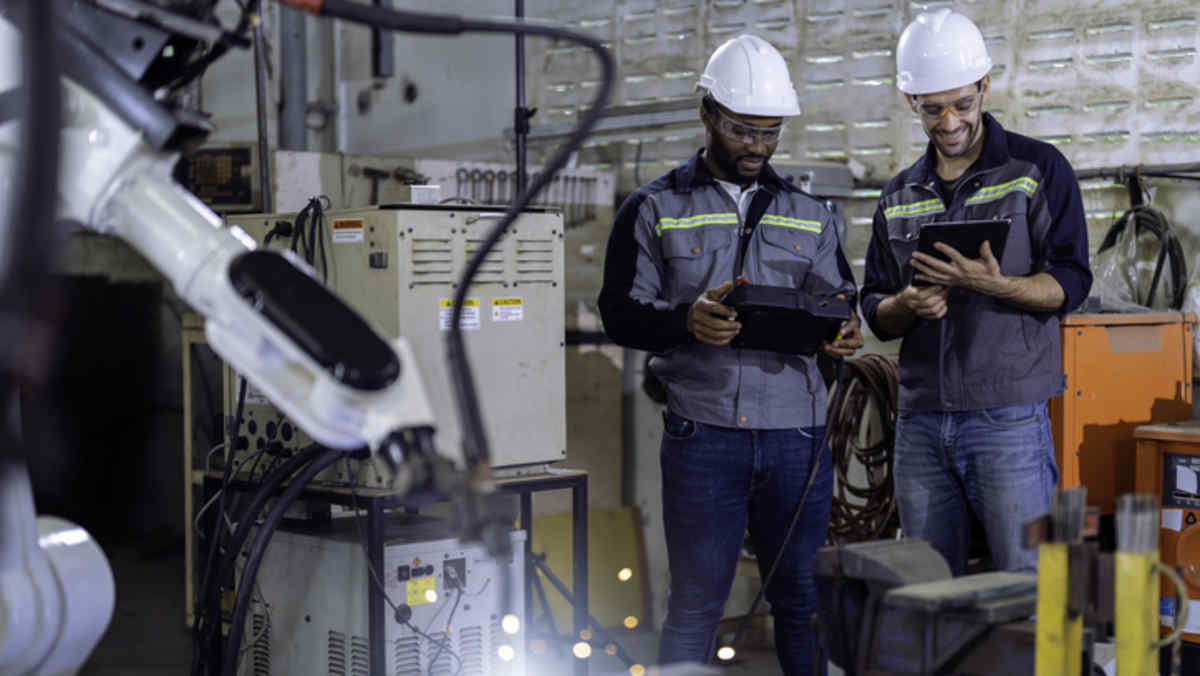
?North American companies purchased more robots in the first quarter of 2022 than they did in any single quarter on record. The increasing investment in robots comes at a time when human resource executives are grappling with the impact of the Great Resignation, labor shortages, salary increases and the ongoing issues created by the COVID-19 pandemic. 

Data from the Association for Advancing Automation shows that with 11,595 robots sold at a value of $646 million, these numbers represent growth of 28 percent and 43 percent respectively compared with the first quarter of 2021, and 7 percent and 25 percent respectively over the previous record-breaking fourth quarter of 2021.

“We are in the early days of purchasing robots in the United States and throughout the world,” said Jeff Burnstein, president of the Association for Advancing Automation in Ann Arbor, Mich. “These numbers look big because they are records, but so many companies have not yet invested in even one robot and it’s just starting to penetrate certain industries.”

The data also provides further evidence that since the pandemic, nonautomotive companies in sectors such as agriculture, food and consumer goods, construction, retail, and hospitality are driving the increase in orders for robots.

With the surge in robot investments, Burnstein recommends that HR leaders prepare their workforce for the introduction of robots by making it clear that the goal is not to replace humans but to augment employees’ tasks by making their work easier and worthwhile to do.

To accomplish this, HR managers should help workers transition from performing dull, dirty, dangerous and repetitive jobs to jobs that support the management and maintenance of robots. Establishing these positions creates better jobs that people will want to do.

“Robots just don’t come in and start working on their own,” Burnstein said. “How to operate a robot, how to program one, and how to install and collect data from robots takes a lot of expertise. Robots have to be prepared, they have to be monitored and they have to be adjusted. There is a whole lot of human intelligence that is required here.”

Recent research from Gartner echoes these trends. In a Gartner study of 351 supply chain professionals conducted in the fourth quarter of 2021, 96 percent of the business executives who responded said they plan to use cyberphysical automation, which integrates computation, networking and physical processes.

Examples of cyberphysical automation are robots, cars that drive themselves or industrial conveyors that transport bulk material in warehouses. 

Gartner’s numbers also show that 66 percent of respondents want to adopt cyberphysical automation because of a lack of labor availability, while 34 percent cited labor-cost reduction as a reason to adopt robots and other machinery to support organizations’ workloads.

In another study, conducted by Peerless Research Group in the first quarter of 2022, 100 business executives were polled and 52 percent of respondents said they currently use or plan to use robotics. Of that number, 86 percent said they will increase the size of their robotic fleet, and 92 percent are looking to expand over the next two years the use cases of robotic automation at their company.

According to Dwight Klappich, research vice president and Gartner Fellow in Gartner’s Logistics and Customer Fulfillment team, Gartner is seeing a very high number of customers actively looking at or piloting robots for the first time.

Klappich said the second wave of growth will come from customers expanding their fleets of robots; they might start a proof of concept with 10 robots and, if successful, could grow to 1,000 or more robots over time.

Another trend is that companies are getting better at identifying new use cases for robots, Klappich said. “Gartner believes that within 10 years, the majority of medium to large companies will have heterogeneous fleets of robots doing different things. This might be having one type of robot for collaborative picking, a different type for heavy payload transport and maybe another for item picking,” he noted.

As robot technology becomes more advanced, companies will have to find a way to manage all aspects of running robots at the workplace, from understanding how to buy robots to how to govern robots.

Part of the management of robots will include relying on HR executives to hire and train workers and to design a new business environment, along with other business unit leaders, as workers leverage robots to help them improve their performance.   

“HR departments need to start working with their operational groups within the organization to bridge the intersection point between humans and robots. Very few organizations have done this,” Klappich said.

Nicole Lewis is a freelance journalist based in Miami.

Subscribe to our Newsletter