

Microsoft Will Be Neutral if Workers Try to Unionize in AI Era
Microsoft agreed to neutrality on unionization should its employees seek to unionize, announcing Dec. 11 that the company and the AFL-CIO would work together on artificial intelligence issues. We’ve gathered articles on the news from SHRM Online and other outlets.
Neutral Stance on Labor
AFL-CIO President Liz Shuler said Microsoft’s position differed from other tech companies that she said have fought efforts to unionize. Microsoft’s “positioning is—if workers want to organize, we shouldn’t stand in their way,” Shuler said.
“By working directly with labor leaders, we can help ensure that AI serves the country’s workers,” said Brad Smith, vice chair and president of Microsoft. “This groundbreaking partnership honors the rights of workers, learns from the advice of labor leaders as we develop technology and helps us provide people with the skills that will become essential in a new AI era.”
AI’s Role in the Workplace’s Future Highlighted
The partnership will include meetings in which AI experts from Microsoft brief labor leaders and workers on developments in the technology. Microsoft’s experts will also seek input from workers so they can develop AI while addressing such concerns as job elimination. The company and the AFL-CIO said they would collaborate to enact policies that would prepare workers for jobs incorporating AI.
Different Perspectives on AI
The announcement comes as business leaders and policymakers consider wide-ranging potential impacts AI will have on the labor market. Prominent voices in the tech industry have highlighted AI’s ability to help employees work more efficiently. But labor leaders have raised concerns over the potential for AI tools to put some out of work.
(CNN)
Influential Guidelines May Be Next
The size and influence of Microsoft and the AFL-CIO will increase the chance that any guidelines they reach will be adopted by employers in contract deals with unions, said Rebecca Givan, associate professor at Rutgers University’s School of Management and Labor Relations in Piscataway, N.J.
Guidance from Biden Administration
Human resource professionals searching for guidance on managing artificial intelligence should pay attention to the Biden administration’s Oct. 30 executive order that seeks to manage the risks of AI and reap its benefits.
Employee Can Sue Public-Sector Union Over Dues Requirement


A public-sector union allegedly violated an employee’s First Amendment rights when it denied her request to stop paying union dues, according to a recent ruling from the 3rd U.S. Circuit Court of Appeals. The case challenged a New Jersey law that limited employees to a 10-day window each year to revoke their union dues authorization.
On Nov. 7, the circuit court partially agreed with the plaintiff and sent the case back to the lower courts to be reviewed. It rejected the employee’s petition for a preventive injunction to stop the future collection of union dues from her paycheck. It also rejected her call for a declaratory judgment that the state’s 10-day requirement was unconstitutional.
“It really was a matter of standing, whether she had standing to sue, and the court found she did,” said Melody Rayl, an attorney with Fisher Phillips in Kansas City, Mo.
Background
In July 2018, a nurse at the county-run Essex County Hospital Center in New Jersey requested to resign from her union and cease paying union dues. A state law required such requests to be made within a 10-day period each year. The time window had expired when she made her first request, so the union denied it. The next time the 10-day period opened, the nurse asked again to stop her payments to the union, and her request was granted.
The nurse sued the union and the county, claiming that delaying her ability to stop paying union dues violated her First Amendment rights by compelling her to subsidize union speech. She argued that the state law implementing a brief window for revoking union dues authorizations was unconstitutional. In March 2020, the union sent her a check to refund the dues, plus interest.
In June 2021, the U.S. District Court for the District of New Jersey ruled that the nurse was no longer a union member and therefore lacked standing to bring the lawsuit, so it dismissed the case. She appealed.
First Amendment Protections
The U.S. Constitution’s First Amendment gives Americans the freedom to assemble without interference from the government.
“Traditionally, public-sector employees could not be compelled to join the union because of the First Amendment’s protections related to freedom of assembly. The government could not compel you to join the union,” Rayl explained.
However, in a 1977 case called Abood v. Detroit Board of Education, the Supreme Court ruled that public-sector employees could be required to pay agency fees, also called fair-share fees, to cover the union’s cost of negotiating a contract. This excludes regular union dues that go toward other purposes.
The situation changed in 2018 when the U.S. Supreme Court held that agency fees and other forms of payment to a public-sector union cannot be deducted from an employee’s paycheck, unless the employee consents to pay, according to David Pryzbylski, an attorney with Barnes & Thornburg in Indianapolis. That case is Janus v. AFSCME.
Right-to-Work Laws
Similar policies apply to both private-sector and public-sector employees in so-called right-to-work states. Twenty-seven states have right-to-work laws, which hold that employees cannot be forced to pay union dues as a condition of employment. New Jersey has never had such a law. Michigan recently repealed its right-to-work law, effective mid-February 2024. Right-to-work laws vary from state to state, but most employees working for private employers are covered, along with those in the public sector, according to the group Workplace Fairness, which advocates for workers’ rights.
Right-to-work laws aren’t without some controversy. The Economic Policy Institute states that “by making it harder for workers’ organizations to sustain themselves financially, state [right-to-work] laws aim to undermine unions’ bargaining strength.”
In states without a right-to-work law, unions in the private sector can require workers to pay dues through payroll deductions, even if they don’t want to belong to the union, said Matthew Crawford, an attorney with Martenson, Hasbrouck & Simon in Atlanta.
“Private companies have no First Amendment repercussions,” Rayl noted.
UAW Widens Strike Against GM, Stellantis
[This article has been updated.]
The strike against General Motors (GM) and Stellantis, limited up to this point, will be expanded at noon today because not enough progress has been made in contract negotiations, said United Auto Workers (UAW) President Shawn Fain on Sept. 22. More progress has been made in negotiations with Ford Motor, so the strike against it won’t be broadened. We’ve gathered articles on the news from SHRM Online and other media outlets.
Additional Work Stoppages
The additional work stoppages—including all 38 parts distribution centers at GM and Stellantis but not additional Ford factories—turn up the heat on GM and Stellantis as the union pushes for new labor deals.
(Axios)
Union Demands
The companies have offered raises of about 20 percent over four years, but Fain initially called for double that, noting more recently that the UAW has not made an offer below 30 percent. The union also wants pensions to cover more workers, companywide health care for retirees, shorter hours and measures that make it harder for companies to close U.S. plants. In addition, rather than tiered wages, which provide higher pay for those with lengthy seniority, the union is calling for “equal pay for equal work.”
(The New York Times and CNBC)
Automakers’ Temporary Layoffs
GM idled an assembly plant in Kansas because of a shortage of parts due to the strike. Approximately 2,000 of its workers were temporarily laid off. Stellantis laid off about 370 workers at three parts factories that supply its Jeep plant in Toledo, where the UAW has gone on strike. Ford laid off 600 workers at a Michigan assembly plant. The carmakers have said they’re developing contingency plans for further work stoppages.
The union has promised to pay wages to the temporarily laid-off workers until new contracts are signed. “Their plan won’t work,” Fain said. “The UAW will make sure any worker laid off in the Big Three’s latest attack will not go without an income.”
(CNBC, CBT News, The Washington Post and Bloomberg)
‘Record Offer’
GM President Mark Reuss wrote in an op-ed that the company made a “record offer” Sept. 14, addressing what employees said mattered to them most: wage growth, job security and long-term security. He said that the proposal to increase wages by 20 percent would mean approximately 85 percent of represented employees would earn about $82,000 per year. Total compensation for these employees with overtime and benefits would be more than $150,000 per year, he wrote.
Reuss described the UAW’s demands as untenable, saying the company has already announced its intention to add jobs in 2024 as it pivots to a fleet of all electric vehicles (EVs). He emphasized the importance of capital investment in GM’s EV future, saying, “If we don’t continue to invest, we will lose ground—quickly.”
Making Up for Concessions During the Great Recession
The UAW wants to make up for concessions that propped up the automakers during the Great Recession—the effects of which workers still feel to this day.
(NPR)
Many Members of the Public Support Strike
A Reuters/Ipsos poll found that 58 percent of U.S. citizens support the UAW strike, while 32 percent oppose the action and 10 percent were unsure. Two-thirds said pay for CEOs and workers should go up equally—a central talking point of the UAW strike.
(Reuters)
Bargaining over Representation at EV Plants
Another bargaining issue is whether the union can represent employees in new plants in the U.S. that are joint ventures with Asian companies to make EVs’ batteries. Because electric vehicles require fewer parts and less labor to build than gasoline-powered vehicles, a transition to EVs may lead to closure of plants making engine parts for traditional cars. The union wants a guaranteed right to strike over plant closures and compensation in the event of a plant shutdown.
(The Washington Post, SHRM Online and NPR)
Ford Reaches Tentative Deal in Canada
On Sept. 20, Ford reached a tentative new deal with Unifor, the union representing auto factory workers in Canada. Unifor and the company didn’t disclose details of their tentative agreement, which covers about 5,600 members at Ford’s Canadian facilities.
Stipend for Striking Workers
Striking workers earn less during walkouts. The $500 per week stipend for striking and laid-off workers is well below their weekly earnings on the job.
Examples of Disclaimer and Policy Changes in Response to NLRB Handbook Decision
Employers who are revising disclaimers and policies in response to a National Labor Relations Board (NLRB) decision in August should replace broad, ambiguous wording with specifics.
“The main takeaway is that employers should review all policies that regulate employee behavior and conduct in light of the business purpose the employer wants to achieve through the policy,” said Brian Balonick, an attorney with Fisher Phillips in Pittsburgh. “Carefully defining the business purpose will help employers craft specific policies that meet a specific business purpose. That is the thrust of the Stericycle decision.”
Stericycle Decision
In Stericycle, an administrative law judge found that the employer violated the National Labor Relations Act (NLRA) by maintaining certain rules for its employees that addressed personal conduct, conflicts of interest and confidentiality of harassment complaints. The NLRB announced a new standard for whether work rules violate the NLRA and sent the case back to the judge to consider the ruling in light of the new standard.
Under that standard, if an employee could reasonably interpret the work rule to have a coercive meaning, the NLRB general counsel would have met her burden to prove that the rule has a reasonable tendency to chill employees from exercising their NLRA rights.
The board clarified that it will interpret the rule from the perspective of an employee who is subject to the policy, is economically dependent on the employer and contemplates engaging in protected concerted activity. If the general counsel provides such proof, the rule is presumptively unlawful. However, the employer may counter the presumption by proving that the rule advances a legitimate and substantial business interest and that the employer can’t advance that interest with a more narrowly tailored rule.
Sample Disclaimer
A possible disclaimer for an employee handbook would cite the NLRB general counsel’s description of a sufficient disclaimer, according to Peter Spanos, an attorney with Taylor English in Atlanta, and might state:
Policy Recognizing Employee Rights Under the National Labor Relations Act
Section 7 of the National Labor Relations Act (“the act”) guarantees employees the right to self-organization, to form, join, or assist labor organizations, to bargain collectively through representatives of their own choosing, and to engage in other concerted activities for the purpose of collective bargaining or other mutual aid or protection, as well as the right to refrain from any or all such activities. Section 8(a)(1) of the act makes it an unfair labor practice for an employer to interfere with, restrain or coerce employees in the exercise of the rights guaranteed in Section 7 of the act.
Nothing in this handbook will be interpreted, applied or enforced to interfere with, restrain or coerce employees in the exercise of their rights under Section 7 of the National Labor Relations Act. To the extent that you are an employee covered by the act, nothing in this handbook prevents you from:
a) Organizing a union to negotiate with the company concerning your wages, hours, and other terms and conditions of employment.
b) Forming, joining or assisting a union, such as by sharing employee contact information; talking about or soliciting for a union during nonwork time, such as before or after work or during break times; or distributing union literature during nonwork time, in nonwork areas.
c) Discussing wages and other working conditions with co-workers or a union.
d) Taking action with one or more co-workers to improve working conditions by, among other means, raising work-related complaints directly with the employer or with a government agency, or seeking help from a union; striking and picketing, depending on its purpose and means; and taking photographs or other recordings in the workplace, together with co-workers, to document or improve working conditions, except where an overriding employer interest is present.
e) Wearing union hats, buttons, t-shirts and pins in the workplace.
f) Choosing not to engage in any of these activities.
However, Robert Boonin, an attorney with Dykema in Ann Arbor, Mich., cautioned, “Employers should not take comfort by relying on disclaimers, at least until a court of appeals holds the NLRB’s hostility to them is misplaced.”
Policy Changes
Among the many policy revisions needed following Stericycle, Spanos gave the following example of one possibility for a revised personal conduct policy:
If you decide to offer complaints or criticism, avoid using statements, social media posts, photographs, video or audio that reasonably could be viewed as unlawful, knowingly or recklessly false, or constitute unlawful harassment of one or more co-workers. Examples of such conduct might include false defamatory communications meant to harm someone’s reputation, statements about the company that you know are false, or posts that could contribute to a hostile work environment on the basis of race, sex, disability, age, national origin, religion, veteran status, or any other status or class protected by law.
He said a policy restricting statements to media or agencies on behalf of the company might be revised to say:
From time to time, the company may become involved in news stories or potential or actual legal proceedings of various kinds. When that happens, lawyers, former employees, newspapers, law enforcement agencies, and other outside persons may contact the company to obtain information. If you receive such a contact, you should not speak on behalf of the company. Make it clear in your social media activity, discussions with third parties or interviews with media that you are speaking only on your own behalf. This policy does not prevent communications with government agencies about events or concerns in the workplace.
Any policies that are overly broad or general should be evaluated for revision, said David Pryzbylski, an attorney with Barnes & Thornburg in Indianapolis.
A policy that prohibits insubordination should likely be revised to identify examples of conduct that the rule is intended to address and not address, said Amy Schwind, an attorney with Lowenstein Sandler in New York City.
No policy is categorically lawful or unlawful, cautioned Sul Ah Kim, an attorney with Seyfarth in Atlanta.
Handbooks Need Revision Following NLRB Ruling


Many employer handbooks and policies likely should be reviewed and revised following a landmark Aug. 2 ruling by the National Labor Relations Board (NLRB), Stericycle.
“This ruling, in a word, is huge,” said David Pryzbylski, an attorney with Barnes & Thornburg in Indianapolis. “This decision may invalidate countless workplace rules maintained by private-sector employers—whether they are unionized or not. It applies to all companies covered by the National Labor Relations Act [NLRA], which is the vast majority of employers in America.”
The NLRA does not apply to federal or state governmental units, railroads or airlines.
Employers need to create documentary evidence of the justification for their work rules before an unfair labor practice charge is filed, recommended Harry Johnson III, an attorney with Morgan Lewis in Los Angeles and former NLRB member.
New Standard
In Stericycle, an administrative law judge found that the employer violated the NLRA by maintaining certain rules for its employees that addressed personal conduct, conflicts of interest and confidentiality of harassment complaints. The NLRB announced a new standard for whether work rules violate the NLRA and sent the case back to the judge to consider the ruling in light of the new standard.
Under that standard, if an employee could reasonably interpret the work rule to have a coercive meaning, the NLRB general counsel would have met her burden to prove that the rule has a reasonable tendency to chill employees from exercising their NLRA rights. The general counsel, currently Jennifer Abruzzo, is independent from the board and responsible for the investigation and prosecution of unfair labor practice cases under the NLRA.
The employer’s intent in maintaining a work rule is immaterial, the NLRB wrote. The board instead clarified it will interpret the rule from the perspective of an employee who is subject to the policy, economically dependent on the employer and contemplates engaging in protected concerted activity.
Concerted activity includes talking with one or more co-workers about wages and benefits or other working conditions, circulating a petition asking for better hours, participating in a concerted refusal to work in unsafe conditions, openly talking about pay and benefits, and joining with co-workers to talk directly to the employer, an agency or the media about problems in the workplace, according to the NLRB.
It’s hard to imagine the general counsel won’t be able to prove that a rule has a reasonable tendency to chill employees from exercising their NLRA rights, said Phil Wilson, president and general counsel with the Labor Relations Institute, a labor and employee relations consulting firm in Broken Arrow, Okla.
If the general counsel provides such proof, the rule is presumptively unlawful. However, the employer may counter the presumption by proving that the rule advances a legitimate and substantial business interest and that the employer can’t advance that interest with a more narrowly tailored rule. If the employer proves this, the work rule will be found lawful.
However, “with little actual guidance about the meaning of the phrases above, needless to say, it is an incredibly uphill battle if an employer finds itself trying to rebut the presumption,” said Jason Reisman, an attorney with Blank Rome in Philadelphia.
In addition, the Stericycle opinion discarded previous NLRB decisions holding that certain types of policies were inherently lawful, regardless of the precise language in which the policy is expressed, in favor of evaluation of each challenged policy on a case-by-case basis, said Peter Spanos, an attorney with Taylor English Duma in Atlanta. Policies that are no longer deemed by the board always lawful to maintain are investigative-confidentiality rules, nondisparagement rules and rules prohibiting outside employment.
“Employee handbooks and policies that were adopted or revised based on prior guidance from the NLRB may now be subject to challenge,” he said.
The decision probably will be appealed. The appellate process can take many months or even years, Pryzbylski added. “In the meantime, the board will be enforcing this new standard, so employers face the risk of having their policies invalidated if they do not revisit them to ensure they are drafted in a compliant manner,” he said. “To the extent they are found to have unlawful rules, it could result in backpay awards in the event an employee is terminated pursuant to such a rule, have negative effects on a union election outcome, as well as other penalties.”
Plus, in most cases, the NLRB does not follow a federal appeals court ruling outside of that court’s jurisdiction until the Supreme Court weighs in, if it does. “So, that may favor companies taking a fresh look at their policies sooner rather than later,” Pryzbylski said.
Employer Policy Implications
Examples of policies that likely need to be reviewed and rewritten to be aligned with the new board standard, according to Spanos, include work rules:
- Restricting employees’ use of social media.
- Restricting criticism, negative comments, and disparagement of the company’s management, products, or services.
- Promoting civility.
- Prohibiting insubordination.
- Requiring confidentiality of investigations and complaints.
- Restricting behaviors such as using cameras or recording devices in the workplace.
- Outlining rules for safety complaints.
- Restricting the use of company communication resources, such as email or Slack.
- Limiting the recording of meetings or the use of smartphones or other devices.
- Restricting meetings with co-workers or the circulation of petitions.
- Limiting comments to the media or government agencies.
All HR professionals should work with their labor counsel to audit current employment policies for compliance with the new standard and to keep up-to-date on board decisions that will apply the Stericycle standard in coming months, said Raeann Burgo, an attorney with Fisher Phillips in Pittsburgh.
The bottom line is that many policies “will be under new and intense scrutiny by the NLRB, and employers should be aware of the new standard and review and update their policies accordingly,” Pryzbylski said.
NLRB Intensifies Scrutiny of Employer Policies


On Aug. 2, the National Labor Relations Board (NLRB) overruled a prior 2017 decision, Boeing, that had afforded flexibility for employer policies, and also overturned clarifying opinions, including Apogee Retail, that had followed Boeing. We’ve gathered articles on the new ruling, Stericycle, from SHRM Online and other media outlets.
Balance Tilted Toward Employee Rights
The board ruled that certain categories of work rules—such as investigative-confidentiality rules, nondisparagement rules and rules prohibiting outside employment—are not always lawful to maintain. The primary problem with the standard from Boeing is that it permits employers to adopt overbroad work rules that chill employees’ exercise of their rights under the National Labor Relations Act (NLRA), the NLRB said in its decision.
Boeing “gives too little weight to the burden a work rule could impose on employees’ [NLRA] rights,” the board stated in its opinion. “At the same time, Boeing‘s purported balancing test gives too much weight to employer interests. Crucially, Boeing also condones overbroad work rules by not requiring the party drafting the work rules—the employer—to narrowly tailor its rules to only promote its legitimate and substantial business interests while avoiding burdening employee rights. The standard we adopt today remedies these fundamental defects,” the NLRB said.
In a dissent, NLRB Member Marvin Kaplan wrote, “Under the standard my colleagues announce, a work rule is presumptively unlawful to maintain ‘[i]f an employee could reasonably interpret [it] to have a coercive meaning’ ” (emphasis added by Kaplan). The standard in Boeing accommodated “the reality that work rules must be worded generally, and it accord[ed] sufficient weight to both employee rights and employer interests so that it is fair to say that these equally undisputed rights are truly being balanced against each other in a meaningful way,” he added. “In contrast, the standard my colleagues announce today does not measure up. It gives effectively dispositive weight to the employee rights side of the balance.” He later said that under the board’s standard, “a challenged rule will be found presumptively unlawful … without any consideration of the legitimate employer interests it advances.”
Kaplan also strongly objected to Stericycle‘s overruling of Apogee Retail, where the board held in 2019 that rules requiring employees to maintain the confidentiality of workplace investigations for the duration of the investigation are categorically lawful to maintain. “Apogee struck an appropriate balance between employee rights and employer (and employee) interests,” he also in dissent. “My colleagues do a disservice to employers and employees by overruling it” (emphasis in Kaplan’s dissent).
In addition, Kaplan objected to the board applying its new rule retroactively.
((NLRB board decisions—search for Stericycle)
Unlawful Presumption if General Counsel Meets Threshold Requirement
The NLRB said in a press release that under Boeing‘s standard, employers were not required to narrowly tailor rules to promote legitimate and substantial business interest without unnecessarily burdening employee rights. “Under the new standard adopted in Stericycle, the general counsel must prove that a challenged rule has a reasonable tendency to chill employees from exercising their rights,” the NLRB said. “If the general counsel does so, then the rule is presumptively unlawful.”
However, the employer may rebut the presumption by proving that the rule advances a legitimate and substantial business interest and that the employer is unable to advance that interest with a more narrowly tailored rule. If the employer proves its defense, the work rule will be found lawful to maintain.
Boeing Standard
In the board’s 2017 Boeing decision, the board adopted a balancing test that would consider the following factors with regard to a policy that is not worded to intentionally interfere with workers’ NLRA rights: 1) The nature and extent of the potential impact on NLRA rights. 2) The employer’s legitimate justifications associated with the rule. That standard provided “a common-sense approach in terms of how to evaluate whether work rules impact employee rights under the NLRA,” said Steve Miller, an attorney with Fisher Phillips in Chicago.
Federal Contractors Must Publicize Whether They Use Union Avoidance ‘Persuaders’
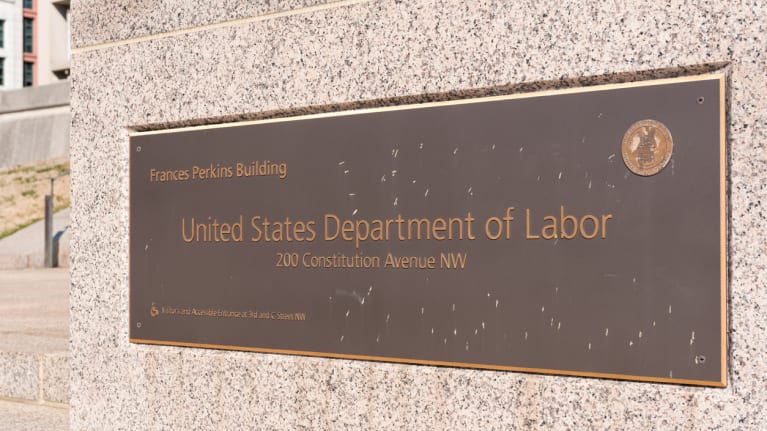
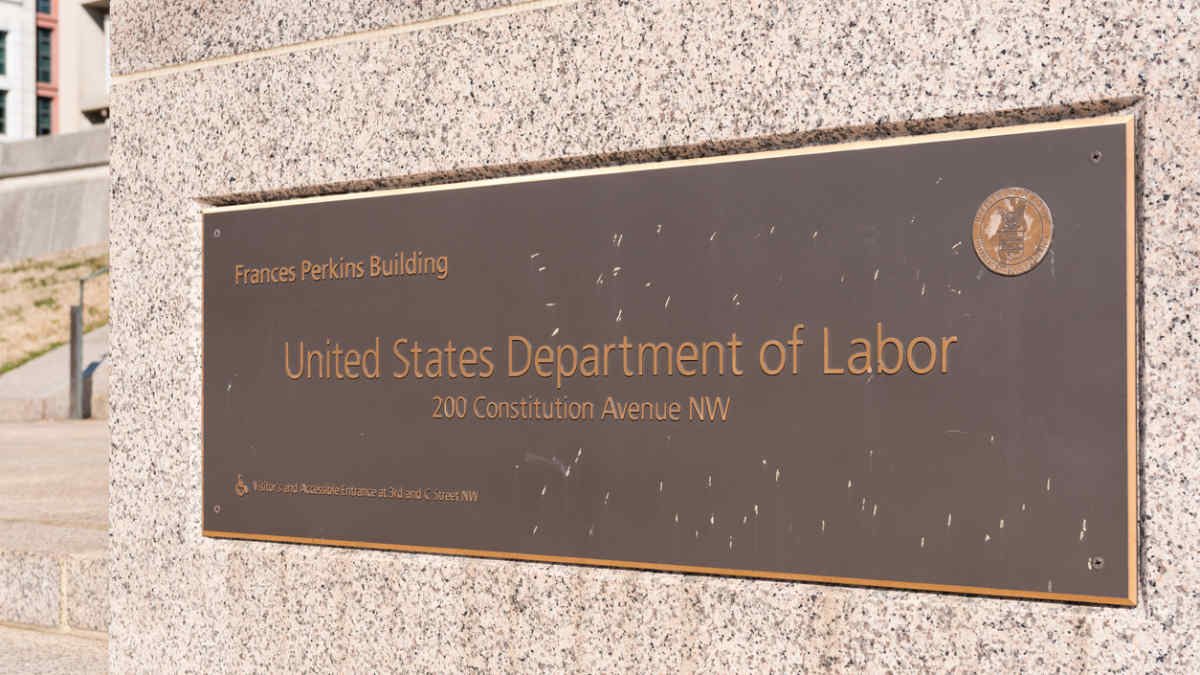
The U.S. Department of Labor (DOL) announced a final rule July 27 requiring federal contractors that use persuaders—consultants or attorneys who inform employees about all the possible effects of unionization as part of union avoidance—to publicly identify themselves as doing so by checking a new box on the LM-10 form. Employers must file the form to disclose certain specified financial dealings, including the use of persuaders.
The rule, which was published in the Federal Register on July 28, could lead to fewer contractors using persuaders if they believe doing so will impact their ability to get a government contract, said Jonathan Keselenko, an attorney with Foley Hoag in Boston. The revision takes effect Aug. 28.
“The final revision explains that the transparency created by the revision would better inform workers in making determinations regarding the exercise of their rights to organize and bargain collectively,” the DOL said in a news release. The department makes all reports submitted to it publicly available.
“[W]ith the knowledge that the source of the information received is an anti-union campaign managed by an outsider, workers will be better able to assess the merits of the arguments directed at them and make an informed choice about how to exercise their rights,” the DOL added in the rule’s supplementary information.
Contractors will likely be concerned that the rule will effectively hinder free speech. “Given the contractor’s dependency on the federal government, the company will worry that if a persuader is retained and reported, they may be under additional scrutiny, which, of course, is exactly the point of the rule,” said Michael Lotito, an attorney with Littler in San Francisco.
Reason for Changes
The DOL said it added the checkbox to the form in response to the increased prevalence of persuader activities in recent years.
Other revisions include two new lines on the form to enter contractors’ unique entity identifier and federal contracting agency or agencies. “In all other respects, the form remains unchanged,” said Steven Bernstein, an attorney with Fisher Phillips in Tampa, Fla. The unique entity identifier is the official identifier for doing business with the U.S. government.
The rule adds another certification checkpoint to assist the Office of Federal Contract Compliance Programs in identifying federal contractors, said Cheryl Behymer, an attorney with Fisher Phillips in Columbia, S.C.
It comes as “employer efforts to defeat unions have become more prevalent, with more employers turning to union avoidance consultants,” according to the DOL, citing a Senate hearing on whether taxpayer dollars should go to companies that violate labor laws. As union avoidance activity increases, the DOL said it is well within its role to increase the quality and utility of the information being disclosed about such activity.
Even though persuader activity is lawful, Congress has found that most of this kind of activity is “disruptive of harmonious labor relations,” the DOL added. Federal contractors may not receive reimbursement for the costs of engaging in persuader activities.
‘Chilling Effect on Employers’
“The only explanation for this rule is to make it easier for contractors to face negative PR for engaging a persuader during a campaign, in spite of the fact that this is lawful speech protected by both Section 8(c) [of the National Labor Relations Act] and the First Amendment. It is certainly designed to chill protected speech,” said Phil Wilson, president and general counsel with the Labor Relations Institute, a labor and employee relations consulting firm in Broken Arrow, Okla.
The DOL stated in the rule’s supplementary information: “By learning of the federal contractor status of their employer, those employees would have convenient access to the information that would allow them to meaningfully exercise their organizing and collective bargaining rights, such as their First Amendment right to choose whether to contact their representatives in Congress to inquire about the federal appropriations underlying the contracts with their employers, or the employers’ activities undertaken pursuant to such contracts, or allow the employees to work more effectively with advocacy groups or the media to disseminate their views as employees to a wider audience.”
Jim Plunkett, an attorney with Ogletree Deakins in Washington, D.C., said, “Reading between the lines, this passage argues that it is important for employers engaging in persuader activities to identify as federal contractors so employees can 1) encourage Congress to implement some form of a federal contractor blacklisting scheme; and 2) more easily launch public media campaigns against contractors. This is likely to have a chilling effect on employers who wish to communicate with employees about unionization.”
In contrast, Keselenko didn’t think the requirement was burdensome, but he noted it would allow procurement officers to see whether contractor candidates are using persuaders to try to avoid unionization.
Ultimately, the final rule likely will give employers pause, said David Pryzbylski, an attorney with Barnes & Thornburg in Indianapolis.
That’s partly because the DOL will be making this information—whether a federal contractor is engaging or has engaged in persuader activity—more accessible to employees and organized labor. “Such a disclosure is not likely to lead to an immediate chilling effect or substantial disruptions in the near term, but [it] is part of a calculated attempt to provide this information to employees and unions, that will in turn provide information for their own campaigns,” Pryzbylski said. For example, a union could learn that a company spent thousands of dollars on persuading services and then inform employees in a campaign of that fact to sow distrust with the employer.
Likewise, this information may result in organized labor ratcheting up pressure on employers to abandon these practices and on the federal government to refuse to do business with any contractor that engages in persuader activity, Pryzbylski noted.
“The bottom line here is that companies who are contractors with the federal government should be cognizant of the fact that their use of persuaders in labor relations matters will be receiving more scrutiny and could potentially impact the award of contracts in the future,” he said.
UPS Strike Averted but Union Action Spreads Across the US
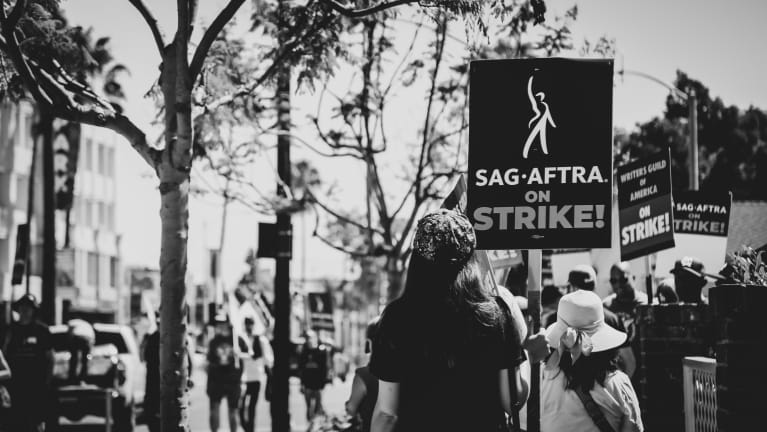
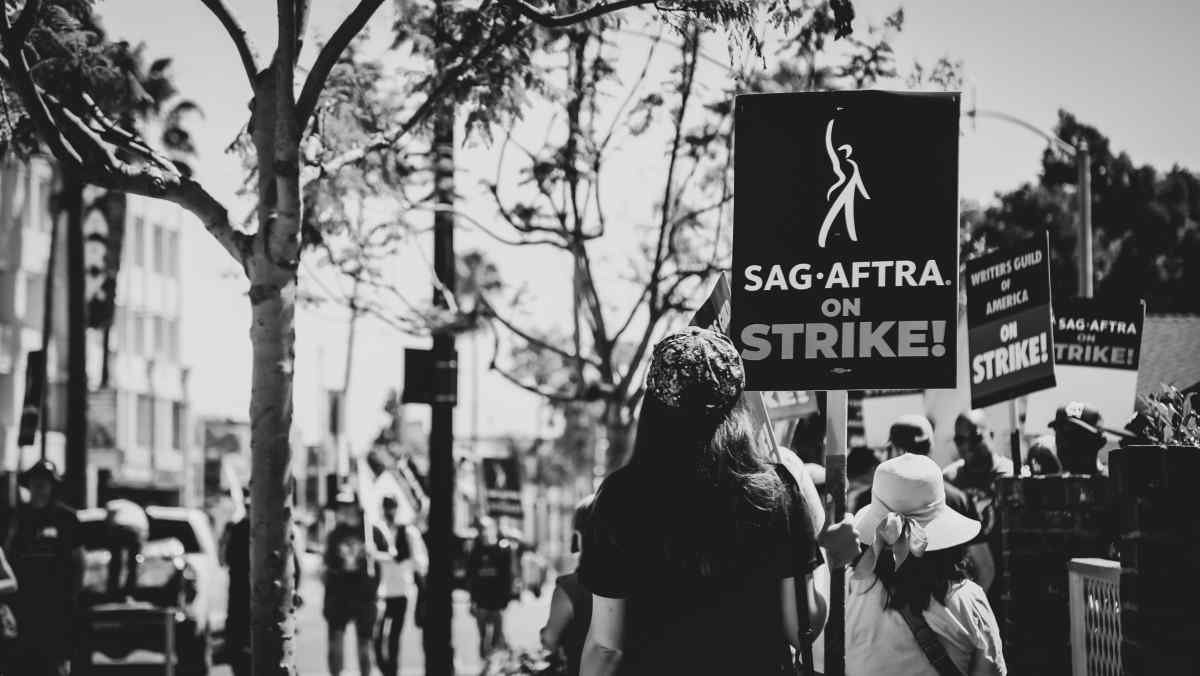
The International Brotherhood of Teamsters and the United Postal Service (UPS) sidestepped a potential walkout of about 330,000 package delivery drivers and package sorters after hammering out an agreement July 25, according to The Wall Street Journal. But other large employers could face more union activity this summer.
“The UPS-Teamsters contract is the largest collective-bargaining agreement involving a private employer in North America, and a strike could harm the supply chains of many companies,” The Wall Street Journal noted. The five-year contract still must be ratified by union members.
Prior to this breakthrough, UPS workers were poised to hit the picket line in what would have been the biggest strike in the U.S. since 1959, according to CBS News.
In recent days, a strike by workers at Yellow Corp. operating companies YRC Freight and Holland was averted when the Central States Health and Welfare Fund agreed July 23 to extend health care benefits to workers, according to a statement from the Teamsters.
The Teamsters would have joined ongoing strikes by the Screen Actors Guild—American Federation of Television and Radio Artists (SAG-AFTRA), who have been on strike since July 15, and the Writers Guild of America (WGA). WGA went on strike May 2; this is the first time in 63 years WGA and SAF-AFTRA have been on strike at the same time.
Starbucks workers went on strike in June at some of the coffee emporiums as tensions over in-store LGBTQ pride decorations heated up while unionized stores were in the midst of contract negotiations, The Wall Street Journal reported.
As of May, there were 50 ongoing strikes in the U.S., according to the Cornell University School of Industrial and Labor Relations’ Labor Action Tracker.
In 2022, 23 major work stoppages idled 120,600 workers, according to the U.S. Bureau of Labor Statistics, with the education and health services sector accounting for 88 percent of striking workers. SHRM Online reported the surge in strike activity, pointing to 417 strikes and seven lockouts last year.
The National Labor Relations Act protects certain strike activity, but not all, according to SHRM. The main types the NLRA cover are:
- Unfair labor practice strikes, which protest employers’ illegal activities.
- Economic strikes, which may occur when there are disputes over wages or benefits.
- Recognition strikes, which are intended to force employers to recognize unions.
- Jurisdictional strikes, which are concerted refusals to work to affirm members’ right to particular job assignments and to protest the assignment of work to another union or to unorganized employees.
SHRM Online collected the following news articles on this topic.
America Is Barreling Toward a Summer of Strikes
More than 650,000 American workers are threatening to go on strike this summer—or have already done so—in an avalanche of union activity not seen in the U.S. in decades.
The combined actors and writers strikes in Hollywood are already a once-in-a-generation event. Detroit’s Big Three automakers are poised to join them in coming weeks if contract negotiations fall through. One Bank of America Corp. analyst put the odds of a United Auto Workers strike at more than 90 percent.
(Bloomberg)
Major Strikes Loom in US Labor Market
The labor movement in the United States is having an unusually active moment, with as many as four high-profile strikes possible and a level of coordination among separate unions that experts say has been lacking in recent years.
(Voice of America)
UPS Reaches Tentative Labor Deal to Avoid Teamsters Strike
United Parcel Service Inc. reached a tentative agreement to renew a five-year labor contract with the Teamsters union, staving off a possible strike as soon as next week that could have paralyzed shipments throughout the US and beyond.
The provisional deal, which needs to be ratified by the Teamsters’ 340,000-strong membership in a vote next month, could be a good omen for negotiations between labor and management across several key industries.
(Bloomberg)
5th Circuit Will Reconsider Ruling Against Elon Musk About His Tweet


The full 5th U.S. Circuit Court of Appeals will rehear a 5th Circuit panel’s decision finding that a tweet by Elon Musk, CEO of Tesla Motors and owner of X Corp. (formerly known as Twitter), violated the National Labor Relations Act (NLRA). We’ve gathered articles on the news from SHRM Online and other media outlets.
Tweet Found to Violate NLRA
The United Auto Workers (UAW) persuaded the 5th Circuit panel that Musk violated the NLRA when he tweeted that employees might not continue to have stock options if the UAW became Tesla’s union.
5th Circuit Panel Interpreted Tweet as a Threat
“[B]ecause stock options are part of Tesla’s employees’ compensation, and nothing in the tweet suggested that Tesla would be forced to end stock options or that the UAW would be the cause of giving up stock options, substantial evidence supports the NLRB’s [National Labor Relations Board’s] conclusion that the tweet is as an implied threat to end stock options as retaliation for unionization,” the appeals court panel said. “Moreover, the statement in the tweet is materially similar to other statements that the NLRB and our court have found to be threats.”
(Circuit Court Decision—March 31 opinion)
Tweet Hasn’t Been Deleted
The three-judge 5th Circuit panel upheld an NLRB order that Tesla make Musk delete the tweet. However, the company hasn’t taken down the tweet as it fights the board’s court order. The tweet from Musk states, “Nothing stopping Tesla team at our car plant from voting union. Could do so tmrw if they wanted. But why pay union dues & give up stock options for nothing? Our safety record is 2X better than when plant was UAW & everybody already gets healthcare.”
Grounds for Reconsideration
In seeking reconsideration, Tesla cited free speech concerns and said the NLRB ignored that no employees claimed Musk was threatening them, Musk did not intend to threaten anyone and he later clarified his tweet was not a threat.
(Reuters)
Tweet Defended as Accurate
Last year, an attorney representing Tesla argued before the 5th Circuit panel that what the NLRB wanted “is to punish any bare statement that unionization will cause lost benefits, no matter how accurately that statement predicts union bargaining behavior.”
(Reuters)
