

How the Great Resignation Impacted the Tech Workforce

​There’s a reason 2021 earned the tagline, “The Great Resignation.” According to the U.S. Bureau of Labor Statistics, about 100 million people quit their jobs during 2021 and 2022.

“The Great Resignation was a wake-up call to leaders that we must prioritize a greater connection between work and mission, provide clear career trajectories and opportunities for upward mobility to ensure our workers have the skills needed to sustain challenges, and move into the future,” said Michael E. Hansen, CEO of the Cengage Group, an education technology company in Boston. “Losing sight of these employee priorities can have an impact on culture and the bottom line.”

To isolate trends in workforce movement and new opportunities for the tech sector, his company surveyed workers who had resigned in 2021 and found a new job by the following year. The results included:

  • 34 percent of respondents left their job because the company’s mission no longer aligned with their values.
  • 24 percent felt stuck in their role or industry with no growth opportunities.
  • 30 percent said they moved to a company that had a clear path to growth and development.
  • 27 percent said the new company’s mission more aligned with their values.
  • 81 percent have no regrets about quitting.
  • 85 percent are satisfied in their new role.
  • 50 percent switched industries completely.
  • 21 percent of those who changed jobs during the Great Resignation now work in tech, a larger percentage than any other sector.
  • 29 percent of tech workers who resigned did so for better professional development opportunities elsewhere.
  • Only 14 percent left for more pay.

The Great Retraining

Hansen believes the Great Resignation has given way to the so-called Great Retraining:

  • 77 percent of tech workers who resigned said they took an online training course to give themselves a leg-up in job searches.
  • 89 percent of those who pursued online training believe it positively impacted their job search.
  • 66 percent said access to employer-sponsored training was an important factor in accepting their current job.
  • 89 percent of them plan to take full advantage of employer-paid online training to upskill.
  • 56 percent added that their prior employers didn’t offer those same training opportunities.

“Businesses should be focused on growing and empowering top talent, including creating connections with local education institutions and other partners to further opportunities for current and prospective talent,” Hansen said.

Layoffs Alter the Picture

2021 saw employees gain the upper hand in relationship to their employers. Employees were happy to quit, and many employers struggled to fill positions. But things changed in the early months of 2023. With so many layoffs in tech, some workers who resigned and are now re-employed are voicing concern: 

  • 72 percent of tech workers are worried about job security and how a potential recession could impact their employment status. In such a frame of mind, they are unlikely to consider resignations or moving to new roles.
  • 76 percent plan on taking an online training course or certificate program to broaden their skills and make them more marketable to avoid a potential layoff.

There has also been a surge in online searches for tech industry jobs. According to Fasthosts, a web-hosting and cloud solutions company in Gloucester, U.K., job searches rose by 156 percent over the past year for cloud engineering positions and 86 percent for data analyst jobs. Developer roles are also seeing far more searches. Software developer job searches online increased by 50 percent, front-end developer jobs by 46 percent and web developer jobs by 26 percent.

Michelle Stark, sales and marketing director at Fasthosts, believes these increases were influenced by mass layoffs among tech employers.

“It’s important to keep in mind that it’s not just those who lost their jobs due to the layoffs who will be contributing to the higher searches, but also those who still remain,” Stark said. “Many remaining employees may feel a sense of unease about the future of their positions, as we’ve seen recently with Amazon that these cuts are far from being over. It’s only natural that they would be investigating other options that may be more secure.”

Taking Control of Your Career Path

Jeff Pollard, an analyst at Forrester Research, noted that even in the burgeoning cybersecurity sector where employer after employer bemoans a shortage of talent, workforce reductions are taking place. He cited the example of membership platform Patreon, which cut its entire in-house cybersecurity team and gave the business to a managed service provider. He offered tips to tech professionals who have been laid off or are worried about their job security.

“Remember that no one is indispensable,” Pollard said. “No matter how secure you feel in your company or role, this is a great time to start cultivating new skills.”

That might be learning a programming language, mastering a new tool, pursuing a specialized certification, working on your presentation skills or just becoming more of a subject matter expert in your current domain.

“More skills give you more opportunities, and more opportunities lead to better compensation,” Pollard said.

Another tip is to define who you are and what you are good at. For example, it takes a certain skill set to be the interface between tech and business. Not everyone is the person who helps senior executives understand technology and how they can use data to make better business decisions.

“If you can summarize what you do best, it will go a long way to helping you land your next gig and make it an even better fit,” Pollard said.


Drew Robb is a freelance writer in Clearwater, Fla., specializing in IT and business.

How Employers Should Respond as Older Workers Retire at Record Speed

?Baby Boomers are getting older. Born between 1946 and 1964, the youngest members of this generation are turning 59 this year. The generational shift is being felt throughout the economy—and the workforce.

According to Moody’s, an estimated 70 percent of the drop in labor force participation since the end of 2019 was due to the retirement of aging workers. Baby Boomers are exiting the labor force at a higher rate than any other population; the labor force participation rate for Americans over age 55 has fallen 1.5 percentage points since before the pandemic.

In addition, research from Gad Levanon, chief economist at The Burning Glass Institute in New York City, shows that working-age population growth is slowing to a halt for the first time in U.S. history, a trend that will continue through the rest of the decade.

The Impact of the Labor Shortage

Economists agree that employers are going to face increasing talent shortages in the years ahead, especially if many of their workers are older.

“The most likely scenario for the coming year is a mild recession or slow growth,” Levanon said. “Job growth is likely to significantly slow down and may even turn negative later in 2023. At the same time, many older workers are retiring every day, [and] the working-age population is not growing.”

Michael Madowitz, director of macroeconomic policy at the Washington Center for Equitable Growth in Washington, D.C., spelled out the challenge even clearer: “There is no demographic wave coming to save employers.”

To be sure, HR won’t be powerless when addressing the talent shortage. “There’s much more to attracting talent than demographics,” Madowitz said, adding that there are many creative ways to attract and retain workers both old and young. Here are four tactics worth considering:

1) Cater to Older Workers’ Needs

If your goal is to convince older workers to stay in the workforce, then it’s critical to start tailoring jobs to fit their needs. At the top of that list are flexible scheduling and accommodations as these workers deal with changes in their personal lives.

“Companies that can innovate and meet older workers where they are, say with flexibility and leave to care for children, grandchildren or parents, can bring productive workers off the sidelines,” Madowitz said.

CallerSmart, a software development company in Knoxville, Tenn., offers older employees a range of support tools to help them succeed in the workplace, according to Kathryn Boudreau, the company’s operations and HR manager, who recommended that other companies do the same.

“Provide more incentives for older workers, like health support and more-inclusive work conditions, so they are inspired to avoid retiring sooner,” she said. “Let go of the target-based work model, and allow them to bring their more grounded energy to the workplace and benefit from it.”

By catering to older workers’ needs, employers can retain a group of well-educated employees who tend to be very productive because they already know the most efficient way to do their jobs.  

“There are still jobs where being too old to work is a thing, but in a connected, service-dominated economy, employers that adopt the too-old-to-work paradigm are setting themselves up for failure,” Madowitz said. “For decades to come, the cohort of Americans reaching retirement age will be the best-educated retirees in history. It will be a problem for employers and the economy if old thinking from younger managers sidelines productive workers too soon.”

2) Ask Older Workers to Train the Next Generation

Once they reach age 65, most older workers will want to retire, even if they enjoy their jobs. But before that happens, employers should partner with older workers to develop training programs they can lead to make sure the next generation is well-equipped to continue in their positions.

“[We convince] experienced and unreplaceable talent to stay on longer and train their younger counterparts long enough [so they can] adapt well to the jobs they are replacing,” Boudreau said. “[Older workers] can mentor and train younger employees while also feeling recharged in the presence of a younger workforce, learning new skills and adapting to the changing world of technology and digitalization.”

3) Shift the Focus to Attracting Younger Talent

Lynx Software Technologies, a San Jose, Calif., software company serving the aerospace and defense sector, is dealing with industrywide labor shortages.

“The aerospace and defense industry is primarily composed of older workers, whether that be veterans or blue-collar workers,” said Amanda Blum, Lynx Software’s chief financial officer. “We are certainly starting to see a shift of that generation retiring and the next generation coming in.”

Since the 50-employee company is located in Silicon Valley, it has also experienced an uptick in applicants due to recent layoffs in the area’s tech sector. The company has made it a priority to attract younger workers by making positions more appealing to them.  

“For us, we see that businesses have to shift to technology and processes that attract new talent,” Blum said. “For example, younger folks don’t leave—or even listen to—voicemails, so more-seasoned folks have to text. In the same way, what worked in tech for decades is changing.”

The company has discovered that while workers used to care more about stock options and other benefits, one of the younger generation’s top priorities is to work in a job where they can make an impact. Lynx Software strives to give them that opportunity.

“To attract new talent, while we can’t compete with the tech giants, we can provide an environment where all employees are able to make a difference in the company on a day-to-day basis,” Blum said. “When you are a small company, each employee’s involvement and contributions have a direct impact on the company’s success.”

4) Fill Positions from Within

The answer to addressing the labor shortage might be the most obvious: Search for talent currently working within the company, no matter the age of the worker.

“When the pool of outside workers is smaller and hiring is more competitive, employers can make large gains by looking inward,” Madowitz said, adding that the best approach is to invest in training and promoting current employees to fill positions in the short term and build a pipeline for the future.

“An anecdotal reason we saw so much labor market churn in the recovery [after the COVID-19 pandemic] was employees who had spent years working for an employer still found it harder to get promoted internally than at a competitor,” he said. “Creating better internal talent management has benefits for employers and the economy as a whole.” 

Kylie Ora Lobell is a freelance writer based in Los Angeles.

Industries Raise Alarm over Aging Workforces

?The U.S. trucking industry is barreling down the road toward an alarming shortage of drivers.

In an October 2022 report, the American Trucking Associations (ATA) estimated the industry was weighed down by a shortage of 78,000 drivers. That’s an improvement from the shortage of more than 81,000 in 2021, but it’s still far from ideal. In fact, the trade group forecasts the shortage of truckers could surpass 160,000 in 2031.

In large part, the trucker shortage stems from an aging workforce. The average age of an over-the-road trucker in the U.S. is 46, which is above the typical age of all full-time workers. The average retirement age of a trucker: 62.

The trucking sector isn’t alone, though, in confronting a shortage of workers due to aging workforces. As a recent Associated Press article reported, a “wave of retirements” is leaving a number of U.S. industries desperate to fill jobs.

So, what are HR professionals, hiring managers and others in these industries doing to fill jobs being vacated by newly minted retirees?

Building Up the Trucking and Construction Workforces

The ATA is tackling the labor shortage on several fronts. For instance, the group is rolling out a mentorship program to encourage women to join the transportation business. Among those invited to be mentors are HR professionals, drivers, dispatchers and executives. Nearly 14 percent of professional drivers are women, according to the Women in Trucking Association.

“Trucking has an aging workforce that well-exceeds the national average. Over the next decade, the industry will need to hire roughly 1.2 million new drivers to keep pace with retirements and growing freight demand,” according to the ATA.

The construction industry is suffering labor pains similar to those of the trucking industry.

“We’ve got a lot more people retiring than coming into the industry. We appreciate that that’s not unique to construction,” said Brian Turmail, vice president of public affairs and strategic initiatives at Associated General Contractors of America (AGC), a trade group for the construction industry.

In a 2022 survey from AGC and software company Autodesk, 93 percent of construction companies reported they had open positions. Among those companies, 91 percent ran into trouble filling at least some jobs.

The survey indicates construction companies are ramping up efforts to address the industry labor shortage. Over half (51 percent) of those questioned in the survey report they’re connecting with career-building programs at schools. In addition, they’re sinking more money into training and professional development (41 percent), online and video training (25 percent), and augmented reality/virtual reality training (16 percent).

Moreover, many construction companies are boosting pay, bulking up benefits, and offering incentives and bonuses to attract and retain workers.

Turmail said the construction industry seeks to crush the long-held notion that the path to success involves earning a four-year degree.

“We’ve really devalued and put almost a stigma culturally on career tracks that don’t require that four-year degree,” Turmail said, “and don’t require you to work in a fluorescent-lit cube farm.”

Court Reporters and Water Workers in High Demand

One group of professionals that works indoors—but generally not in cubicles—is court reporters. And they’re also in short supply.

Karen Santucci, director of the court reporting program at Plaza College in Queens, New York City, said a combination of retirements and a lack of knowledge about the career field has caused a significant scarcity of court reporters.

Nationwide, the industry is coping with a shortage of nearly 5,500 court reporters, according to the National Court Reporting Association. Santucci said that in her state, New York’s Supreme Court and lower court systems each report about 200 vacant court-reporting jobs, and grand juries in Brooklyn and Queens are clamoring for court reporters as well.

To woo court reporters, some employers are sweetening compensation with bonuses that may go as high as $1,000, Santucci said.

Adopting a longer-term approach, the court-reporting industry is bolstering relationships with schools like Plaza College that train court reporters. And the National Court Reporters Association’s A to Z program is introducing prospective court reporters to the stenography profession through a free six-week online course.

The course is “a great opportunity for students to try out—and hopefully fall in love with—the field before making a financial commitment,” Santucci said.

Veolia North America, a provider of water and wastewater services, is mirroring the court reporters’ offering of free online education.

The company recently opened its in-house Veolia Academy training program to the general public. The academy delivers dozens of online courses at no cost to people wanting to pick up the skills and certifications required to work in water and wastewater treatment. Veolia North America launched the program internally in 2021.

In a news release announcing the move, Fred Van Heems, president and CEO of Veolia North America, said “a generational wave of retirements” is propelling the water and wastewater industry “toward a staffing crisis.”

Luis Franco, senior vice president and chief human resources officer in the municipal water business unit at Veolia North America, said his division is recruiting candidates for about 250 jobs across the U.S. Among the open positions are operators and technicians.

Franco said a key driver of his unit’s shallower talent pool is the industry’s aging workforce.

“Skill gaps between the available workforce and the evolving demands of the industry—combined with a lack of educational programs and training opportunities specifically tailored to the needs of the industry—further contribute to the shortage,” Franco said.

Are Older Workers ‘An Underleveraged Pool of Talent’?

As the trucking, construction, court-reporting and water treatment industries strive to overcome worker shortages due in part to their aging workforces, one talent expert believes some employers might look to older workers to help load up their employment pipelines.

Brian Ruggeberg is managing director and partner at Kincentric, which provides employee engagement and HR consulting services. He said some folks argue that delayed retirements and the return of retirees to the employment ranks are stifling job opportunities for others. But he maintains that older workers simply represent “a broader and sometimes underleveraged pool of talent” that can bump up the current and future labor supply.

Today’s supply of older workers already is relatively robust. The share of workers 55 and older rose from 13 percent in 2000 to 23 percent in 2021, according to the U.S. Bureau of Labor Statistics. By 2024, a full one-fourth (25 percent) of the workforce is expected to be at least 55 years old.

“Organizations are missing the boat if they fail to include older workers in their talent pools,” Ruggeberg said. “Older workers often possess significant knowledge and experience, well-honed soft skills, greater intrinsic motivation and more flexibility in employment contracts. This makes them particularly attractive to organizations struggling with labor shortages.”

John Egan is a freelance writer based in Austin, Texas.

The Evolution of HR and the Workforce

75 Gold.png

?Old soldiers never die, they just fade away.” It’s a line from a U.S. Army ballad famously quoted by Gen. Douglas MacArthur in his farewell address to the U.S. Congress in 1951. MacArthur’s leadership helped the Allies win World War II, and it was the conflict’s veterans who shaped the workplace in the years following SHRM’s founding.

The GIs based their organizations’ structures on their military experience. The result was largely rigid, hierarchical systems that demanded a respect for authority and strictly dictated working styles, hours and promotional structures. The model those old soldiers created has been fading with them—though it hasn’t been completely dismantled—as new generations march into leadership. Few members of the Silent Generation (those born between the mid-1920s and 1945) remain in the workplace, and Baby Boomers (born between 1946 and 1964)—at least the older ones, who also embraced the formula—are increasingly scarce.

That former system worked well for those storied generations, in part because their employment coincided with a long period of economic growth. Their loyalty was rewarded with lifelong employment, steady promotions and pensions. But newer generations have brought different expectations to the workplace, and rigid rules have softened in recent years as a result.

Changes Begin

The tenets of the postwar arrangement began to fray in the 1970s, as globalization devastated many U.S. businesses and the Watergate scandal and the failure of the Vietnam War drove many Baby Boomers to question authority. Younger generations were similarly shaped by the dot-com bust, the 9/11 terrorist attacks, the Great Recession, the #MeToo and Black Lives Matter movements, and the COVID-19 pandemic. Even though every generation endures hardship, Millennials (born 1981 to 1996) and members of Generation Z (born after 1996) have had the distinction of being constantly bombarded with all the details, thanks to 24-hour news access and pervasive social media for some, if not all, of their lives.

As younger generations gain workplace influence, they have made clear that they have no intention of parking in one spot their entire careers. Companies hoping to even be a pitstop must offer flexible and hybrid work schedules, strong mental health benefits, a commitment to diversity and social justice, and good pay. 

steve.png
‘After the stock market crash in 1987, ‘organizations came to expect that people were going to continue putting in those very long hours.’
BEA BOURNE

Generation X (born 1965 to 1980) started to change the status quo by job hopping in numbers that hadn’t been seen previously, says Bruce Tulgan, founder and CEO of RainmakerThinking Inc., a New Haven, Conn.-based management research, training and consulting company. He says members of that generation grew up in the 1970s, when corporate layoffs and divorce became commonplace. Runaway inflation, surging gas prices, the Iran hostage crisis and the threat of nuclear war were hallmarks of the time. Members of Generation X may have been young, but the events cast a pall over society, creating a general sense of malaise. 

“There was a feeling that the world didn’t seem safe,” Tulgan says. “­Institutions didn’t seem secure and reliable.”

Another reason Generation X switched jobs so frequently was because they had the freedom to do so. There were only 65 million members of that generation, compared with roughly 72 million Baby Boomers.

“There wasn’t enough of us to go around,” says David Stillman, a generational expert and 

best-selling author in Minneapolis who wrote Gen Z @ Work: How the Next Generation Is Transforming the Workplace (Harper Business, 2017) with his then-17-year-old son, Jonah.

Baby Boomers Reign

Generation X’s attitudes contrasted sharply with those of Baby Boomers, who set the standard for hamster-wheel-like working schedules. Baby Boomers faced competition from peers, for sure, but they were entering their prime working years in the early 1980s, as the country exited a recession and conspicuous consumption ruled the day. Baby Boomers logged excruciatingly long hours, especially in the financial industry. 

For them, the wealthy became cultural icons. For example, Jack Welch, then chairman and chief executive of General Electric, was lionized in the press for his leadership, which was laser-focused on short-term profits and the company’s stock price, with little regard for anything else.

One of the best-known movie lines of the 1980s came from “Wall Street,” when the corporate raider played by Michael Douglas sneered that “Greed is good.” 

Until it wasn’t. Ironically, the movie came out two months after the stock market crash in October 1987. The crash was a shock to the national consciousness, and the years that followed brought higher unemployment and a recession just as older members of Generation X were starting their careers. People weren’t working long hours just to accumulate wealth to keep up with the Joneses. They were fighting to keep their jobs. 

“Organizations came to expect that people were going to continue putting in those very long hours,” says Bea Bourne, a Texas-based marketing professor and senior lead for diversity, equity and inclusion at Purdue University Global.

Over the years, leaders began realizing they needed to consider the social and emotional needs of their employees, especially as the workplace became more diverse. 

“They needed to change assumptions about how employees work to lead high-performance teams,” Bourne explains.

Screen Shot 2023-06-02 at 12824 PM.png

The Millenial Era

Managing with empathy and appreciation became paramount as Millennials entered the workforce. Some were raised by helicopter parents who coddled them and shielded them from disappointment, so employers had to soften long-held norms if they wanted loyal workers.

Millennials are now the largest generation in the workforce and the most diverse segment of the adult population, according to researchers at the Brookings Institution, a Washington, D.C.-based think tank. 

Older generations often malign Millennials for being entitled individuals who need constant praise and don’t want to pay their dues. Yet thanks to Millennials, workplaces offer more benefits that improve employees’ lives, such as family leave, more paid time off and better mental health benefits. 

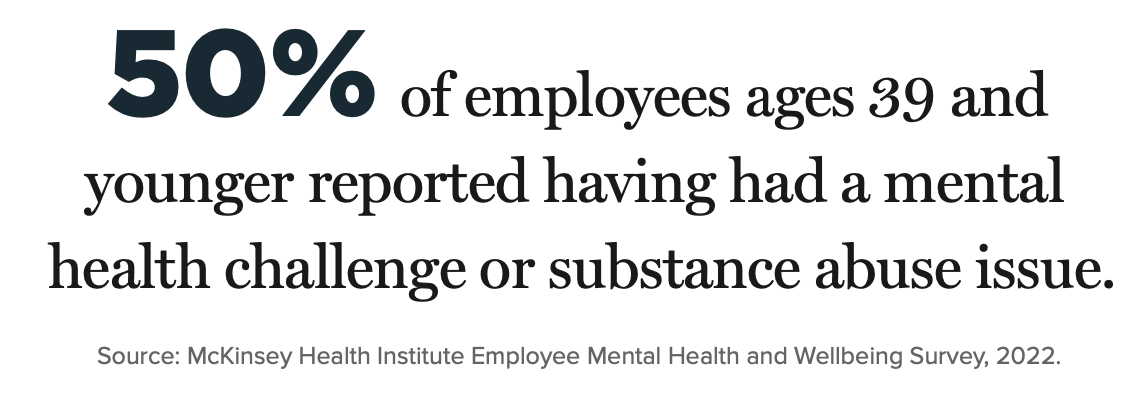
Even so, Millennials and members of Generation Z are more stressed than other generations. Many are saddled with huge amounts of college debt and struggled more with the effects of the pandemic. Over 50 percent of employees ages 39 and younger reported having had a mental health challenge or substance abuse issue, according to a 2022 study by McKinsey & Co. The percentages are higher for younger respondents. 

Perhaps given their personal experiences, younger generations have led the charge in starting to normalize discussions about mental health issues at work. They grew up in an era when children and teens were regularly diagnosed and medicated for conditions such as attention deficit hyperactivity disorder, and therefore don’t have the same negative associations with mental illness as their older counterparts. 

steve.png
‘I still think the first thing [company leaders] think about is the return to shareholders.’
CHRISTOPHER J. COLLINS

Plus, many already broadcast the details of their personal lives on social media. 

And while the pandemic and George Floyd’s 2020 murder impacted all workplaces and employees, younger workers are more likely to put pressure on employers as a result of these events. For example, they expect their employers to continue offering the flexible work-from-home arrangements introduced during the pandemic, and they want their employers to foster diversity, equity and inclusion in the workplace. Working at an organization that provides meaningful work but allows for time to pursue other passions 

and decompress is also important to younger generations.

High Ideals

Many younger people say they are willing to walk out the door if employers don’t match their expectations. Fifty-three percent of Millennials with a hybrid schedule said they would look for another job if their employer ordered them back to the office full time, according to a 2022 study by IWG, a provider of flexible workspaces. Only 33 percent of Baby Boomers felt the same.

Similarly, 46 percent of Millennials and 49 percent of members of Generation Z say they wouldn’t work for an organization that wasn’t proactively taking steps to make its workforce more diverse and its workplace more equitable. Only 33 percent of older workers shared that sentiment, according to a 2022 report from recruitment and staffing company Randstad USA.

Whether younger generations make dramatic headway into turning workplaces into fairer, more socially responsible enterprises remains to be seen. In recent years, the Business Roundtable has called for companies to drop the all-encompassing focus on short-term profits in favor of a long-term approach of investing in their workers and communities. But companies have been slow to adopt a new mindset.

“I still think the first thing [company leaders] think about is the return to shareholders,” says Christopher J. Collins, a professor of human resource studies and director of graduate studies in the School of Industrial and Labor Relations at Cornell University in Ithaca, N.Y. “I think some of these [social] issues are getting more recognition, but there isn’t a level playing field yet.”

He adds that individuals may start out with lofty notions about having more inclusive leadership and getting more people involved in decision-making. Yet at some point, intentions meet reality and decisions need to be made. 

“As every generation ages,” Collins says, “they start to realize the difficulty of managing really big, complex organizations.”  

Theresa Agovino is the workplace editor for SHRM.

Illustration by Valerie Chiang.

5 Key HR Metrics to Track

Solo HR practitioners in small companies often have an abundance of people data that could help their organizations. But they may not know how to make sense of it all.

Experts advise focusing on key metrics that will help the organization achieve its business goals. 

“It is not the best use of time or resources to track certain metrics just for the sake of tracking them or because you see other organizations doing the same,” says Lindsey Garito, SHRM-SCP, former director of human capital management and total rewards at Summit Health, a national health care organization with 13,000 employees based in Rye Brook, N.Y. 

HR metrics are a specific set of figures that measure the performance of an organization’s HR function. Once produced, those metrics can be analyzed and compared against the organization’s historical performance or against the performances of other companies of a similar size and industry. 

Here are five key metrics that every HR professional should track. 

Employee Turnover Rate

Few HR metrics are better than turnover rate at showing whether a company is delivering a positive employee experience. 

Looking at the historical pattern of employee turnover can also be helpful for resource planning, such as budgeting for hiring and training, says Kendra Davis-Roberts, a people insights strategist and founder of KDR Analytics in Philadelphia.

Calculate the rate by dividing the number of employees who departed by the total number of employees over the same time period, then multiply by 100 to get a percentage. A high turnover rate can signal potential issues, such as poor candidate selection, ineffective managers, low compensation or a lack of advancement opportunities. 

To identify what underlying issues may be plaguing your company, you’ll need to determine who is heading for the exits and why. Obtaining this information is even more important than knowing how many people are leaving, because it provides an opportunity to pinpoint and fix problems to slow attrition. To gain insights, dig in to data such as demographics, salary history, performance reviews and exit survey responses. Many HR professionals already track this information, and grouping the data through a human capital management system or in spreadsheets can help reveal patterns.

“Maybe you notice that people are leaving from a certain demographic group or you’re losing certain people to a competitor,” says Chelsea Williams, founder and CEO of Reimagine Talent Co. in New York City. “That is going to help you not just with workforce planning in general, but also with making strategic hires and really starting to form that company culture.”

Time-to-Hire

Time-to-hire is the number of days from when a candidate applies for a job, or is contacted by a recruiter, to when the individual accepts an offer. This figure can be displayed as a per-person average. A ­longer-than-average time-to-hire might not be a problem for companies with high levels of employee retention and engagement. However, if an organization is frequently losing good candidates, it could be time to look for bottlenecks in the recruiting and hiring processes.

Davis-Roberts recommends asking questions such as: 

  • Are recruiters attracting enough suitable candidates? 
  • Are candidates being interviewed in a timely manner?
  • Are hiring managers prepared to evaluate candidates?

To shorten time-to-hire, HR professionals also can quickly create a pool of potential candidates composed of people who have previously applied for roles, suggests Joseph DiCarlo, SHRM-SCP, chief people officer at Clarest Health, an 800-employee personalized medication management company based in Farmingdale, N.Y. 

In addition, Williams recommends working with outside agencies to help hunt for candidates and sort through resumes.

Benefits Participation Rate

Tracking which benefits employees use the most can help ensure that employees’ needs are being met and money is being spent wisely.

To determine the rate, divide the number of employees enrolled by the number of employees eligible, then multiply by 100 to get a percentage.

“There’s a lot of spend that goes into trying to take care of your people,” Williams says. “And so, if you notice that employees aren’t contributing to a 401(k), for example, and you’re paying for something like that, it is something to note.”

Offering personalized benefits also can be effective in retaining current employees and attracting qualified candidates, she adds. For example, Williams’ first employees didn’t need health insurance, so she gave them extra time off.

Diversity

As companies strive to foster cultures that reflect a commitment to diversity, equity and inclusion, HR professionals will want to track their organizations’ progress in hiring and retaining a diverse workforce.

Gender and racial diversity can be measured as a percentage of the overall employee population, or it can be reported as a ratio comparing, say, males to females or white employees to nonwhite employees.

“It’s important to see if any employees are having different experiences in processes that should be equal, like hiring, promotions, average salary and more,” ­Davis-Roberts says.

In addition to collecting quantitative demographic data, it’s useful to capture qualitative diversity data around employee experiences through discussions and surveys. 

“Small companies should consistently keep their ears and eyes open to the experiences of people—avoiding assumptions and instead asking questions,” Williams adds.

Tracking how talent finds open job positions is also a good way to help diversify the employee population at an organization, DiCarlo says. 

Employee Satisfaction

Regularly assessing employee satisfaction—how happy employees are with the work they do and the organizations they work for—is something that should be done multiple times a year.

“You should be taking that snapshot and marrying it to turnover because 99 times out of 100, there’s going to be a direct correlation between the two,” DiCarlo says.

One tool for measuring employee satisfaction is the Employee Net Promoter Score. To calculate that number, first ask employees how likely they are, on a scale of 0 to 10, to recommend the organization as a good place to work. Then subtract the percentage of “detractors” (employees who choose 6 or below) from the percentage of “promoters” (employees who choose 9 or 10). A score between 30 and 50 is considered good, Davis-Roberts notes.

HR professionals can also use an employee satisfaction index (ESI), in which they ask employees to rank their satisfaction level on a scale of 1 to 10 in response to specific statements. The formula to calculate ESI is the sum of all employees’ scores divided by the maximum possible score, multiplied by 100. 

ESI statements might include: You feel connected to your co-workers. Your job duties match your ideal role. Your supervisors effectively communicate company news. 

However, don’t ask about issues that are unlikely to be addressed.

“It can do more harm than good to ask for employee feedback that is never responded to or acted on,” Garito says. “Focus on the metrics that are meaningful for your organization and relate to the key priorities.”  

Kate Rockwood is a ­freelance writer based in Chicago.

Image by Irina_Strelnikova / istock

How to Find Seasonal Help for the Summer

?Last summer, a chronic shortage of hourly workers across the U.S. kept many public pools from fully operating, forced restaurants to limit their hours, prompted amusement parks to keep some sections closed and led trolley lines that serviced beaches to shut down.

This year, the labor shortage remains a problem—and it’s already impacting employers in need of seasonal help.

“Seasonal workers are always going to be a challenge to find, no matter the market,” said Stacy Fetherston, field talent officer at College HUNKS Hauling Junk & Moving based in Tampa, Fla. “The days of ‘I’m so lucky to have a job’ are now a case of ‘We are so lucky to have employees.'”

Nevertheless, HR professionals say that by acting now, you can still find the employees you’ll need for the summer months. They recommend taking the following steps.

Start Recruiting Early

“Preplanning for the summer months is key,” said Chelsea Searan, human resources lead at Instant Financial in Atlanta. “You have to be early to get the best talent in the door before they are committed to working somewhere else.”

Post your available jobs online now, and once you identify solid candidates, don’t wait too long to make an offer, Searan advised. Chances are good that candidates will receive a range of offers as soon as they post their resumes, so be ready to move ahead.  

This is particularly important in certain fields.

“While the latest jobs report shows that the hiring pace is slowing, highly skilled talent will always be in demand—especially in sectors that continue to demonstrate high levels of job growth, such as leisure and hospitality, health care and government,” said Tracey Power, chief people officer at Vaco, a talent solutions company based in Brentwood, Tenn.

Employers should also consider how long it’ll take to train a new seasonal employee and make sure they feel empowered in their role, Power said.

“Onboarding, training and assimilating new employees into your organization is just as important as the hiring process itself, especially for seasonal workers,” she said. “Giving your new hires the support they need to thrive will pay dividends for both employees and employers.”

Look for Workers in the Right Places

Posting available positions on LinkedIn, Indeed and other online platforms makes sense when you’re hiring full-time employees to work year-round. But when looking for seasonal help, it pays to be more creative, said Kendra Janevski, SHRM-SCP, managing director of HR at Vault Consulting in McLean, Va. She recommends writing succinct and enticing job descriptions and placing them where potential seasonal hires are looking.

“Right now, that is often social media,” Janevski said. “Setting up an employer Instagram account for recruiting can be the best place to find generations of talent who would be searching for the perfect summer position to enhance their resume or pocketbook. Reaching out to local or specialized high school, college and other niche job boards can also be a great option.”

Power agreed that social media can be key when looking for seasonal candidates, particularly TikTok and Facebook, where younger workers’ parents might see your job listings. But doing legwork on the ground can also pay off.  

“You can invest in online advertisements and share job openings on college message boards,” Power said. “But a little grassroots effort goes a long way with this population, so you can also keep it simple by posting physical signage at your office location(s) that tell people you’re hiring.”

Provide Competitive Wages and Instant Pay

Offering pay above minimum wage for summer work will set your organization apart from others, said Searan, adding that it’s crucial to include the wage range in job posts so that more people apply.

Employers may want to consider offering instant pay as well.

“It’s important to remember that it’s not all about how much you can pay, but when your talent can access it,” Searan said. “With Generation Z especially, who have grown up in a world of instant accessibility, providing that same instant access to wages is a competitive edge over employers that will not bend from traditional payroll cycles.”

Offer College Credits

Are you hoping to hire candidates who are still in college? They may want more than a paycheck and experience from their summer position. If you can provide college credits, that could convince some students to apply.

“Accrediting a seasonal job varies on a school-by-school basis, which means that if a college offers credit for summer work, they will have their own requirements and some kind of form and/or check-in process,” Power said. “It’s worth it to build a partnership with local colleges and build these accreditation programs, especially if you know you will have regular seasonal openings you need to fill every year.”

Provide Other Learning Opportunities

Along with college credits, you can make summer positions more attractive—and meaningful—if you use them as less-formal teaching opportunities.

“Identify your core team members and turn them into mentors,” said Fetherston, who also hosts team-building activities for seasonal employees at her company. “Fill in the gaps and provide a space for others to learn and grow.”

Lastly, keep in mind that even though it can be intimidating to try to find seasonal help, it’s important not to rush any decisions.

“Hiring too quickly, or hiring the wrong people, is the fastest way to weaken a sustainable business,” Fetherston said. “Remember, people are not your most important asset—the right people are.”

Kylie Ora Lobell is a freelance writer based in Los Angeles.

Blend Technology and Human Connection to Hold on to Restaurant Workers

Restaurant owner and operator Jamal Wilson has a lot on his plate these days. 

Wilson, the founder and owner of a small chain of food halls, opened his first location—The Hall on The Yard in Orlando—in 2021. The Florida food hall has nine restaurants with 60 employees. Soon, Wilson will open The Hall at Ashford Lane in the Atlanta suburb of Dunwoody, Ga., which will house 10 restaurants with about 75 employees. And in the third quarter of this year, The Hall at the Grove in Snellville, Ga., another Atlanta suburb, will offer 12 restaurants staffed by about 75 employees. 

In less than three years, Wilson’s company will have hired about 210 restaurant workers. And as you might expect, it has struggled to fill job openings. To cope with labor shortages, Wilson and other restaurant operators are turning to newer technology and what you might call workplace anthropology. 

“Hiring and managing labor has been a nightmare since the pandemic. Our guests have come back in person, sometimes at even greater rates than before the pandemic, but it’s been quite a challenge to hire and retain the amount of workers that are needed to keep up with the demand,” Wilson said. “There’s simply too much work to be done and not enough employees to do it.” 

Wilson’s story is far from unique in the U.S. restaurant business. 

In January, more than 1.7 million jobs in the leisure and hospitality sector—which includes restaurants—went unfilled, according to the U.S. Bureau of Labor Statistics

But despite the labor shortage, the National Restaurant Association predicts the U.S. foodservice industry will add 500,000 jobs by the end of this year. In a recent survey by the association, 87 percent of restaurant operators said they would likely hire more employees in the next six to 12 months as long as qualified applicants are available. 

So what are Wilson and his counterparts around the country doing to overcome the labor shortage? 

For starters, Wilson has enlisted help from a robot nicknamed Hall-E, a nod to the lovable robot WALL-E in the 2008 computer-animated movie of the same name. Wilson’s company bought the robot from SoftBank Robotics America, which specializes in workplace automation. 

“The robot works alongside our staff to automate repetitive and mundane tasks, like bringing food from the kitchen to customer tables or taking dishes from tables to the ‘dish pit,’ ” Wilson explained. “It allows our servers and other front-of-house employees to devote more time and energy to the higher-touch tasks like customer service, which in turn has a direct impact on ‘return on experience’ for our guests that keeps them coming back.” 

Hiring workers for the “dish pit” ranks among the biggest staffing hurdles at Wilson’s restaurants, he said. But since “hiring” the robot, employee satisfaction and retention rates have climbed. Hall-E has proven so successful, in fact, that Wilson plans to place robots at all of his locations. 

Besides technology, what else can restaurants do to hire and keep workers? 

Wilson recommends prioritizing people above all else. 

“Without servers and bussers and cooks and bartenders and hosts, you can’t keep your doors open,” he said. “Making sure that your employees are happy and finding cost-effective ways to make their jobs easier goes a long way toward boosting retention and keeping your valued employees for the long haul.” 

A bonus: Ensuring employees are happy triggers positive word of mouth that draws more job applicants, Wilson said. 

Christie Schatz, vice president of human resources at Sonny’s BBQ, which operates 94 restaurants in eight states, said that in the pandemic era, a stepped-up emphasis on hiring principles has paid off. 

For example, Sonny’s instills in its franchisees and restaurant managers the importance of hiring workers with the “traits and talents” needed to deliver the Sonny’s experience, Schatz said. That experience adheres to this motto: “Throw a BBQ Slathered in Hospitality.” 

Although Sonny’s hasn’t adopted robotics thus far, due to the “extremely experiential” nature of barbecue joints, it has embraced predictive scheduling software and predictive hiring tools, Schatz said. 

Schatz said restaurant operators shouldn’t be afraid of using technology to help resolve labor issues. 

“When used correctly, innovative technology solutions can go a long way toward supporting—not replacing—your workers,” she said. “And more often than not, the upfront investment pays dividends toward keeping your employees and creating an unforgettable experience for guests.” 

Nonetheless, Schatz underscores a basic human element when it comes to staffing: the value of daily connections and weekly sit-downs with restaurant employees. Each Sonny’s location employs between 40 and 60 people. 

“The flaw I see in our industry still is that we make hasty hires and do not check in with people because we are so busy,” she said. “However, we are in the people business, and our guests are also our team members. Treat them with gratitude and ask them to give you feedback as to why they stay.”

John Egan is a freelance writer based in Austin, Texas.

How to Provide a Negative Reference

?When asked to provide a reference for a former employee, solo HR practitioners typically will confirm only dates of employment and job title. 

Many believe it’s best to say as little as possible, because they don’t want to put themselves and their companies at risk of a lawsuit if a former employee thinks the reference was unfair or didn’t portray their work accurately. 

In many states, a company is required to confirm only the date of hire, the date of termination and whether the individual is eligible for rehire. 

But many hiring managers say they would like to be able to verify more than just a candidate’s work history.

“It’s easy for a job seeker to claim skills they may not have or expert-level experience where they are still a novice, and it’s tough to get information about their effectiveness from past employers,” says Walter Sabrin, senior vice president of recruiting services for VensureHR, an HR consultancy in Atlanta.

Receiving short and generic responses during a reference check makes it difficult for potential employers to understand the employee’s strengths and abilities, and it can potentially lead to bad hiring decisions, says Catherine Castro, senior HR and recruitment manager at 20four7VA, a virtual assistant staffing firm in Berlin, Md.

In fact, 76 percent of senior managers admit to recruiting the wrong candidate for a role and 64 percent say the negative impact of a bad hire is more severe now than it was before the pandemic, according to research by global staffing firm Robert Half. 

However, HR professionals can divulge more about former employees than just dates of service and titles without putting their companies or themselves at risk, provided they are offering accurate and unbiased information, HR experts say.

Understand State Laws

There are no federal laws that address what an employer can or can’t say about a former worker. Many states, however, have enacted legislation that gives employers qualified immunity when providing information for a reference check. There’s a caveat: The immunity is lost if it can be shown that the employer knowingly or recklessly provided false or misleading information or acted with malicious intent, says Molly L. Kaban, a partner at law firm Hanson Bridgett in San Francisco. 

Other states have few or no protections for employers. Massachusetts recently enacted legislation that provides qualified immunity for health care providers, she says, while New York state still doesn’t offer any employers qualified immunity. To win a lawsuit, an employee in New York state would need to show only that an employer negligently made a false statement about them, she notes.

Kaban adds that she has never encountered a reference-check lawsuit during her career. As long as employers keep references factual, the risk of being sued is low, she says, particularly in states with qualified immunity. 

“These qualified-immunity statutes were created to allow the employer to give an honest reference,” she says.

The key is to avoid inserting opinion when giving a reference.

Screen Shot 2023-03-08 at 83213 AM.png

“Stick to the facts, and avoid giving any opinion that could be construed as either positive or negative,” says Kimberley Tyler-Smith, vice president of strategy and growth at Resume Worded, an online career platform in New York City. 

Subjective opinions, such as whether the employee is suited for the job they’re being considered for, should be avoided, says David Aylor, founder and CEO of David Aylor Law Offices in Charleston, S.C. Additionally, any comments should be backed up with supporting evidence.

“It is much better to give a balanced overview of the employee and not attempt to sway the prospective employer in any direction,” he says.

Be mindful that whatever is said during a reference check has the power to advance or stymie someone’s career, notes Laura Mazzullo, owner of East Side Staffing in New York City. 

“We all have subjective opinions about what makes a candidate great,” she says. “Someone’s best employee is someone else’s worst employee. You can help the other hiring manager by being constructive and specific in your feedback.”

Highlight areas of strength as well as areas where the candidate might need to improve, while understanding that the job the candidate is being considered for might require different skills than the one they held at your company, Mazzullo explains. 

Be Subtle

In some situations, HR might want to discourage a hiring manager at another company from making a job offer because of a pattern of bad behavior or poor job performance, says Jill Santopietro Panall, SHRM-SCP, owner of 21 Oak HR Consulting LLC in Newburyport, Mass. 

However, rather than getting into specifics or coming right out and saying, “Don’t hire this person,” there are ways to send a subtle message that the candidate isn’t a good employee. For instance, Panall suggests saying, “I can give you those dates and nothing more. This is a person I don’t wish to discuss further.” 

Stating that someone isn’t eligible for rehire also sends a clear signal without getting into details. When employees sever ties with the company, Panall says, HR should sort each employee into one of three categories: do not rehire, would rehire and would love to rehire. 

HR has an obligation to let another company know when an employee has legal restrictions, such as a restraining order, or if there was any workplace violence or crime committed, says Chad V. Sorenson, SHRM-SCP, president of Adaptive HR Solutions in Jacksonville, Fla. 

Kaban warns that a prospective employer can sue another employer for providing negligent information if certain facts are withheld during a reference check, such as if the person committed a crime or was violent while working at the previous employer.

“If safety is a concern, the best thing for an employer is to give an honest reference,” she says.

Share with Care

HR should never divulge sensitive or confidential information about an employee without their consent. This includes any medical information, such as whether an employee has a history of mental health issues or the number of times someone took parental leave, Panall says. Steer clear of discussing someone’s appearance, age, weight, gender, sexual orientation and even their salary, she adds.

If someone leaves your company in good standing and would like a reference for a future job opportunity, ask them to sign a form stating that their colleague or manager may serve as a reference if the company is contacted, advises Rachel Alansky, owner of consultancy Seamless HR Solutions in Arlington, Va. 

However, Kaban says it might be a good idea for all reference checks to be directed to an HR professional, who will be more familiar with applicable laws. The HR professional may want to consult with the former employee’s supervisor to give an appropriate reference that goes beyond confirming dates of hire and title.

If a former employee has any outstanding claims or lawsuits against the company, be extra careful to avoid making comments that could be interpreted as a bad reference, Panall says.

In those cases, she advises, “consult a lawyer, because if the employee could make the case that you’re bad-mouthing them, it can impact the company’s suit.”  

Lisa Rabasca Roepe is a ­freelance writer based in Arlington, Va. 

Image by Nuthawut Somsuk / istock

How to Counter the Baby Boomer Brain Drain

?As employers grapple with a record number of employees quitting their jobs, many also are contending with an increase in the departure of workers ages 55 and older. In fact, the number of employees in that age group who have left their jobs has grown by 3.5 million over the past two years, according to research conducted by the Pew Research Center.

While there was a definite uptick in retirements during the pandemic, many of these workers are leaving for new jobs, not the rocking chair. The U.S. Bureau of Labor Statistics projects a rise in labor force participation among older adults from 2020 to 2030, with nearly 40 percent of adults ages 65 to 69 being in the labor force by 2030, up from 33 percent in 2020.

Experts say there are several reasons why retirements are being delayed, and older workers are switching jobs: 

  • More employers are creating scheduling flexibility and remote opportunities, especially for workers ages 55 and older;

  • Changing financial circumstances are prompting more older employees to remain in the workforce; and

  • These workers want to share their knowledge and experience, remain productive and contribute to their organizations beyond the traditional retirement age.

“Historical norms have changed,” said Erin Dertouzos, chief people officer at StrongDM, an IT services company in New York City. “You can’t always count on historical data to make business decisions. Many people either can’t or don’t want to retire at [age] 65.”

However, even those who delay or postpone retirement are aware their remaining time in the workforce is finite. Many are seeking new jobs that better reflect their skills, experience and workplace requirements.

Employers that want to retain these workers need to develop transition strategies that enable older workers to remain engaged and productive, as well as share the knowledge they have gained over the course of their careers.

“Organizations facing excessive talent losses need to address several pressing questions, ” said David DeLong, author of Lost Knowledge: Confronting the Threat of an Aging Workforce (Oxford University Press, 2004):

  • How can they encourage valuable Baby Boomer employees to postpone retirement or departure?

  • How can they transfer their knowledge, skills and experience to younger, less experienced employees?

  • How can they develop employees across all age groups?

“First and foremost, it’s important to take an inventory of your people, including skill levels, seniority, tenure and career mapping,” said Gianna Driver, CHRO at Exabeam, a Silicon Valley cybersecurity company. “This data gives a good sense of the current workforce, which can be used to create individual development plans.”

In addition, it’s critical to take an inventory of what your older workers want moving forward. “It doesn’t have to be all or nothing. You need an armada of solutions to address this complex challenge,” added Athena Karp, founder and CEO of HiredScore, an AI-recruiting company in New York City. “If you want some employees to stay longer, find out what’s most important to them and create strategies to help them achieve their goals.”

Be Proactive About Documentation

“Organizations need a strategy to sustain knowledge bases in light of retirements, turnover and the increasing complexity of jobs,” DeLong said. And it’s important to be proactive in addressing the challenge of knowledge transfer. “If you wait until the last minute, you have fewer options,” Karp said.

Dertouzos views these impending retirements as an opportunity for companies to pause and consider the most effective ways to preserve the institutional knowledge that is often taken for granted.

“The more you can document without paralyzing the workflow, the better it is for the company. It helps others learn from your experience even when you aren’t available,” she said.

StrongDM recently hired a process analyst whose primary responsibility is to work with different teams to document the company’s philosophy and operations, including people processes, customer journeys and user journeys. The collected information is housed on the company’s Intranet where other employers can access it easily.

While this proactive approach to documentation helps prepare the company for the retirement of its older employees, Dertouzos has found it also helps with onboarding new employees, self-directed learning and the challenges of turnover.

“It’s an opportunity to button up something that hasn’t been clearly documented or articulated,” she said.

Sharing Tacit Knowledge

Rosina Racioppi, founder and CEO of WOMEN Unlimited, a New York City firm dedicated to mentoring high profile women, advises companies to give Baby Boomer workers new assignments to reignite their desire to stay on the job.

“Managers should focus on opening them up to new challenges, which can serve to recognize their contributions to the company while simultaneously making the job feel new and exciting all over again,” she said.

Concurrently, it’s important to create an effective strategy for the transfer of “tacit knowledge” from older to younger workers. Tacit knowledge is a form of practical intelligence that is built through personal and professional experience over the course of a lifetime. Because tacit knowledge is based on subjective experience unique to the individual and often difficult to articulate, it’s best shared through conversation, observation and collaboration with others.

“Tacit knowledge is something that can’t be written down or codified. Observation is key,” said Heather McGowan, a Boston-area author who wrote Adaptation Advantage: Let Go, Learn Fast, and Thrive in the Future of Work (Wiley and Sons, 2020).

She shared the example of a 70-year-old president of a New York-based foundation who had a unique and well-honed talent for conflict resolution. He was concerned that no one else in the organization had this particular set of “people skills,” and although it was difficult for him to explain his approach, he found that his small team of directors and managers benefited greatly from observing him resolve conflicts between employees.

The president began routinely inviting colleagues to sit in on those conversations and then discuss what they observed. After watching him in action several times, they were able to internalize his attitude and techniques, and adapt it to their own style and for their own purposes.

“It was instructive for me too,” the president acknowledged. “I learned something about myself that I hadn’t really understood before. I think it made me a better leader and mentor.”

McGowan said it’s important to build these kinds of redundancies into the system so when people retire or leave, there are others in the organization who can step in. “No one should hold all the cards,” she said.

Karp recommends what she calls “the project solution” as an effective way to share tacit knowledge. She found that pairing less experienced employees with more experienced people and allowing them to work side by side on a project for three to six months provides a gradual exposure to complex knowledge that makes learning more effective and sustainable.

Role sharing is another viable alternative. When two people from different generations share one role, they have numerous opportunities to learn from each other, McGowan said.

Passing the Torch

The impending exodus of so many experienced Baby Boomers from the workforce is an opportunity for leaders to rethink their role, said McGowan. “It’s really a succession planning issue. The focus needs to be on developing people rather than performance. The bench you leave tomorrow is more important than how you perform today,” she said.

Mentoring and knowledge sharing is key to developing the next generation of leaders, said Driver, who launched a pilot program at Exabeam in 2021 called GROW in which older, more experienced leaders mentor and share their knowledge with a select group of employees who have been identified as “high potential, high performance.”

In this multi-month program, an instructor meets virtually every few weeks with a cohort of 10 to 12 members. The curriculum, which was developed by the director of learning and development, uses career ladders to determine what participants need to learn and progress with the company. Then the content is delivered by senior-level employees who have the skills, knowledge and passion to facilitate and lead this process.

Exabeam uses the program as a retention tool for both the faculty and participants. Baby Boomer employees who are asked to facilitate usually feel honored to be asked because it signals a respect and appreciation for their knowledge and experience, and makes them feel valued and relevant, said Driver, who added that HR can be instrumental in creating an inclusive, learning-rich environment that celebrates mentoring, knowledge sharing and collaboration.

“People from different generations can learn a lot from each other,” she said. 

Arlene S. Hirsch is a career counselor and author based in Chicago.

Transferring Professional Skills to the Cannabis Industry

?Back in 2012, Colorado and Washington became the first U.S. states to legalize recreational marijuana. As of today, 21 states and Washington, D.C., have legalized the recreational use of marijuana, and the U.S. cannabis industry is projected to generate roughly $32 billion in sales this year.

Like many industries, the cannabis sector has experienced challenges in hiring the talent it needs. What specific skills does the cannabis industry need, which skills are transferable from other industries, and how has the industry gone about attracting people with those skills? 

Much like the consumer packaged goods (CPG) industry, the cannabis industry sells products to the public and needs to hire talent in areas including sales, marketing, retail/distribution, HR, finance/accounting and legal/compliance. Since the industry is relatively new, cannabis companies have often recruited and hired professionals who developed their skill sets in other industries.

For Hire: Skills Transferable to Cannabis Sector

Many professional skills translate well to the legal cannabis industry, including:

Experience working within a highly regulated sector. Experience and skills developed in highly regulated industries, such as pharmaceuticals, alcohol and banking, are readily transferable to the highly regulated cannabis industry. “Professionals operating in the cannabis space must understand regulatory nuances because compliance is a critical issue,” said HR thought leader Tara Furiani, host of the “Not the HR Lady” podcast.

Startup experience. There’s no playbook for working for a cannabis company—just like at tech startups. “The legal cannabis industry is rapidly changing, and there’s a need for people who can wear many hats, think of creative solutions and collaborate well across disciplines and departments,” said Matthew Indest, technical director of agronomy and plant improvement at cannabis provider Curaleaf. 

Sales and marketing skills. Cannabis companies are looking for experienced, effective sales and marketing people to stimulate product demand, facilitate purchases and generate revenue. That said, there are multiple legal restrictions regarding how and where cannabis products can be sold and marketed or advertised, often varying by state.

Finance and cost accounting expertise. Banking and managing cash flow have been constant hurdles for the U.S. cannabis industry, making finance and accounting skills among the most sought-after. As the American Bankers Association explains, “[T]he possession, distribution or sale of marijuana remains illegal under federal law, which means [providing banking services related to cannabis] could be considered money laundering.”

A learning mindset. “Ultimately, the transferability of professional skills to the cannabis industry depends on individuals and their willingness to learn and adapt to changing circumstances,” said Jessica Glazer, owner of MindHR, an executive placement, career coaching and resume writing company in Montreal that works with the cannabis industry.

A Cannabis Professional’s ‘Growth’ Story

Many cannabis companies need employees with skills related to agriculture, including cultivating and processing practices, as well as people with expertise in plant science. As an example, Indest started his career working with crops such as sweet potatoes and moved on to working with cannabis. He first became interested in cannabis during his late teens while growing up in Louisiana.

“I became fascinated with plant science as a teenager but didn’t have opportunities to work with cannabis at scale in my home state,” Indest said.

However, his plant science experience with noncannabis crops would later become highly transferable to cannabis. “My work focusing on breeding schemes, improving crop color and flavor, and disease resistance all have applications in cannabis,” he said.

When industrial hemp licenses became available in Louisiana, Indest decided to “take the opportunity to get hands-on with [growing] cannabis after spending 15 years in traditional agriculture.”

Transferring Skills: 3 Big Challenges

Despite its similarities with the CPG industry, cannabis is unlike other industries in several respects. Cannabis companies are generally small-scale enterprises and often lack clearly defined job roles.
“Many cannabis companies have less than 200 employees, and there are many roles in which a professional will likely struggle to adapt if they’ve only worked for large, established businesses where less versatility and flexibility are required,” said Kara Bradford, CEO of Viridian Staffing, which specializes in recruiting for the cannabis industry. 

Finance and marketing professionals also confront special challenges in transferring their skills. “Finance professionals coming from noncannabis industries may struggle with navigating the banking and financial limitations faced by the cannabis industry, while marketers may need to adjust to the industry’s restrictive advertising regulations,” Furiani said. 

A third challenge to transferring one’s skills to the cannabis industry involves “acquiring knowledge about the plant itself and its effects [on people],” said Kelsea Appelbaum, vice president of partnerships at cannabis industry recruiting firm Vangst. She noted, “The cannabis industry is so young that everybody is learning together.” 

Cannabis Recruiting Gets Creative

Cannabis companies are exploring new and innovative ways to hire talent from other industries. “Some companies are partnering with staffing agencies and headhunters to identify and recruit candidates with specific skill sets. Others are offering competitive salaries and generous benefit packages to lure professionals away from more traditional industries,” Furiani said. “Some are even implementing creative strategies such as ‘budtender competitions’ or ‘cannabis cook-offs’ to recruit talent.”  

In the end, “the cannabis industry isn’t all that different from other agricultural and CPG industries,” Applebaum said. “It just has an added level of regulation and laws.”

As the cannabis industry continues to mature and as more professionals start their careers in it, skills transfer will likely become smoother.

Joseph Romsey is a freelance writer based in Boston.

Subscribe to our Newsletter