Emerging Tech Skills That Should Be on HR’s Radar

?Technological advances create changes in companies—and jobs—of all kinds. The pace of change has become so rapid that it’s hard, if not impossible, for educational institutions to keep up. Even the most recent graduates often lack the specific skills that organizations need, so learning has to happen on the job.

HR leaders should stay abreast of these changes to ensure they’re developing internal talent and seeking external talent to fill technology gaps that may exist today while preparing for future needs. It’s a daunting task with tech talent in increasingly short supply, and new needs continually emerging.

Digital Transformation Driving Talent Needs

Charlie Schilling is president of enterprise business and workforce development at Emeritus, an edtech company based in Singapore. In 2023, Schilling said, companies are narrowing in on operational efficiency and driving ROI. Leaders need to be comfortable analyzing data to make decisions and employees need to possess—or learn—skills to use technology to do their jobs most efficiently.

“Tech-related skills have become more critical in the last decade and continue to be important for almost any role to have some digital knowledge or savvy,” agreed Kacie Walters, vice president of people and culture at Atlas, a global talent management platform company in Chicago. “Just because you may not be in an IT or technology role doesn’t mean you don’t need skills in the realms of data, security, automation and design thinking. These skills are needed in any function within an organization to help streamline processes and maximize data for good decision-making.”

Unfortunately, these skills are in short supply.

Critical Skills Gaps

Schilling points to research showing significant gaps in technological needs and the availability of talent to meet those needs:

  • A 2022 PwC Pulse Survey indicated that 60 percent of business leaders felt the most important growth driver for their organizations was digital transformation; 77 percent said hiring and retaining talent was the most critical growth driver. The two are closely related.
  • Salesforce’s 2022 Global Digital Skills Index revealed that 73 percent of respondents don’t feel equipped to learn the digital skills that businesses currently need; 76 percent don’t feel equipped for the future. 

Sania Khan, chief economist and head of market insights at Eightfold AI, said her company identified the top 10 emerging skills in tech:

  • Cloud computing
  • Integration
  • Analytics
  • Git
  • Machine learning
  • Digital marketing
  • Mobile applications
  • Hadoop
  • Python
  • Android

Cloud computing demand is nine times higher in 2022 than it was in 2021. “Every organization could benefit from developing a plan for acquiring these emerging technical skills,” Khan said. That plan is likely to include some combination of talent acquisition and internal training and development.

But, while tech skills are top-of-mind during talent acquisition these days, soft skills also play a critical role in ensuring that tech talent can operate efficiently and effectively.

“Our clients and partners repeatedly tell us that technology training on its own falls short,” Schilling said. “Where many organizations struggle is failing to pair technology know-how with leadership skills.” That is “the soft-skills part of the equation,” he said. And it’s a critical part. It’s important, Schilling said, for leading technology-driven organizations to have a customer-first mindset. That requires leaders to “think strategically, build technology advantage and accelerate growth while leading and inspiring teams along the way.”

Filling KSA Gaps: Grow or Buy?

“Data analytics is now a table-stakes skill for technical and nontechnical teams alike, and organizations that bring in seasoned leaders while also upskilling current teams will benefit strategically and operationally,” Schilling said. In addition, he said, “since the pandemic there has been an emphasis on companies expanding different processes by leveraging new technologies, including artificial intelligence and machine learning.”

These integral knowledge, skills and abilities (KSAs), Schilling said, “are driving the future of work and should be top of mind for organizations when offering educational training and skills development for current and future employees.”

But, while organizations can turn to the external market for these skills, Khan acknowledged that this “poses a series of challenges in a tight labor market.” She observed that “many organizations are scaling their upskilling operations and leaning on contingent workers to fill skill gaps in the current economic environment.”

Walters agreed. The labor market is very competitive when it comes to tech-related competencies, she said. “This is why some larger organizations are working with schools and colleges to develop programs and certifications that feed into their talent pipelines for internships, rotational programs, or entry-level jobs. Hackathons are another great way to find talent.” Hackathons are events that bring people together to solve a challenge. While not always related to technology, these events do tend to attract people with an affinity for both problem-solving and tech-related solutions.

Atlas, said Walters, partners with Coursera to provide training to help employees develop deep expertise in areas like data analytics, cybersecurity, design thinking and Agile methodology. The training is made available to them “on day one,” she said. “Going forward we will be identifying additional critical skills we need across the organization and align learning paths and opportunities to ensure people develop what they need to stay competitive and add value to Atlas.”

“Whatever course of action is taken, it’s important to jump-start plans today so your organization can be future-ready tomorrow,” Khan said. Continued attention and ongoing assessment of skills gaps, especially related to technology needs, need to be at the top of every HR leader’s “must do” list in 2023.

Lin Grensing-Pophal, SHRM-SCP, is a Wisconsin-based business journalist with HR consulting experience.

Recruiters Brace for a Challenging Year Ahead

?Talent acquisition (TA) professionals are staring a possible economic recession in the face as 2023 advances, causing some to consider pulling back on hiring. At the same time, employers that are experiencing a skills shortage will be focusing on retention and candidate priorities, like flexibility and career development. And the buzz about skills-based hiring will only get louder.

Labor Market Will Cool

Coming off an economic roller coaster, 2023 will bring a sharp slowdown in hiring, most economists agree.

“This year we are seeing a slower pace of growth, as the economy comes back down to earth after a meteoric rise last year in one of the fastest recoveries we have ever seen,” said Karin Kimbrough, chief economist at LinkedIn. “Nevertheless, labor-market dynamics remain tight. So in many ways, employees still hold the power to demand more from their employers when it comes to salary, flexibility and benefits. But this power balance is likely to start leveling out in the coming months.”

The number of job openings, which reached its highest level in 21 years last year, is predicted to slowly decline in 2023. The Great Resignation started to lose steam last year, and although recession fears are still present, the unemployment rate fell to 3.4 percent in January.

“Our best-case forecast is that we will gain about 1.2 million jobs this year,” said Jay Denton, chief analytics officer at LaborIQ, a compensation and labor market analytics software company based in Dallas. “That may have seemed optimistic but is more plausible after January’s blockbuster jobs report. A more pessimistic case, which could still be in play, is that we lose half a million jobs overall. There are still plenty of question marks out there.”

He added that certain sectors will remain very strong, such as health care, and leisure and hospitality. “Talent shortages will also remain,” Denton said. “The competition for talent is not easing, even with a slowdown in hiring. There is more than enough new job creation to cover any layoffs.”

Johnny Campbell, CEO of Dublin-based SocialTalent, a learning platform for recruiters, said the technology industry is already experiencing the brunt of layoffs as the year begins. “But don’t be fooled,” he said. “Hiring will still be incredibly difficult. As big as the recent number of layoffs seem, this is only a fraction of total current vacancies. Combine this with global workforce shrinkage, and it only adds to the challenge of recruiting.”

Experts agreed that even when the labor market contracts and hiring freezes spread, recruiting operations should not be slashed.

“Given how hard it will be to find talent in the coming years, you need to ensure your hiring machine remains solid, enabled and ready to fire once we get back to business as usual,” Campbell said. “When COVID hit, the talent acquisition function was drastically reduced, only for there to be a scramble to reform these teams when the function was needed most.”

Neil Costa, CEO of Boston-based HireClix, a digital recruitment marketing agency, said he’s seeing some recruiters already being laid off and some clients pulling back on hiring, but he’s still also seeing a lot of enthusiasm for recruiting.

“If there is a slowdown in hiring, TA teams can put their focus elsewhere, like revamping their career site and employer brand. Many companies still need a refresh on different aspects of recruiting strategy.”

Amy Schultz, global head of talent acquisition at Canva, a desktop publishing design software firm based in Sydney, senses a more pessimistic shift in the recruiting industry. “With more recruiting teams being laid off again, I predict we will see people leave recruiting for good, which will cause a further talent shortage when the market picks back up and recruiters are in high demand. Since the pandemic began in early 2020, some recruiters have been laid off three or more times. I don’t blame folks for not wanting to return to this kind of ongoing turbulence.”

The last two years have put exceptional pressure on HR and recruiting, said Nicola Hancock, managing director for the Americas at AMS, a recruitment services and advisory firm based in London. “With all the burnout, I could see people rethinking their careers in the short term. But recruiters love recruiting. It’s a real passion. Ultimately, it is very rewarding—you help people find jobs and move up in their careers. And the recruiting role has never been more critical. For many business leaders, attaining the right skills during a talent shortage is a top concern.”

Candidates Still Value Flexibility

Job candidates and employees will continue to seek out employers that value flexibility and work/life balance, two priorities that spiked to prominence during the pandemic and will remain core to an employer’s value proposition. As an added benefit, supporting flexibility will improve retention.

“I expect work/life balance and flexible-work arrangements to remain top talent drivers for years to come,” said Jennifer Shappley, vice president of global talent acquisition at LinkedIn. “These days, candidates are looking for companies that will value their whole selves and provide support in achieving work/life balance.”

Hancock said remote roles have been reduced since the height of the pandemic, but some flexibility is what candidates are looking for consistently, after compensation and benefits. “Organizations must try to balance their goals with what’s important to candidates, especially in such a competitive market,” she said.

Flexibility no longer means just working remotely, said Jeanne Meister, executive vice president with Executive Networks, a San Francisco-based resource group for HR leaders. “More workers want flexibility in when work gets done over flexibility in where work happens. It can mean working four or even three days a week while working longer hours each day. For knowledge workers, working asynchronously requires an employer to make a cultural shift where work/life boundaries are respected, workers are trusted to do their jobs outside of a traditional 9 to 5 workday and employers set guardrails on where live synchronous work can take place.”

Flexibility in work schedules is also possible for front-line workers, Meister said. “For example, Chick-fil-A allows workers the ability to work 13 to 14 hours on three consecutive days with full-time pay, which has resulted in increased employee retention.”

Jeanne McDonald, president of global RPO solutions at HR and management consulting firm Korn Ferry, agreed that in 2023, more candidates will look for companies that promote work/life integration—foregoing the traditional 9 to 5 workday in favor of a more fluid schedule.

“That means being able to put in hours when it’s most convenient to take care of personal responsibilities when needed,” she said. “Watching the clock will become less important as managers assess success by the output of employees and not the time frame of their workday.”

Meister added that the hybrid work model will continue to be shaped. “HR and business leaders will need to set clear principles for success rather than mandate policies. That starts with defining what hybrid means in the organization, defining the workspaces where work will happen, the technology tools needed, the team norms, core collaboration hours and rituals for success.”

Employees got a taste of what autonomy, empathy and trust in the workplace could mean during the pandemic, Campbell said. “And while it was an imperfect experiment, it showed how important these elements are for sustaining a positive impact on engagement and well-being. We need to stop pretending that life outside work isn’t important. Having the breathing room to alter your start time for example, or pop out midday for an appointment, could be game changing for some employees.”

Internal Mobility Will Get Stronger

More employers will seriously consider internal mobility as the desire for it grows and technology has made it easier to accomplish.

Costa said it takes a factor of trust to work, but candidates have expressed a strong interest in career development from prospective employers, and research shows that the investment in skills building and career pathing leads to a strong return in retention.

“Employees want to have the flexibility to explore different roles and acquire new skills,” said Linda Jingfang Cai, vice president of talent development at LinkedIn. “Helping employees transform their careers as their interests shift instead of keeping people in rigid pathways will make it easier to keep great talent.”

MacDonald added that investing in internal mobility not only will boost the attractiveness of the company to candidates and develop more diverse pipelines, but also will help fill open roles and critical skill gaps amid stalled hiring.

LinkedIn data shows that employees who have moved around internally have a 64 percent chance of staying with the organization after three years, while the percentage lowers to 45 percent for those who haven’t made a move. Implementing career pathing also sets up a skills-first mindset within the organization, creating a workforce that is more adaptable to the changing external environment.

“People are looking to be engaged and re-engaged,” said Eric Sydell, executive vice president of innovation at recruiting technology firm Modern Hire. “There are a lot of things people can do that they don’t necessarily know they can do. And as engagement lessens, one way to motivate people is through internal growth opportunities.”

But implementing effective internal mobility programs isn’t easy, experts said. Internal mobility is much more complex than offering a promotion or a lateral move. Employers can fail to create a culture where mobility is encouraged, and organizations often lack processes that connect employees with opportunities.

“The challenge is how you operationalize it,” Hancock said. “HR must first understand the difference between the strategic practice of talent and skills mobility versus simply filling a role internally. Organizations will need to build a skills and careers framework in order to understand what skills exist already and how they can move people most effectively.”

MacDonald said more companies will use talent analytics to determine which new roles are needed to future proof the business and which employees might be a good fit for those roles.

“Increasingly, companies will use artificial intelligence platforms with predictive analytics to shortlist promising internal candidates, provide tailored career development content, and develop personalized career paths based on goals and interest areas,” she said.

“Technology can help drive the process and the experience, but ultimately, it is about a culture where internal mobility is celebrated and recognized,” Hancock added.

Skills-Based Hiring Will Gain Momentum

More companies will gradually move toward a skills-first mindset when hiring, putting more emphasis on candidates’ competencies and less on traditional criteria such as college degrees and work experience. Labor-shortage struggles in recent years have forced companies to broaden their recruiting lens, and job listings data since the pandemic show fewer degree requirements. The trend has bipartisan support, with state and federal lawmakers from both parties proposing skills-based hiring measures.

“The shift toward skills-based hiring will accelerate in 2023 as skills emerge as the currency of the labor market,” Meister said. “In addition to broadening the talent pool for employers, skills-based hiring helps to remove career and salary barriers for over two-thirds of adults in the United States who do not have a bachelor’s degree. For employers, skills-based hiring broadens the talent pool, increases the speed to hire and adds greater diversity in the workforce.”

The shift is picking up adoption in the technology sector, where many workers do not need a degree to perform their jobs, Meister said.

“It’s smart to look for the best talent versus the perfect resume,” Costa said. “I started in accounting. Did someone think I would build a recruitment advertising agency? No. But over time, I picked up new skills. It’s a practice that will give value to both employers and employees, but it’s still a very new concept for most organizations.”

[SHRM Foundation: The Rise of Skilled Credentials]

Hancock agreed that skills-based hiring will continue to gain traction, but it will not be easy to operationalize. She added that the practice may be more common in years to come, but recruiters will have to do more to educate and influence hiring managers.

Like with every new workplace trend, HR technology vendors are innovating to make the process easier for users, Costa said.

Sydell noted that one of the biggest early problems is defining skills. “The term ‘skills’ is being used to mean everything under the sun, so you have taxonomies with millions of skills out there, but not everything is a skill, and not all are equally important for a given job.”

He said traditional predictive assessments that measure human characteristics shouldn’t be thrown out in the skills revolution. “You want to use a hiring process designed to measure not only skills, but also job fit, work style, potential to learn and grow, and other attributes that make a whole hire.”

Meister said a disruption in skills is underway, with soft skills like communication, customer service and collaboration being more sought after by employers than technical skills, which remain highly valued.

“Business and HR leaders have always known that human skills are critical, but now we’re seeing a heightened demand for them,” she said. “They rely on human connections, the ability to lead others, and they cannot be automated.”


Businesses warned not to ditch hybrid working

Many large employers are considering enforcing return-to-office policies this year, according to research from business consultancy Gartner.

But although many leaders feel that a return to the office is the only way to promote productivity, visibility, and loyalty, the real issue, argue Gartner consultants, is that many businesses have failed to optimise the opportunities of hybrid working.

Gartner has found that, as labour turnover slows because of the economic downturn, many organisations are using the period to plan more office-centric workforce strategies.

However, say the consultants, the connectivity and productivity challenges businesses are experiencing are not the result of hybrid work but an inability to realise its full benefits.

Gartner based its projections on research finding that 69% of business leaders had concerns about collaboration, culture, creativity and engagement and that 54% of HR leaders felt that their employees were less connected to their organisations than they were before the pandemic – a finding that chimes with those of OC Tanner, which came to similar conclusions in a report this week.

Research has also shown, though, that employees were 1.6 times more likely to perform better when their teams were dispersed in different locations and timezones and that employees who were allowed to decide when they work were 2.3 times more likely to achieve higher performance than employees without autonomy.

Caitlin Duffy, director in the Gartner HR practice, said shifting to office-based working would be a mistake. Such an approach, she said, “overlooks the numerous benefits of hybrid work. This includes greater opportunities for employee flexibility and rest, advantages for underrepresented and neurodiverse talent, opportunities to reduce overheads on physical premises, and the important fact that many employees are significantly more productive and more engaged in a hybrid workplace.”

She said “connectedness” was the key to realising the benefits of hybrid working. “For example, a weakened workplace culture is not the result of having fewer employees on-site, but a failure to intentionally build culture connectedess into the hybrid workplace.

“Organisations that resist hybrid working are setting themselves up for long-term reputation and attrition risks and hindering their long-term competitiveness in what will inevitably be a more virtual society in future. They need to be embracing hybrid work and finding creative ways to leverage it.”

Latest HR job opportunities on Personnel Today

Browse more human resources jobs

Nursing degree applications fall 19%

Patient care will ‘continue to suffer’, according to the Royal College of Nursing, as the number of people applying for degrees in nursing across the UK fell by 19%.

New figures from the Universities and Colleges Admissions Service (UCAS) show that the number of applicants to nursing courses in England is down 18% compared with the same point last year. By the January deadline, 27,370 people had applied to study nursing at course providers in England, compared with 33,410 at the same point last year.

The decline is worse in Scotland, where the number of applicants to study nursing starting this autumn fell by 24%. In Wales, applications have fallen by 22% and in Northern Ireland by 17%. Across the UK, there has been a 19% decline in applications made to UCAS compared with 2022.

RCN general secretary and chief executive Pat Cullen said: “These figures are damning for the UK government. Not only are they losing record numbers of experienced nurses from the NHS, but they are compounding the problem by deterring the next generation.

“With tens of thousands of unfilled nurse jobs across the country, ministers should urgently consider a set of measures to turn this situation around. Nursing staff, today’s and tomorrow’s alike, need to know they are valued and that starts with fair pay. They must fund tuition fees and living costs for all nursing students.”

Nurses went on strike this week (6-7 February) in a continuing dispute over pay. Cullen described the fall in nursing degree applications as “deeply concerning” for the profession’s future. “During the pandemic, people were drawn to apply to study nursing by the professionalism that was showcased,” she added. “These figures show that has been reversed entirely. Ultimately, it is patient care that will continue to suffer.”

The figures show there has been a significant fall in the number of mature applicants to nursing courses, with UCAS polling on student attitudes showing that cost-of-living factors are making applicants re-evaluate their choice of subject based on value and future career prospects.

There was a sharp rise in the number of applicants to nursing courses during the pandemic, reaching a peak of 46,040 across the UK in 2021. Nursing degree applications are down 27% since then.

Applications to enrol on midwifery degree courses fell 22% to 8,910 in the UK compared to last year; this figure was less than pre-pandemic levels of 9,350 in 2020 and 9,040 in 2019.

A spokesperson for the Department of Health and Social Care said: “We know the number of applicants was exceptionally high during the pandemic but there continues to be strong interest in nursing and midwifery careers, with applications above 2019 levels.

“For the third consecutive year, we have seen over 26,000 acceptances to undergraduate nursing and midwifery programmes and in 2022 there were 3,700 more acceptances compared to 2019 – a 16% increase.”

They added that NHS England will publish a long-term workforce plan this year focused on recruiting and retaining more staff.


HR opportunities in Healthcare on Personnel Today

Browse more HR opportunities in healthcare

Employers Are on the Hunt for Workers with These Tech Skills

?When it comes to hiring for today’s workforce, there’s no escaping the need for people equipped with digital skills. In fact, a new report shows each of the 10 fastest-growing job skills is in the digital realm. 

“The ongoing evolution of technology means employers are regularly seeking new digital competencies from potential hires while also reskilling existing workers,” wrote Zac Rule, vice president North America, enterprise, at online learning platform Coursera, which recently released its list of the fastest-growing job skills for 2023

Here’s the global list of the 10 fastest-growing job skills as ranked by Coursera (based on course enrollments): 

  1. Scrum software development
  2. Data visualization
  3. Customer success tools
  4. E-commerce
  5. Customer relationship management (CRM) software
  6. User experience design
  7. Agile software development
  8. Software framework development
  9. System software development
  10. Search engine optimization (SEO) 

Underscoring the ever-evolving nature of digital skills, only two of the top 10 for this year were repeats from last year: data visualization and user experience design. 

The Coursera report also identified the fastest-growing job skills by region. In North America, the top five are: 

  1. E-commerce
  2. Customer success tools
  3. SEO
  4. CRM software
  5. Back-end Web development 

In-Demand Workers Set Own Terms

Of course, salaries in each of the top five North American categories can vary widely, depending in part on job duties and technical skills. For example, the average salary for a customer success manager in the U.S. is $52,309, according to job platform Indeed, while the average salary for a back-end Web developer in the U.S. is $115,952. 

In many cases, people with digital skills can command robust salaries and perks due to the ongoing talent gap. In-demand perks for tech workers include flexibility in terms of remote work and work schedules. 

A 2022 report from job platform Hired indicated that candidates for tech jobs “are still emboldened.” Nearly 90 percent of tech workers said they’d immediately start looking for a new job if they were denied a pay raise in the next six months, and half expected salary increases by 2023. 

Despite the growing number of tech layoffs in the U.S., thousands of tech-focused jobs remain unfilled. A recent report from career marketplace Dice found that more than 375,000 openings for tech jobs were posted as of October 2022. 

One reason may be the ongoing gap in tech skills. A 2022 survey commissioned by cloud services provider Cloudreach and Amazon Web Services found that more than 70 percent of IT leaders around the world viewed the skills gap as an urgent concern.  

The shortage of tech talent can hurt employers’ ability to foster innovation, improve customer and/or employee experiences, and boost productivity, Coursera said. The skills drought also has a financial cost: Consulting giant Korn Ferry said the U.S. stands to lose $162 billion in annual revenue unless it finds more tech workers. 

Employers Ready to Pay for, Maintain Talent

Despite worries about the economy and the shortage of tech talent, the demand for digital skills appears to be here for the long haul. 

“We’ve seen this trend accelerate over the past couple of years, and it will continue to grow as more industries and companies prioritize digital transformation,” said Rich Jacquet, chief people officer at Coursera. “As critical as it is to invest in technology, it is just as crucial to invest in your people to hold a competitive advantage.” 

Carol Cochran, vice president of people and culture at career platform FlexJobs, said the emphasis on digital skills dovetails with the rise of remote work. Employers offering remote-work options must find employees with experience using several types of technology, such as project management software and company-specific platforms, along with the willingness to immerse themselves in new technology, she said. 

But, Cochran added, it’s not enough to hire employees with strong digital skills. 

“As technology advances, companies must continue to hone and build workers’ skills to stay relevant, competitive and agile,” said Cochran, referring to a skill-building practice known as “new skilling.”

Employers shouldn’t dismiss the importance of human-centered skills, such as leadership, management, communication and storytelling, and how those mesh with digital skills, she said.

The Coursera report identified the 10 fastest-growing human skills:

  1. Storytelling
  2. Change management
  3. Organizational development
  4. Influencing
  5. People management
  6. Culture
  7. Collaboration
  8. Decision-making
  9. Communication
  10. Planning 

Human-centered skills “will remain staples for personal and professional development,” Coursera’s Jacquet said, adding that HR and learning-and-development leaders must put more emphasis on developing these skills to help managers and employees communicate more effectively, navigate uncertainty and “future-proof” their organizations. 

“The combination of the pandemic and current economic conditions has helped us realize that while technological innovation is essential, our people must come first,” Jacquet said. “Increasing employees’ proficiency in human skills is integral for long-term business success and employee retention.” 

John Egan is a freelance writer based in Austin, Texas.

Federal Hiring Outpaces Departures

Andrea Medici wrapped up three decades with the U.S. Environmental Protection Agency (EPA) late last year, around the same time Allecia Jones had settled in as a Foreign Service officer for the State Department.

Medici left her job nine months after becoming eligible to retire as a 56-year-old attorney-advisor. Hired in 1991 during George H.W. Bush’s administration, she worked in the EPA’s general counsel’s office in Washington, D.C., specializing in pesticide and chemical regulation.

“I do feel proud of doing that for a long time, and I believe I did my job well. At the same time, it was a mixed bag,” Medici says. “I did get what I would call burned out, particularly in the last administration.”

Jones, a member of Generation Z, has a two-year assignment researching the Haitian economy from Port-au-Prince. She arrived in Port-au-Prince in May 2022.

“I really enjoy doing the economic work,” she says. “There are real-world results that happen from some of the reporting and information that I’m providing to our policymakers back in D.C.”

It was one out, one in for the federal government, which has more than managed to keep up its headcount amid employee exits, despite longtime predictions that the federal labor force would be hit hard by a wave of Baby Boomer retirements. The federal civilian workforce increased from just under 2.1 million at the close of fiscal 2017 to nearly 2.2 million in May 2022, according to the U.S. Office of Personnel Management (OPM).

 ‘There isn’t any massive event that’s triggering federal retirement.’
Jeff Neal

That said, government agencies have long been hobbled by bureaucracy and slow to make hiring decisions, among other shortcomings.

“Nobody in their right mind would devise the hiring system like the one the federal government has right now,” says Jeff Neal, a former chief human capital officer for the Department of Homeland Security and a member of the National Academy of Public Administration. “It’s too complicated, it’s too lengthy, it doesn’t actually produce the results it’s designed to produce.”

Retirement Doomsday? Maybe Not

A long-predicted tsunami of retirements in the federal workforce has not occurred. Collectively, about 180,000 civilian employees retired from the federal government over the past three fiscal years. That’s a significant figure, but the number of new hires has more than tripled that—nearly 652,000—over the same period, according to OPM data.

“That whole ‘retirement tsunami’ idea was sort of a flawed concept to begin with,” Neal says. “Tsunamis happen because of a single event that causes a massive change in the water, and there isn’t any massive event that’s triggering federal retirement.”

As of September 2022, 14.3 percent of the federal workforce (nearly 280,000 employees) was eligible to retire, OPM reports. Historically, however, not everyone leaves as soon as they are able. Many public servants tend to stick around for years after running out the clock, Neal notes.

“People stay around for different reasons. Some people are even more inclined to want to stay in the agency they’re in once they’re eligible to retire,” he says. “Now they know, ‘I’m here because of my choice, not because I have to be here.’ ”

Even Medici, a top-grade employee who literally counted down the days until she was eligible to retire, did not do so immediately. Rather, she stayed on for several months as a full-time union steward for the National Treasury Employees Union Chapter 280, which represents about 1,500 EPA employees. She first assumed that role in 2019.

“It was not just a refreshing change, but a really rewarding change,” Medici says of her union work. “I was helping people directly, and they appreciated that.”

Changing Demographics, Nonetheless

As the competition for workers heats up, federal jobs come with significant perks. The government offers pensions and a paid parental leave policy that is still rare in the U.S. Also, many government positions offer mission-driven work that may be especially appealing to young people.

CPR_222456_ATW_NewsletterGraphic.jpg

Still, the feds are seen as being hobbled by bureaucracy and slow to make hiring decisions, among other shortcomings. For example, members of Generation Z (those born between 1997 and 2012) are generally expected to be picky about where they work and not inclined to wait months for an offer, which is a common problem among federal agencies.

These so-called digital natives are known as the most diverse U.S. generation ever, with nearly 50 percent identifying as nonwhite; not surprisingly, they value inclusion. They also will require a work/life balance that their Millennial and Generation X predecessors did without, says Mark Beal, a Rutgers University assistant professor of professional practice and communication who studies Generation Z.

“Gen Z is looking for the opportunity to work remotely—not necessarily full time, but the opportunity to have the hybrid situation,” Beal says.

Another reality for bosses is there may not be as many Generation Z members to go around in the U.S. labor market. Figures vary, but there are an estimated 65 million to 70 million members of Generation Z in the U.S., slightly less than the Millennial count of 72 million.

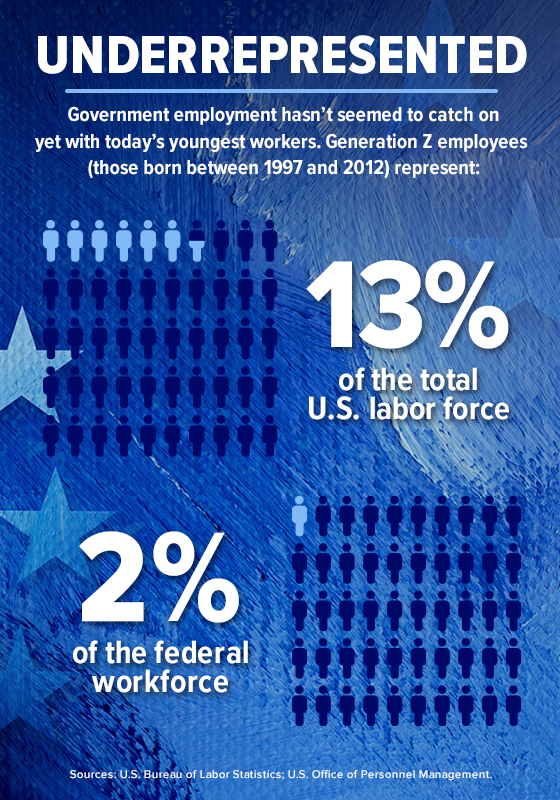
Currently, members of Generation Z account for nearly 13 percent of the U.S. labor force, according to the U.S. Bureau of Labor Statistics. But they are currently only about 2 percent of the federal workforce, according to OPM.

 ‘In the new world of work, retention becomes our No. 1 goal.’
Bradley Schurman

“For probably about half a century, we got really accustomed to having a readily available, relatively well-educated workforce that was cheap and at our disposal,” says Bradley Schurman, a consultant on older generations and author of The Super Age: Decoding Our Demographic Destiny (HarperCollins, 2022). “The new demographic reality doesn’t look quite like that, because there just aren’t as many Gen Zs as there were Millennials. It’s simply a shift in the labor force participation rate.”

In the coming years, people ages 65 and over will represent at least 20 percent of the population in many developed nations, Schurman says. U.S. employers will need to revise their notions about retirement and be open-minded about what older Americans can accomplish in the workplace, he says.

“In the new world of work, retention becomes our No. 1 goal,” he says.

212156_SubstanceAbuse_Sidebar-1000x250.png

U.S. workers continue to demand greater opportunities to telework or do their jobs completely remotely. Federal human resource officials say they are not oblivious to this trend.

The government’s central job-listing site, USAJobs, flags positions that may be done remotely in hopes of tapping the widest talent pool. And the Office of Personnel Management (OPM) is examining how telework and remote work will fit into the future of the federal workforce.

The U.S. chooses the refugees it accepts and sets limits on the number of refugees it allows into the country each year. Before being accepted, refugees are screened by various government authorities, including the FBI, the Department of Homeland Security (DHS) and the Department of Defense.

“We have learned and certainly have seen that in order to be competitive with other sectors, we need to have workplace flexibilities, and that is going to be something that’s important for the next generation,” says Margot Conrad, an advisor to OPM Director Kiran Ahuja.

The percentage of federal employees eligible to telework at least some of the time has risen from 33 percent in fiscal 2011 to 50 percent in fiscal 2022, according to a report from the OPM issued late in 2022.

Not surprisingly, the percentage of teleworking federal employees dramatically increased at the height of the COVID-19 pandemic—from 22 percent in fiscal 2019 to 47 percent in fiscal 2021.

Proponents of telework and remote work (doing one’s job entirely away from the office) say these options promote greater work/life balance, could help in the retention of employees and could reduce the government’s real-estate footprint, among other upsides.

Holding On to Good People

Some observers find the recent uptick in the size of the federal labor force surprising, given the Trump administration’s turbulence and the COVID-19 pandemic’s disruptive impact on the U.S. labor force. The former president’s tenure included a lengthy government shutdown, the de-emphasis of certain executive agencies and attempts by the White House to remove job protections for tens of thousands of federal positions.

But when it comes to retention, the federal civilian workforce is not in crisis mode, according to an analysis from the Partnership for Public Service (PPS).

In fiscal 2021, the governmentwide attrition rate was 6.1 percent and included a roughly equal number of “quits” and retirements. That level was consistent with the federal attrition rates from fiscal 2019 and 2018, if slightly higher than the 2020 rate of 5.5 percent, the organization reported.

Some agencies were losing employees at a greater clip. At 7.1 percent, the Department of Veterans Affairs had the largest attrition rate among agencies in fiscal 2021, the PPS says. Health-related occupations in government had a higher-than-average attrition rate—also 7.1 percent.

Despite notions that its employees were unhappy during the isolationist Trump administration, the State Department did not experience a mass exodus. Its attrition rate actually stayed in the 5 percent to 6 percent range.

Still, officials say, the department created its first-ever retention unit in hopes of preserving its core roster of 11,500 Civil Service members and 13,700 Foreign Service officers. Individuals in the latter category must retire at age 65 because of the sometimes-dangerous nature of international work.

In 2022, the State Department saw its largest influx of Foreign Service officers in a decade, officials say. Jones, the Generation X member working on a two-year assignment in Haiti, is among the newest hires serving in another country. As a Black woman from Oklahoma, she says she has had the opportunity to defy expectations some foreigners may have about Americans.

“When you travel abroad, [I’m] not necessarily what people think of as a quintessential American,” Jones says. “All of the conversations I’m having with people are very interesting because they’re learning a little bit about the U.S. culture through me.”

CPR_222456_ATW_Graphic_1-1.jpg

Gauging Morale

Not all government employees are satisfied with their work conditions.

Medici says labor-management rancor persists, even after the Biden administration took the reins of the government. And she feels there is a significant brain drain occurring through retirements, based on her observations at the EPA.

In the meantime, the American Federation of Government Employees (AFGE), the largest labor union representing federal workers, has said some areas of the federal workplace are dangerously understaffed.

Shane Fausey, national president of the AFGE Council of Prison Locals, told the U.S. Senate Judiciary Committee last year that roughly 3,000 employees in the U.S. Bureau of Prisons were expected to leave by the end of 2022. He said only about 35,000 employees were actually staffing the prison system, even though the bureau was authorized in 2016 to have a staffing level of 43,369. He urged the Biden administration to restructure pay bands and offer retention bonuses. (AFGE representatives did not make themselves available for this article.)

At least collectively, morale within the civilian workforce appears to be fairly stable, according to the most recent Federal Employee Viewpoint Surveys conducted by OPM. On a scale up to 100, the broad metric of employees’ “global satisfaction,” which includes an assessment of pay and job satisfaction, has seesawed in the 60s and dropped slightly during the Biden administration. The composite figures ranged from 64 in 2018 to 65 in 2019, 69 in 2020, 64 in 2021 and 62 in 2022. (Seventy-two percent of the federal employees who participated in the latest survey skewed middle-aged or older as members of Generation X or Baby Boomers.)

“The numbers are not wildly different from one administration to the next,” says Neal, the of the National Academy of Public Administration. “It means, for the most part, federal employees are not highly political animals, even though they’ve been accused of that, and they do their jobs. Whoever is sitting in the White House has an effect—but not much.”

212156_SubstanceAbuse_Sidebar-1000x250.png

The government has taken a novel approach to hiring, retention and related federal workforce issues since the Biden administration took office in January 2021, say officials at the Office of Personnel Management (OPM).

One of the first moves was to reorganize the Chief Human Capital Officers Council (CHCOC), a panel of top HR managers across the federal government, as well as a smaller steering committee. The smaller group sets meeting agendas for the council and serves as a “sounding board” for new ideas, says CHCOC Executive Director Margot Conrad.

In an interview with All Things Work, Conrad and Carmen Andujar, OPM’s manager for recruitment policy and outreach, discussed some of the strategies that the federal government is using to keep the pipeline flowing with employees that reflect the nation’s diversity. They include:

Taking a skills-based approach to hiring. Derived from a Trump-era executive order, the skills-based hiring concept allows hiring managers to weigh an applicant’s skills and competency over educational background for certain jobs.

“Not everybody has a formal education, but they may have the skills to be successful in the performance and duties of the position,” Andujar says. The U.S. Digital Service, a technology unit in the executive office of the president, is an obvious fit for skills-based hiring, she says.

Continuing the use of pool hiring. This allows multiple departments to share candidates who receive certification for a particular job. In the traditional model, siloed agencies post jobs and screen candidates individually. Several departments have used the newer “shared certificates” method as they filled thousands of jobs created under the recent infrastructure bill passed by Congress, Conrad says.

Offering 10-year appointments to science, technology, engineering and mathematics (STEM) professionals. Jobs with limited lengths of service work well with some project-oriented agencies, including NASA, Conrad says. “It gives them another tool when they’re doing their workforce planning,” she says.

Increasing the number of paid federal internships so that young people can recognize viable career paths in government. Past experience shows that pre-employment opportunities offered by the federal government help influence people to enter public service. —M.R.

Mike Ramsey is a Chicago-based freelance writer.


Explore Further

SHRM provides resources and information to help business leaders to help leaders stay ahead of federal workforce trends. 

‘Quiet Hiring:’ A New Name for a Revived Practice

?The trend of repackaging established workplace behaviors and practices into new buzzwords continues. In the wake of last year’s “quiet quitting” and “quiet firing” phenomena—catchphrases for employee disengagement and passive performance management—comes “quiet hiring,” when employers fill talent gaps by shifting employees around and hiring contractors or part-time workers.

The rebrand may be suspect, but the workforce strategy is pressing, as organizations anticipate an economic downturn while continuing to navigate a labor market bereft of available workers.  

“The main reason employers are doing this is because of the talent shortage,” said Emily Rose McRae, senior director of research at Gartner. “It’s not just hard to find talent. In some cases, the talent is not there, or hiring takes so long that the business is seriously impacted. Hiring a data scientist can take six months or longer, for example.”

Quiet hiring enables businesses to be ready and adaptable to change, said Jennifer Kraszewski, SHRM-SCP, vice president of human resources at Paycom, an HR and payroll technology provider based in Oklahoma City. “The practice of companies upskilling current employees and moving them to new roles or focus areas, either on a temporary or permanent basis, in order to fit new or evolving business needs has been around for many years and is something smart businesses often do regularly,” she said.

The practice has taken on new relevance in the recent labor market climate characterized by the 4.8 million surplus of open jobs over available workers, reduced hiring budgets and elevated turnover.

High turnover is expected to be “relatively permanent, consistently higher than it was before the pandemic,” McRae said. “So, if you don’t have enough talent, you have to maximize the talent you have.”

Jeff Schwartz, vice president of insights and impact at Gloat, a talent marketplace and internal mobility platform based in New York City, said that quiet hiring uncovers the opportunity to move beyond static jobs and standard recruiting and reimagine how work could be done in projects and gigs, an idea energized by the emerging skills-based hiring trend. “It recognizes that the potential of our current employees is far more than their current jobs and job descriptions suggest,” he said.

Jeff Ferguson, a talent acquisition leader and founder of the Talent Trailblazer, a recruiting consultancy in Lakeway, Texas, said that quiet hiring provides a vital solution in times of economic pressure and when traditional recruitment options may be limited due to labor shortages. “By temporarily redistributing tasks [among] current staff, businesses can ensure their essential requirements are met and financial goals achieved without committing long-term resources [toward] new hires,” he said.

Quiet hiring can take two different forms: internal and external. Externally means hiring short-term contractors. Internally, the practice is more open to creativity and potentially includes short-term redeployment, internal mobility programs, rotational programs, and project or gig work.

For example, McRae said if you need more data scientists, you could look to people in HR and marketing who conduct and present data analysis. “If you can shift the complex statistical programming tasks of the data science role to a contract role or existing data scientists, you can then move HR and marketing data analysts to cover the other half of the role—presenting results to stakeholders,” she said. “That is actionable quiet hiring.”

Another example is when a company redeploys its tax team during the off-season to other projects, Kraszewski said.

In still another example reported in August 2022, Australian airline Qantas asked for 100 employees, including managers and senior executives, to work as baggage handlers for three months as it dealt with an acute labor shortage.

Career Pathing

Experts agreed that quiet hiring can also be an excellent opportunity for workers’ professional development.

“Temporary assignments can help employees gain new skills and experiences, and lead to long-term career advancement,” Ferguson said. “Quiet hiring can also be a good way for employees to try out different organizational roles, and discover new interests and passions. By clearly articulating the value of these assignments and how they can help employees advance their careers, employers can help ensure that their employees feel motivated and valued.”

Quiet hiring can be seen as a potential solution for quiet quitting, Kraszewski said. “Many employees quiet quit because they feel like they have plateaued at work and are not interested in the work they are assigned anymore. People are given the opportunity to explore a completely new opportunity and even switch departments or teams, moving them away from the work that had them feeling unfulfilled in favor of an assignment or responsibility that can challenge them in a new way.”

Risks, Downsides

When considering quiet hiring practices, an organization should identify potential risks and downsides.

“One risk includes potential skills and knowledge gaps left when an individual or team pursues a new opportunity,” Kraszewski said. “There’s no on/off switch—it will take time to train employees, even if they are transferring internally.”

McRae said that those being moved to a new role, even part time, can’t be expected to keep up with all their previous role’s work. “You have to make a decision to sacrifice in one part of the business in order to succeed in another part of the business,” she said.

“Being able to identify where and for whom this transition should happen is important,” McRae added. Shifting employees internally has the potential to create resentment from those who get chosen to move and from those who don’t.

“You also don’t want to set people up for roles in which they will not be successful,” she said. “Expecting all of your customer service reps to retrain on data science in 30 days is not reasonable, for example. Look to skill adjacencies and feasible role redesign.”

Another pitfall to avoid is harming diversity, equity and inclusion. “As much as shifting talent can be useful, it can also exacerbate existing issues around equity and inclusion in terms of access to opportunities,” McRae said. “Organizations need to be aware not to only provide the opportunity to shift to people with college degrees for example, and instead reorganize people based on their skills.”

Compensation must also be considered in any quiet hiring decisions, she said. “If you’re asking people to do more or do something that is not particularly desirable, compensate them for that. Compensation could be money—either a bonus or a raise—or it might be more PTO [paid time off] or more flexibility. Communicate that the compensation is recognition for the extra or unexpected work.”

The success of quiet hiring will depend on how it is presented to employees. Saying it needs to be done is not enough. “The message should not be ‘You’re interchangeable,’ ” McRae said. “It should be ‘You are valued and we want to place you where you can have the biggest impact on the business.’ “

Beyond Headcount Planning: New Tech Addresses Labor Shortage Issues

?Workforce planning has long involved using spreadsheets to create an accurate employee headcount based on projected financial metrics. While such planning remains essential for HR and talent leaders, many are finding they need new and richer types of information to address pressing challenges like continuing labor shortages, uncertainty about available skills in their own workforces and succession management plans upended by the Great Resignation.

Some are turning to talent intelligence platforms for tools that can provide greater visibility into current capabilities of the workforce, identify skill “adjacencies” in workers that might allow them to be redeployed into open positions and build succession management plans for roles throughout the company, not just at the top executive level.

“Organizations are realizing they don’t just need to know the number of heads in the company; they also need to know the current inventory of skills available in the workforce, how to resolve continuing labor supply and demand issues, and what their leadership pipelines now look like,” said Josh Bersin, a HR analyst and CEO of the Josh Bersin Academy in Oakland, Calif. “Today you need much more than numeric or headcount data for good workforce planning.”

Bersin said providers of talent intelligence platforms include vendors Eightfold, Beamery, Gloat, SkyHive and a number of human capital management technology suite providers who offer products like skills ontology software that can help identify and verify capabilities in the internal workforce.

“What the platforms can do is look at large volumes of data about people inside and outside of your company and aggregate that information into groups,” Bersin said. “The technology can analyze data in a way that’s much more actionable for today’s talent management challenges than just looking at how much headcount you have in a given month.”

For example, Bersin said his organization has data showing there will be approximately 2.5 million to 3 million open nursing positions in the next three years in health care organizations.

“Whatever your headcount number is, it’s not going to address that growing problem of talent supply and demand,” Bersin said. “You have to figure out where those nurses are going to come from. These are bigger, more complex decisions than simply aggregating headcount numbers in an organization, and it represents a big change in how companies need to construct their talent strategies.”

Research shows more HR professionals are looking for technologies that can help with labor forecasting and identifying skills gaps in the ranks. One of the key themes from Sapient Insight Group’s 2021-2022 HR Systems Survey, for example, was the growth in companies investing in or evaluating skills management software.

New Software Aids Succession Planning

Continuing employee resignations and struggles to fill job openings have combined to disrupt many organizations’ succession plans. HR analysts say the nature of succession management has changed, with HR and talent leaders needing to create “bench strength” for a wider variety of roles in the organization.

“Succession planning is no longer just for the top executive level,” Bersin said. “With all of the resignations and new initiatives happening in organizations, there’s a greater need to identify the most likely people to move into open roles at all levels of the company.”

Bersin said many of the same platforms used for talent intelligence can be used for succession planning purposes.

Jarron Rice, global skills lead for John Deere in Austin, Texas, uses a talent intelligence platform from vendor Fuel50 for succession planning. Rice said the platform has given him a new level of insight into the skills and capabilities of his workforce, and the data helps guide decisions around succession planning and internal mobility.

“Seeing skill adjacencies that exist across entirely different job families broadens our view of viable internal candidates,” Rice said.

One technology vendor that’s reimagined the succession planning process is Columbus, Ohio-based WORQDRIVE. Its platform was built on a belief that succession management should be democratized and companies need greater visibility into the capabilities of their workforces to allow them to better plan for everything from impending retirements to staffing short-term support gigs.

“What we’ve found is many organizations don’t even know the talent they have within their four walls,” said Tracey Parsons, CEO of WORQDRIVE. “There are so many people in enterprise companies that have hidden skills or talents from earlier job experiences or side gigs that could be applied to other roles in the company. Our system is designed to bubble up great skill sets not just for open requisitions but also for opportunities outside of the requisitioning system.”

Users of WORQDRIVE can search for talent inside their own organizations and identify employee matches based on skills, uniqueness and level of advocacy. Worker skills, certifications and experiences are gathered and validated from human resource information systems.

“We give employees the opportunity to update and augment their information to make it current and relevant,” Parsons said. “We also ask employees to invite people within the company to advocate for them and their skills. Because all employee data is anonymized, employees don’t know who has or hasn’t advocated for them, which allows people to be more honest in their advocacy.”

Once short lists of internal candidates are created, WORQDRIVE users can contact those employees through a built-in messaging feature to gauge their interest. The targeted workers’ identity remains hidden until they accept the proposed plan.

“We keep it anonymous to build trust with employees,” Parsons said. “If a person responds favorably to a request to be on a shortlist, only then do we unmask their identity and interested parties can start having conversations outside of the platform.”

DE&I and Workforce Planning

A component of workforce planning also revolves around diversity, equity and inclusion (DE&I) initiatives. At the CUNA Mutual Group in Madison, Wis., chief strategy and human resources officer Linda Nedelcoff uses a technology platform and expertise of a third-party provider to help assess who is likely to retire in the organization and factor DE&I strategies into identifying potential replacements.

CUNA’s DE&I initiatives are designed not only to boost hiring of underrepresented candidates but also focus on their promotion and job tenure once on board.

“We’ve built a form of apprenticeship for our advisor roles to prepare for those advisors who’ve been identified as probable to retire,” Nedelcoff said. “We’re partnering with our diverse communities to create a base for those apprenticeship roles to get more minority and female representation. That not only helps with workforce planning, it also helps advance our DE&I goals.”

Dave Zielinski is principal of Skiwood Communications, a business writing and editing company in Minneapolis.

The Class of 2022 Is Ready to Work—on Their Terms

?The college graduates of 2022 are entering a labor market where jobs are plentiful. Job openings are near an all-time high (11.3 million), and employers plan to hire 32 percent more new college graduates from the Class of 2022 than they hired from the previous class, according to a new report from the National Association of Colleges and Employers (NACE).

That means these in-demand candidates can be more selective, and while they are maintaining some previous job-seeker behaviors observed in older members of Generation Z and late Millennials, this group has been particularly impacted by the COVID-19 pandemic and has different workplace expectations than their predecessors.

Recruiting technology provider iCIMS published its seventh annual report on college graduates’ job-seeking characteristics, based on surveys of 500 HR and recruiting professionals and 1,000 recent college graduates, to understand the career expectations and aspirations of the latest entrants to the workforce.

“Entry-level candidates have had anything but a traditional college and job search experience,” said Laura Coccaro, chief people officer at iCIMS. “As the workforce abruptly went virtual, so did college students—recent grads received up to half of their schooling remotely and likely had canceled or postponed internships. Hiring teams should look for ways to modernize processes, be empathetic and have realistic expectations if they want to successfully hire this generation of talent.”

Christine Cruzvergara, chief education strategy officer at Handshake, a San Francisco-based platform connecting college students and new grads with employers, noted that this year’s graduates have “had to face a heightened and complex number of obstacles in the last two years. Between cultural and racial reckonings, layered on top of a global pandemic and ambiguous economy, this new generation of workers is looking for a sense of stability.”

Kalani Leifer, former teacher and founder and CEO of COOP Careers in New York City, helps unemployed and underemployed recent college graduates advance in their careers. Leifer remembers the cohort of new grads from the last big economic upheaval—the Great Recession of 2008-2010—beginning their first professional job search with a sense of powerlessness.

But the prospects of the Class of 2022 look very different, as the labor market made a quick recovery after the pandemic shut down the economy in 2020. “When the pandemic hit, hiring stopped and it was scary,” he said. “Now I’m seeing graduates well-positioned to take advantage of the hot labor market. Gen Z is feeling powerful, but with a sense of fragility and vulnerability built in because of how quickly things can change.”       

Changed Expectations

The Class of 2022, and Generation Z in general, continue to expect more from employers than previous generations, said Christy Spilka, vice president and global head of talent acquisition at iCIMS. “That’s aided by the access to information at their fingertips,” she said.

Leifer said he admires this age group for their entrepreneurial spirit, tendency to take risks and not compromising the vision they have for their lives.

“Gen Z doesn’t consider work as the end-all, be-all. They want to enjoy life outside of work,” said David Freeman, university relations manager at DISH Network, based in the Denver area. “We try to find out what their personal interests are and see if we can match those skill sets with what we need. That approach piques their interest more than the traditional recruitment pitch.”

Freeman added that this group shows up to job interviews with a sense of assertiveness about what they want and the willingness to talk about things like mental health, flexibility and diversity.

“They really want to know everything, they want details and they appreciate that peek behind the curtain,” he said. “Previous generations were happy to just get the job, but this generation wants to know what the day-to-day will look like and what the actual projects are that they will be working on. They ask about the culture. They want to know about their career growth plan. They want to know about wellness benefits and employee resource groups. They want to know what the company does to give back to the community.”

The skill sets of Generation Z are fundamentally different, said Rebecca Croucher, senior vice president and head of North America marketing at ManpowerGroup. “They are digital natives and know how to communicate through digital forums,” she said. “Graduating seniors are very comfortable with video meetings and have different ways of looking at things from a digital or process automation perspective.”

Croucher said this generation is also very resourceful and seeks out the fastest way of doing something. “We gave our interns projects that we thought would take a week or two, and they did them in a few hours,” she said. “They don’t want to be bored; they have a need to be constantly engaged.”

Salary Gap

The iCIMS research shows that there are some expectation gaps between what Generation Z job seekers want and what awaits them. The most consistent difference concerns starting salary. The Class of 2022 expect an average salary of more than $70,000, while employers expect to pay entry-level candidates just under $53,000.

“That misperception may come from the tug of war between companies going after the same talent and promising higher starting pay,” Freeman said. “Talking about salary has gotten more common, and this generation is more willing to negotiate salary, which is pushing more companies to re-evaluate salary structures going forward,” he said.

Spilka said that the trend toward more pay transparency, where organizations post their compensation in job ads, will help with the misalignment in starting pay expectations. “It benefits employers to know what this group is looking for in starting pay in order to have the conversation during the interview process,” she said.

Flexibility Matters

Flexibility is key to how 2022 college graduates say they want to work. But employers report these entry-level job seekers have an unrealistic expectation of workplace flexibility, according to the iCIMS study. Nearly 70 percent of recent grads would like their job to accommodate remote work, although 90 percent wouldn’t mind going into the office on occasion.

“This group wants some in-person experience, but there is more emphasis on flexibility to work from anywhere,” Spilka said. “They certainly don’t want to be told they have to be in the office every day.”

The new workforce entrants may be disappointed with reality, as NACE reported that 42 percent of their entry-level positions will be fully in person, 40 percent will be a hybrid arrangement—a blend of in-person and remote—and just 18 percent will be fully remote.

“Gen Z does still hold value for in-person connections, particularly for new grads; however, they want the flexibility to create a hybrid work schedule where they can both work remotely and connect with co-workers in person,” Cruzvergara said. “When surveyed, we found that many Gen Z candidates enjoyed greater control, better focus and improved quality of life that often come with a hybrid work environment.”

Flexibility for Generation Z goes beyond what days they come into the office. “Some in this group would be OK working three or four days a week instead of the traditional 40-hour workweek,” Croucher said. “And that’s going to be hard to find in a professional role.”

She added that those working fully remotely will also miss out on a lot. “They will lose out on all that can be gained from being around your colleagues in person. They will miss the camaraderie. It’s different than online learning—working remotely is eight to nine hours in front of your computer at home, by yourself.”

Leifer agreed that the trend toward fully remote work is worrisome. “Work shouldn’t be lonely,” he said. “You need peers to motivate you and hold you accountable, but you also need their help to build a network, especially early in a career.”

Values Alignment

The latest crop of college grads say they work to live instead of live to work. Nearly half (49 percent) said a full-time job is “just a job” and they prioritize their personal passions. Half of respondents (48 percent) said they don’t need to work a nine-to-five workday to be successful in their career, and 66 percent expect their employer to support their mental health and well-being.

“I don’t know if this generation is struggling more with mental health than previous generations, or that they are more willing to talk about it,” Leifer said. “It’s no longer as much of a stigma.”   

Croucher added that Generation Z is starting out with the mindset of focusing on themselves, something that was typically just aspirational for previous generations. “They are very aware of their needs and taking care of themselves,” she said. “There are many hard workers in this generation, but they realize that just grinding it out is not sustainable.”

Cruzvergara said that if employers are not building a mental health program into the existing benefits package, there’s a strong chance they will miss out on attracting early-career talent.

The iCIMS research also found Generation Z looks for personal alignment with a company’s mission and core values when applying for a job.

“They are a generation that not only cares deeply about the world around them—including climate change, equal pay and diversity—but is frequently challenging and encouraging corporations to have robust social responsibility programs,” Cruzvergara said.

Willing to Stay (with the Right Incentives)

While younger workers have developed a reputation for job hopping, the overwhelming majority (91 percent) of the Class of 2022 surveyed by iCIMS say they care about how long they stay with an employer, and nearly 70 percent see themselves staying with an employer long-term.

“Some companies are catering to Gen Z by offering coaching and different levels of achievement on three-year career paths,” Croucher said. “That’s extremely attractive to new graduates.”

Spilka said that the pandemic affected all job seekers, but stability is something the Class of 2022 is especially interested in when looking for a first job. “They have already experienced a lot of ups and downs during the pandemic and want to make sure their employer will be a good, stable fit,” she said.

State by State: Hires, Quits, Job Openings and Unemployment

[These graphics have been updated.]

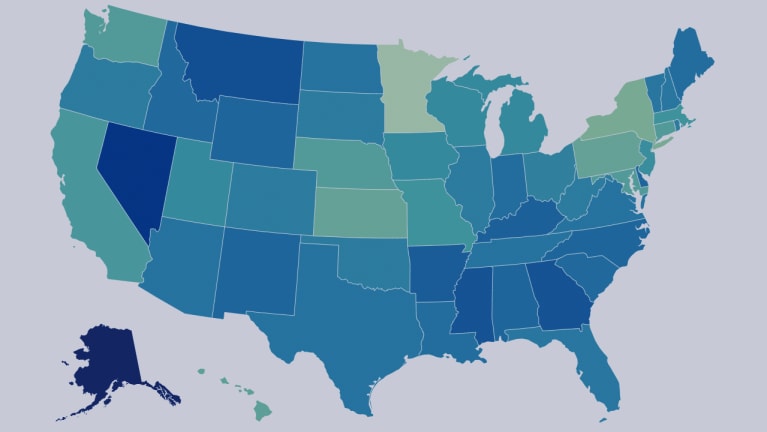
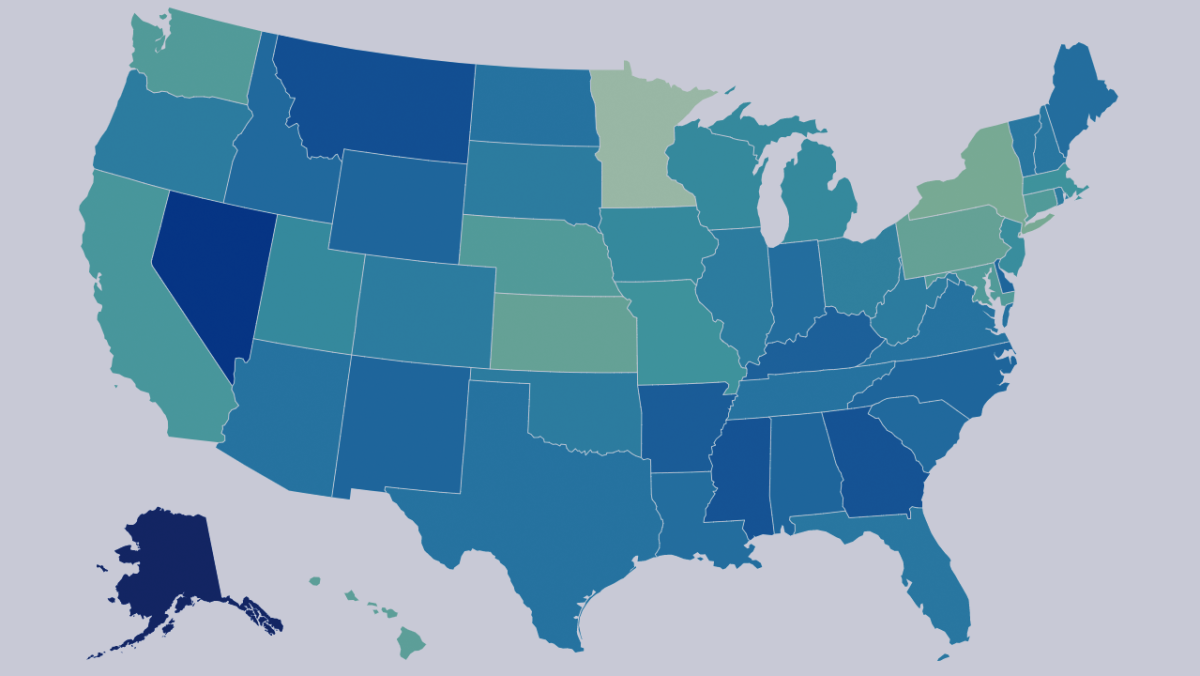
The Great Resignation’s impact on states is continuing to develop as ongoing elevated quits levels have led to increased job openings. The interplay between hires, quits, job openings and unemployment rates gives a state-by-state look at the jobs market in April 2022, the latest Bureau of Labor Statistics data available.

Turnover has not been distributed evenly across the country. The South has the highest percentage of workers quitting their jobs, at 3.3 percent. Meanwhile, 2.9 percent of workers in the Midwest and the West have quit, while only 2.2 percent of those in the Northeast have quit.

The South also led all regions in hiring workers, with a rate of 5 percent. The Midwest, the West and the Northeast saw rates of 3.9 percent, 4.5 percent and 3.5 percent, respectively.

Job openings have grown significantly in the Midwest and the South, with rates of 7.5 percent and 7.3 percent, respectively. The West and the Northeast saw slightly lower job openings rates of 6.7 percent and 6.3 percent, respectively.

The unemployment rate was highest in the District of Columbia (at 5.8 percent), followed by New Mexico and Nevada (at 5.3 percent and 5 percent, respectively). Meanwhile, the unemployment rate was lowest in Nebraska and Utah (both at 1.9 percent).

? ?
? ?

For more information on the Great Resignation, see SHRM’s Resource Hub page on Turnover and Retention.

Subscribe to our Newsletter